OPINION
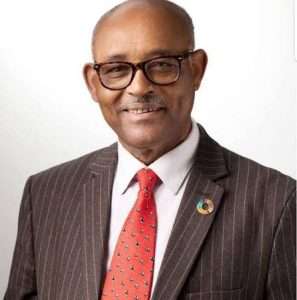
Kebour Ghenna
Ethiopians have received some wonderful economic news. Our country is nearly 60% larger than previously believed. Not because farmers harvested 60% more grain, factories produced 60% more goods, or workers received 60% higher wages. Nothing quite so exhausting.
The government has counted again and discovered an additional 8.94 trillion birr in economic activity that had escaped the attention of its statisticians.
Our newly appointed Finance Minister, Dr. Fitsum Assefa, formerly Minister of Planning and Development, has welcomed the discovery.
Ethiopia’s GDP for 2024/25 has risen from 15.09 trillion to 24.03 trillion birr. The revised figure for 2025/26 is 31.86 trillion birr, equivalent to approximately $210.7 billion.
Excellent news, apparently. And congratulations are certainly in order for the statisticians who undertook the exercise.
But the minister, who spent eight years overseeing national planning, might also have offered the public a more complete explanation of what these new figures mean.
She did acknowledge that rebasing would affect debt sustainability, taxation and economic planning. What was missing was a sufficiently candid account of the less flattering implications.
Allow me to complete the announcement.
Ethiopia’s debt-to-GDP ratio has suddenly become more attractive. If debt previously represented 50% of GDP, it would now represent approximately 31.4%, assuming the amount owed remains unchanged.
Wonderful!
Except that Ethiopia has not repaid a single additional dollar. The creditors have not reduced their claims. Interest obligations have not disappeared. Repayment dates remain where they were. The country’s ability to service its debt still depends on tax revenue, export earnings, foreign-exchange availability, and the terms negotiated with creditors.
One imagines the IMF economists looking at the new figures with considerable interest.
The debt ratio looks better.
The debt problem remains.
The government is collecting less tax than we thought.
Here the celebration becomes less comfortable. A larger GDP means that tax revenue, expressed as a percentage of the economy, has become smaller.
A tax-to-GDP ratio of 10%, for example, would fall to approximately 6.3% after a 59.2% upward revision, assuming collections are unchanged. This is hardly an occasion for champagne at the Ministry of Finance. It suggests that Ethiopia’s government collects a smaller share of measured economic activity than previously understood.
Perhaps the country has greater taxable capacity. Perhaps much of the newly recorded activity is informal, difficult to tax or produces little taxable income. Either way, the minister owes the public an explanation.
Are we discovering a richer country or a government less capable of collecting revenue from the economy it administers? The distinction matters. Particularly to taxpayers who may soon be asked to contribute more.
There is another unfortunate consequence.
Public investment as a share of GDP has declined mechanically. So has government expenditure on education, health and other public services, provided their nominal amounts have not changed.
A public investment ratio of 5% would become approximately 3.1%.
The government has not cancelled a road, closed a school or withdrawn a hospital budget. But its spending now represents a smaller share of the economy.
That raises an interesting question.
If Ethiopia’s economy was considerably larger than previously measured, has the government been investing an even smaller proportion of national output in the institutions and infrastructure required for development?
A country does not become more productive merely because statisticians discover additional production. It becomes more productive when businesses invest, workers acquire skills, farmers improve yields and factories expand output.
Those things require more than a revised spreadsheet.
The Finance Minister might also have explained what the rebasing does not accomplish.
It does not increase exports. It does not generate additional remittances. It does not attract foreign investment automatically. And it does not put another dollar into the National Bank’s reserves.
Indeed, with a larger GDP denominator, exports and foreign direct investment now appear smaller relative to the economy, assuming their measured values are unchanged.
This is not necessarily good news.
It suggests that Ethiopia’s capacity to earn foreign currency may be even more modest relative to the size of its economy than previously believed. The country’s import requirements, external debt payments and foreign-exchange shortages remain real.
The international suppliers who sell Ethiopia fuel, machinery and medicines are unlikely to accept statistical revisions in settlement of their invoices.
They still prefer dollars.
Now, there is nothing inherently wrong with rebasing GDP. Nigeria and Ghana have experienced revisions of comparable magnitude. Modern economies change, new activities emerge, and statistical systems must improve their coverage.
The problem is not the exercise itself. The question is why Ethiopia waited so long. The previous base year was 2015/16. The new one is 2024/25. Nearly a decade.
Five-year updates are a widely used benchmark, although not a universal compulsory rule. Ethiopia now intends to follow such a schedule.
Good.
But when an economy turns out to be almost 60% larger than previously estimated, it is reasonable to ask how much economic activity went unmeasured, for how long, and with what consequences for government decisions.
Dr. Fitsum is particularly well placed to answer.
She was not an innocent bystander who arrived at the Ministry of Finance last week and discovered an unfamiliar collection of national statistics. She previously headed the ministry responsible for national planning. That does not establish that she personally directed the rebasing or bears responsibility for earlier statistical shortcomings. It does, however, give her a special responsibility to explain the transition from the old figures to the new ones.
And what about the IMF?
It provided technical assistance for the rebasing. It also helped design Ethiopia’s economic reform programme using the information available before the new estimates were published.
Now the economy turns out to have been substantially larger. Would the Fund have prescribed the same policies had it known?
Possibly.
Inflation does not disappear because GDP is rebased. Nor do foreign-exchange shortages or external debt obligations.
But the new figures raise questions that deserve answers.
If the tax ratio is substantially lower, should the revenue strategy change? If public investment represents a smaller share of GDP, should the programme reconsider the balance between fiscal restraint and development spending?
If export earnings are smaller relative to the economy, should greater attention be given to expanding productive capacity and foreign-exchange generation? And if a significant part of the economy was previously unrecorded, what does that tell us about the assumptions underlying earlier forecasts and policy prescriptions?
These are not arguments against economic reform. They are arguments for revisiting its assumptions when the underlying evidence changes. One hopes the IMF will do precisely that.
Now, the Finance Minister deserves credit for telling us how much bigger our economy is. She might now explain why a country with so much newly discovered wealth still struggles to finance its schools, hospitals, factories and imports. After all, rebasing has not created a single new job, produced an additional sack of wheat or added one dollar to the country’s reserves.
It has simply changed the numbers.
The government has discovered a bigger economy. Unfortunately, it has also discovered a smaller government effort relative to that economy.
And here is the final irony: Ethiopia has become almost 60% richer without producing anything extra
Its people remain exactly where they were. The GDP has been rebased. Reality has not.
Editors Note: The opinion expressed in this article is that of the author and does not necessarily reflect the position of Ethiopia Today.