African Ownership, Global Partnership, and the Imperative of Justice, Human Dignity, and Sustainable Security
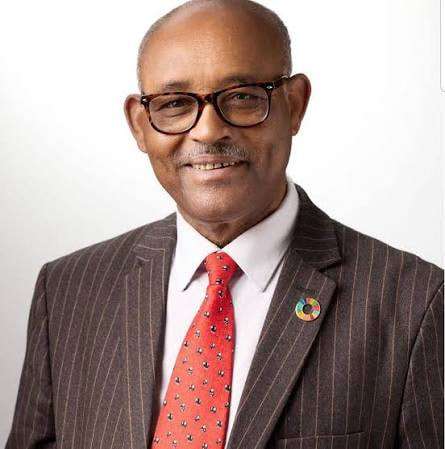
OPINION – By Nigussu Legesse (PhD)
Peace is among humanity’s most cherished aspirations. Yet, across parts of Africa, millions of people continue to experience the devastating consequences of armed conflict, political instability, forced displacement, humanitarian crises, insecurity, and the erosion of social trust. These realities remind us that peace cannot be taken for granted, nor can it be secured through military interventions, diplomatic declarations, or temporary political arrangements alone.
Peace is not simply the absence of armed conflict. It is the presence of justice, human dignity, accountable institutions, social cohesion, equal opportunity, mutual respect, and the confidence of people in their shared future. It requires societies in which differences can be managed peacefully, public institutions serve the common good, and every individual can live without fear, exclusion, or discrimination.
Africa’s pursuit of peace must therefore be understood not merely as a security imperative but as a fundamental condition for human development, democratic progress, economic transformation, and the fulfillment of the aspirations of its people.
The central question before Africa and its international partners is not whether peace is necessary. It is whether we are prepared to build the political, institutional, economic and social conditions that make peace sustainable. More importantly, Africa must have the leadership, institutional capacity and strategic space to shape the peace it needs.
AFRICAN OWNERSHIP MUST BE THE FOUNDATION OF SUSTAINABLE PEACE
Africa must be at the centre of defining, shaping and implementing its own peace and security priorities. This is not a call for isolationism, nor a rejection of international solidarity. It is a recognition that sustainable peace cannot be externally designed or imposed without the meaningful ownership, participation and consent of the people and institutions concerned.
African ownership must extend beyond the language of political declarations. It must be reflected in the capacity of African institutions to prevent conflicts, address their underlying causes, facilitate dialogue, mediate disputes, protect civilians and support societies emerging from violence.
It also requires the courage to confront difficult domestic realities. Conflicts are often rooted in unresolved historical grievances, political exclusion, inequality, weak institutions, competition over natural resources, corruption, abuses of power, discrimination and the absence of credible mechanisms for resolving differences. These challenges cannot be addressed through security responses alone. They require political responsibility, institutional reform, justice, inclusive governance and a genuine commitment to the dignity and rights of all citizens.
African leadership must therefore be accompanied by accountability. Ownership should never become a justification for impunity, nor should sovereignty be invoked to shield violations of human rights or international humanitarian law. The legitimacy of African peace initiatives must be strengthened by their commitment to protecting human life, upholding the rule of law and ensuring that those responsible for serious violations are held accountable.
Ultimately, the credibility of African-led peace efforts will be measured not only by their capacity to contain violence, but by their ability to restore trust, protect communities and create conditions in which people can live together in dignity and security.
THE AFRICAN UNION AND THE UNITED NATIONS: A PARTNERSHIP OF SHARED RESPONSIBILITY
The relationship between the African Union (AU) and the United Nations (UN) remains central to the future of peace and security on the continent. Their partnership should be grounded in mutual respect, institutional complementarity, shared responsibility and recognition of Africa’s primary role in addressing challenges on its own continent.
The United Nations possesses global legitimacy, diplomatic reach, institutional experience and financial capacity. The African Union, in turn, brings continental political legitimacy, regional knowledge, proximity to conflicts and an increasingly developed architecture for peace and security. These respective strengths should reinforce one another rather than create competition or institutional duplication.
The principle of subsidiarity, appropriately understood and applied, should enable decisions and responses to be undertaken at the most relevant and effective level, while ensuring coherence with the responsibilities of the continental and global institutions. The roles of Africa’s Regional Economic Communities and Regional Mechanisms must also be recognised. Institutions such as IGAD, ECOWAS and SADC have important responsibilities and experience in early warning, mediation, preventive diplomacy, peacebuilding and regional conflict resolution.
The partnership between the AU and the UN must therefore move beyond periodic consultations and political commitments towards more predictable, coordinated, and effective action. It should strengthen African institutional capacities, support locally grounded political solutions, and ensure that international engagement is responsive to the realities and priorities of affected communities.
A genuine partnership is neither the subordination of African priorities to external interests nor the withdrawal of international responsibility. It is a relationship in which African leadership and global solidarity reinforce each other in pursuit of a common purpose: sustainable peace, human security and respect for international law.
RESOLUTION 2719: AN IMPORTANT MILESTONE THAT MUST BE TRANSLATED INTO PRACTICE
The adoption of United Nations Security Council Resolution 2719 on 21 December 2023 was an important milestone in the longstanding effort to establish more predictable and sustainable financing for African Union-led peace support operations. Adopted unanimously, the resolution recognized the need to strengthen the partnership between the African Union and the United Nations in responding to threats to international peace and security.
The resolution provides for the Security Council to consider, on a case-by-case basis, requests for African Union-led peace support operations to access United Nations assessed contributions, subject to the relevant authorisation, oversight and accountability arrangements. It provides for financing of up to 75 per cent of an authorised operation’s annual budget through UN assessed contributions, with the remaining resources to be jointly mobilised by the African Union and the United Nations from the international community.
This framework represents an important recognition that Africa’s contribution to international peace and security must be matched by fairer, more predictable and sustainable burden-sharing arrangements.
However, Resolution 2719 should not be regarded as an automatic financing mechanism, nor should its adoption be mistaken for the completion of its operationalisation. Its effective implementation requires agreement on practical arrangements, financial oversight, accountability, command and control, compliance with relevant human rights standards and the protection of civilians.
The AU–UN joint consultative meeting of 2 November 2026 welcomed ongoing efforts to complete the joint roadmap for implementation and reaffirmed the importance of adequate, predictable and sustainable financing, alongside effective financial oversight and accountability.
This is encouraging progress. The task now is to translate the commitments and ongoing institutional efforts into a workable and credible framework capable of supporting African-led peace operations when authorised and required.
The implementation of Resolution 2719 must also preserve the integrity of the African Union’s leadership and the responsibilities of the United Nations Security Council under the UN Charter. It must be underpinned by transparency, professional standards, effective oversight and the protection of civilians. African leadership and international accountability are not competing principles; they are mutually reinforcing foundations of legitimate and effective peace support operations.
PEACE MUST BEGIN WITH PREVENTION, DIALOGUE AND JUSTICE
The most sustainable and humane approach to peace is to prevent conflict before it escalates into violence. Prevention is not only less costly than responding to full-scale conflict; it is also a moral and political responsibility to protect human life and preserve the social fabric of communities.
Africa’s peace and security architecture must therefore invest more deliberately in early warning, early response, preventive diplomacy, mediation, inclusive dialogue and reconciliation. These instruments should not be activated only when violence has already become widespread. They must be embedded in the everyday work of institutions, governments and communities.
National dialogue processes should be inclusive, credible and designed to address the underlying causes of tension and conflict. They must create meaningful opportunities for different political, social, cultural and regional constituencies to express their concerns, participate in decisions and contribute to solutions. Dialogue should not be reduced to a formal event or a temporary political arrangement. It must be a sustained process of rebuilding trust and strengthening the social contract.
Justice is equally indispensable. Where serious violations have occurred, sustainable peace requires truth, accountability, appropriate remedies and, where necessary, transitional justice mechanisms.
Reconciliation cannot be built by asking victims to forget their suffering, nor can national unity be sustained by suppressing legitimate grievances. A just and durable peace must acknowledge suffering, restore dignity and address the conditions that allowed violence to occur.
The protection of civilians must remain at the centre of all peace and security efforts. All parties to armed conflict must respect international humanitarian law and applicable international human rights obligations. The safety and dignity of women, children, displaced persons, older people, persons with disabilities and other vulnerable populations must receive particular attention.
Peace operations, whether African-led or international, must be guided by clear mandates, professional conduct, human rights compliance and credible accountability mechanisms. The legitimacy of any intervention ultimately depends on whether it protects the people it is intended to serve.
THE INDISPENSABLE CONTRIBUTION OF CIVIL SOCIETY AND FAITH-BASED INSTITUTIONS
Peace cannot be built by governments and intergovernmental organisations alone. It is a collective undertaking that requires the active participation of citizens, communities, civil society organisations, faith-based institutions, traditional leaders, academic institutions, the media, women and youth.
Civil society organisations often operate close to communities affected by conflict and possess valuable knowledge of local realities, grievances, social relationships and emerging risks. They can contribute to early warning, community dialogue, mediation, peace education, humanitarian response, reconciliation, social cohesion and the monitoring of human rights and public accountability.
Faith-based institutions also have a distinctive responsibility and opportunity. Their moral authority, community presence and networks across social and geographical boundaries can help bridge divisions, encourage restraint, promote compassion and create spaces for dialogue where trust has been weakened. Their contribution is particularly important in societies where religious and community institutions remain influential in shaping values and relationships.
However, the contribution of civil society must be recognised as more than an instrument for implementing externally designed programmes. Independent civil society organisations are important development and peace actors in their own right. They must be able to participate meaningfully in policy dialogue, contribute to decision-making, raise legitimate concerns and hold institutions accountable.
Women and young people must likewise be recognised as leaders and decision-makers, not merely as beneficiaries or victims of conflict. Their meaningful participation in prevention, mediation, peacebuilding and reconstruction is essential to the legitimacy and sustainability of peace processes.
A peace architecture that excludes the voices and experiences of communities will remain incomplete. Sustainable peace must be built with people, not merely on their behalf.
THE HUMANITARIAN–DEVELOPMENT–PEACE NEXUS: ADDRESSING THE CONDITIONS THAT SUSTAIN CONFLICT
Africa’s experience demonstrates that humanitarian crises, underdevelopment and insecurity are deeply interconnected. Conflict causes displacement, destroys livelihoods, weakens public institutions and undermines access to essential services. At the same time, poverty, inequality, unemployment, food insecurity, competition over resources and the absence of economic opportunity can deepen grievances and increase vulnerability to violence.
For this reason, humanitarian assistance, development cooperation and peacebuilding must be understood as mutually reinforcing dimensions of a coherent response.
Humanitarian assistance remains indispensable in saving lives and alleviating suffering. But emergency relief alone cannot resolve the structural conditions that repeatedly generate displacement, vulnerability and insecurity. Equally, development interventions cannot achieve lasting results where communities remain exposed to violence, exclusion and political instability.
The humanitarian–development–peace nexus offers an important framework for addressing these interconnections. It calls for better coordination, long-term commitment, locally informed planning and stronger links between immediate humanitarian needs, recovery, institutional development and sustainable peace.
This approach must also recognise the relationship between climate change, environmental degradation and conflict. Competition over land, water and other natural resources, particularly where livelihoods are fragile and institutions are weak, can intensify existing tensions. Climate-related shocks can compound displacement, food insecurity and economic vulnerability. Addressing these challenges requires climate resilience, inclusive natural resource governance, environmental protection and development strategies that reduce rather than deepen inequalities.
Peacebuilding must therefore be integrated into national and regional development priorities. Investments in education, health, employment, infrastructure, food systems, social protection and accountable public institutions are not separate from the peace agenda. They are among its essential foundations.
A MORE EFFECTIVE AND EQUITABLE INTERNATIONAL PARTNERSHIP
Africa’s pursuit of peace must be supported by an international system that is more responsive, equitable and consistent. International solidarity should not be selective or driven solely by geopolitical calculations. The lives and dignity of African people must command the same concern and commitment as those affected by conflicts elsewhere in the world.
The international community should strengthen support for African-led preventive diplomacy, mediation, peacebuilding and post-conflict reconstruction. It should also address the structural inequalities that constrain Africa’s capacity to respond to crises, including inadequate and unpredictable financing, debt vulnerabilities, limited institutional resources and unequal influence in global decision-making.
The reform of the United Nations Security Council remains an important part of this agenda. Africa’s longstanding demand for fair and effective representation, as articulated in the Ezulwini Consensus and the Sirte Declaration, reflects a legitimate concern about the credibility, representativeness and effectiveness of the global peace and security system.
A continent that carries a disproportionate share of the world’s peace and security challenges cannot remain inadequately represented in the principal global institution mandated to maintain international peace and security. A more representative Security Council would strengthen the legitimacy of multilateralism and improve the prospects for collective action.
At the same time, international partners must ensure that their engagement is guided by the priorities of African countries and communities, respects national and continental institutions, and contributes to long-term institutional capacity rather than dependency. Partnership should be measured by the extent to which it strengthens African agency, supports accountable institutions and produces tangible improvements in people’s lives.
FROM COMMITMENTS TO COLLECTIVE ACTION
The challenge before Africa is not a shortage of declarations, frameworks or institutional commitments. It is the persistent gap between commitments and implementation. The credibility of the continent’s peace agenda will depend on its ability to translate political will into measurable progress and sustained action.
This requires several mutually reinforcing priorities:
Strengthening African leadership and institutional capacity: The African Union, Regional Economic Communities and Regional Mechanisms must be equipped to prevent conflicts, facilitate political solutions and coordinate effective responses, while strengthening the capacity and accountability of national institutions.
Advancing the operationalisation of Resolution 2719: The AU and UN should complete the necessary arrangements for predictable, sustainable and accountable financing of eligible African Union-led peace support operations, in accordance with the resolution and its case-by-case authorisation requirements.
Investing in prevention and inclusive political processes: Early warning, preventive diplomacy, mediation, national dialogue, reconciliation and transitional justice should receive sustained political and financial support.
Protecting civilians and upholding human rights: Peace and security initiatives must consistently respect international humanitarian law, applicable human rights obligations and the dignity of all affected populations. Accountability must be integral to the design and implementation of peace operations.
Recognising the role of communities and civil society: Governments and intergovernmental institutions should create meaningful opportunities for civil society, faith-based organisations, women, youth, traditional leaders and community institutions to participate in peacebuilding and public accountability.
Connecting peace with sustainable development: Humanitarian response, recovery, reconstruction, economic opportunity, climate resilience and inclusive development must be pursued in a coordinated manner that addresses the structural causes of conflict.
Promoting equitable global governance: International partners should support a more representative and effective multilateral system, including meaningful reform of the United Nations Security Council and fairer arrangements for financing African peace and security priorities.
These priorities require more than institutional agreements. They demand political courage, mutual trust, sustained investment, public accountability and the determination to place human life and dignity above narrow interests.
AFRICA’S FUTURE MUST BE BUILT ON PEACE, JUSTICE AND HUMAN DIGNITY
Africa’s future cannot be secured through conflict management alone. It must be built through a shared commitment to justice, inclusive governance, democratic accountability, social cohesion, economic opportunity and the protection of human dignity.
African governments and institutions must assume their responsibilities with courage and integrity. Regional organisations must strengthen cooperation and act with greater coherence. Civil society and faith-based institutions must continue to contribute to dialogue, reconciliation and accountability. International partners must demonstrate solidarity through fairer partnerships, predictable support and respect for African leadership.
The United Nations and the African Union have an important opportunity to demonstrate that multilateral cooperation can respond effectively to the realities of the twenty-first century. Resolution 2719 provides one significant avenue for advancing this partnership. Its successful implementation would represent more than a financing arrangement; it would demonstrate the value of shared responsibility and the importance of matching political commitments with practical institutional support.
But no financing mechanism, peace operation or diplomatic agreement can substitute for the political will to address injustice, exclusion and the root causes of conflict. Nor can peace be sustained without the participation and confidence of the people whose lives are most directly affected.
Africa must therefore shape the peace it needs: a peace that is African-led, people-centred, grounded in justice, supported by international solidarity and sustained through inclusive development. It must be a peace that protects the vulnerable, gives voice to the excluded, creates opportunities for the young, recognises the leadership of women and restores confidence in the possibility of a shared future.
The responsibility is collective, but it begins with leadership, accountability and action.
Africa does not merely deserve peace. Its people have a legitimate right to live in peace.
Megabi Sere’at-Laeke-Selam Dr. Nigussu Legesse,is an Executive Director, Consortium of Christian Relief and Development Associations (CCRDA),Vice President, All Africa Conference of Churches (AACC)Member, Central Committee, World Council of Churches (WCC) and President Emeritus, Ethiopian Civil Society Organizations Council (ECSOC)
Editor’s Note: The opinion expressed in this article is that of the author and does not necessarily reflect the position of Ethiopia Today.