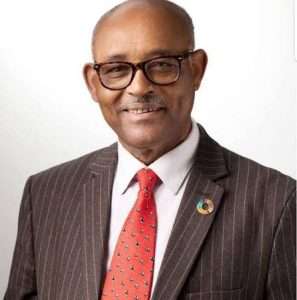
OPINION-By Kebour Ghenna
June 28, 2026
Last week, Ethiopia’s economic leadership gathered before the Prime Minister to present the country’s reform agenda and economic outlook at the National Summit on Economic Reform. Among the many presentations delivered, the Governor of the National Bank of Ethiopia gave what was perhaps the most engaging and memorable.
His presentation was energetic, confident, and, at times, theatrical. He succeeded in transforming subjects such as debt restructuring, fiscal discipline, inflation, and monetary reform into an accessible and compelling narrative. That is no small achievement.
The Governor touched on many important issues, far too many to comment on in a single article. Rather than attempt a comprehensive review, I have chosen to focus on a few points that, in my view, deserve wider public discussion because they go to the heart of Ethiopia’s economic future.
Before doing so, let me state my own position.
I have never been an uncritical admirer of the economic reform packages typically advocated by the International Monetary Fund. Around the world, IMF-supported programmes have in many cases succeeded in restoring macroeconomic stability while imposing significant social costs on ordinary citizens. That concern remains.
Having said that, it’s important to acknowledge genuine progress when it occurs. Ethiopia’s reform programme has produced measurable improvements in several macroeconomic indicators. These achievements deserve recognition, even by those who remain cautious about the broader policy direction.
The question, therefore, is not whether progress has been made.
It has.
The more important question is whether the gains are sufficiently broad, sustainable and inclusive to justify the sacrifices demanded during the reform process.
Question One: Has Ethiopia made genuine economic progress?
The answer is yes.
It would be unfair to dismiss the progress achieved over the past few years.
Government revenue has increased significantly. Inflation has begun to moderate after reaching painful levels. Foreign exchange reserves have improved. Fiscal discipline appears considerably stronger than it was only a few years ago. The IMF itself has acknowledged that Ethiopia’s reform programme has exceeded expectations in several important areas.
These are real achievements.
The country appears to have regained a measure of macroeconomic discipline that had been badly eroded.
Question Two: Does that mean every claim made during the presentation was accurate?
Not necessarily.
Some statements deserve closer scrutiny.
For example, the Governor remarked that Ethiopia had not borrowed “a dime” over the past eight years.
If he meant that Ethiopia had not contracted significant new external commercial loans, his statement is broadly correct.
If, however, he meant that the government has not borrowed at all, then the statement is misleading.
The government has continued financing itself through Treasury Bills and other domestic securities. Domestic borrowing is still borrowing. The lender changes, but the obligation remains.
Similarly, the Governor suggested that debt sustainability has effectively been restored.
That conclusion appears premature.
Debt restructuring has undoubtedly made substantial progress, particularly with official bilateral creditors. But negotiations with private Eurobond holders remain unresolved, and international financial institutions continue to classify Ethiopia as being in debt distress until the restructuring process is completed.
Progress should be acknowledged.
Completion should not be declared before it is achieved.
Question Three: Were the fiscal improvements real?
Again, the answer is largely yes.
The increase in tax revenue and the recovery in the tax-to-GDP ratio suggest genuine improvements in tax administration.
Likewise, reducing the primary budget deficit reflects stronger fiscal management.
But numbers require context.
Revenue measured in birr naturally rises in an economy experiencing both inflation and exchange-rate depreciation.
The more meaningful question is whether these additional revenues have translated into better public services, stronger institutions and improved living standards.
Fiscal discipline is important.
What matters even more is what that discipline delivers.
Question Four: What was missing from the discussion?
This was, perhaps, my greatest disappointment.
For an entire summit devoted to economic reform, remarkably little attention was paid to the social consequences of those reforms.
Economic policy is not simply about balancing budgets or accumulating reserves.
Its ultimate purpose is to improve people’s lives.
One therefore expected to hear more about employment.
About real wages.
About household purchasing power.
About the pressures facing small businesses.
About poverty.
About inequality.
About security.
About how ordinary Ethiopians have experienced the reform process.
Instead, the discussion remained overwhelmingly focused on macroeconomic indicators.
Those indicators matter.
But people matter more.
Macroeconomic stability should never become an end in itself.
It is valuable only to the extent that it creates jobs, improves incomes, reduces poverty and expands opportunities.
Otherwise, stability risks becoming an accounting exercise rather than a development strategy.
Question Five: How should Ethiopia judge the success of these reforms?
Not solely by the standards of investors.
Not solely by the standards of creditors.
Not solely by the standards of international financial institutions.
Those perspectives are important.
But they are incomplete.
The ultimate judges of economic reform are citizens themselves.
They ask different questions.
Has life become more affordable?
Can young people find work?
Are businesses expanding?
Can families save?
Can parents educate their children with greater confidence?
Has hope increased?
These are the questions that ultimately determine whether reforms have succeeded.
The Governor’s presentation demonstrated confidence that Ethiopia’s economy is moving in the right direction.
I sincerely hope he is right.
There is enough evidence to suggest that meaningful progress has indeed been made.
But economic reform is not a destination.
It is a journey.
The next stage of that journey should move beyond celebrating stronger macroeconomic indicators and begin measuring something equally important: the everyday economic experience of ordinary Ethiopians.
Only when both scorecards improve together, macroeconomic stability and human well-being, can Ethiopia truly claim that its reforms have succeeded.
Editor’s Note: The opinions expressed in this article are solely those of the author and do not necessarily reflect the position of Ethiopia Today.