
By: Dawit Astatike
Ethiopia Today (Addis Ababa) February 18,2026: African heads of state and global financial leaders issued a unified call on Monday to transform the continent’s massive economic and demographic potential into bankable projects at scale.
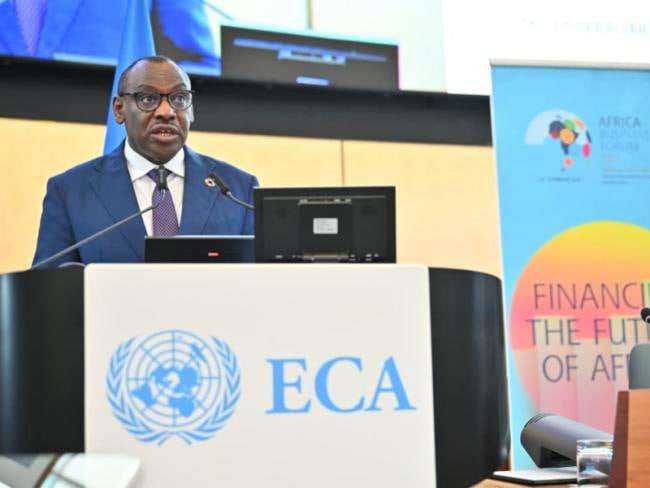
The urgent appeal was made at the opening of the 9th Africa Business Forum 2026, held at the UN Conference Center in Addis Ababa, Ethiopia, where delegates warned that the world can no longer afford to overlook Africa’s role in global stability.
Convened under the theme “Financing the Future of Africa: Jobs, Innovation and Creative Capital,” the flagship forum is a joint initiative of the UN Economic Commission for Africa (UNECA) and the African Union (AU). This year’s gathering is specifically focused on fostering partnerships and leveraging blended finance to advance the “youth economy” amidst a period of profound global uncertainty.
Addressing the forum, Ethiopian President Taye Atske Selassie emphasized the critical importance of harnessing the potential of Africa’s youth. Citing the AU’s 50-year “Agenda 2063” development blueprint, he noted that while over 70 percent of the continent is under the age of 30, a significant gap remains between population growth and economic opportunity.
President Taye revealed that while 362 million young people entered the working-age population this decade, the current market has only provided jobs for 161 million. This demographic reality, he argued, can only become a strength if innovation is successfully turned into scalable enterprises.
UNECA Executive Secretary Claver Gatete echoed this sentiment, highlighting a startling disconnect in African finance. Despite a massive infrastructure gap and the loss of billions annually to illicit financial flows, Gatete pointed out that the continent holds over $1.1 trillion in domestic institutional capital through pension funds, insurance pools, and sovereign assets. He characterized the current challenge not as a lack of capital, but as a lack of mechanisms to connect that capital to viable, bankable projects.
To bridge this gap, Gatete proposed a roadmap for collective action focused on scaling domestic capital through digitized tax systems and innovative financing. He further called for the strengthening of African credit ratings and capital markets to lower borrowing costs, alongside the full implementation of the African Continental Free Trade Area (AfCFTA) to unlock regional value chains. Finally, he stressed the necessity of decisive investment in STEM education and data systems to ensure African youth can participate competitively in the industries of the future.
The forum concluded that Africa’s transformation is a global economic necessity rather than just a regional goal. As supply chains reorganize and green energy demands rise, experts at the summit noted that Africa—possessing the world’s largest emerging workforce and essential critical minerals—will determine the future structure of the global economy.
Gatete warned that the international community must choose to build industrial value chains with Africa or face the global migration pressures and supply disruptions that would follow without it.



