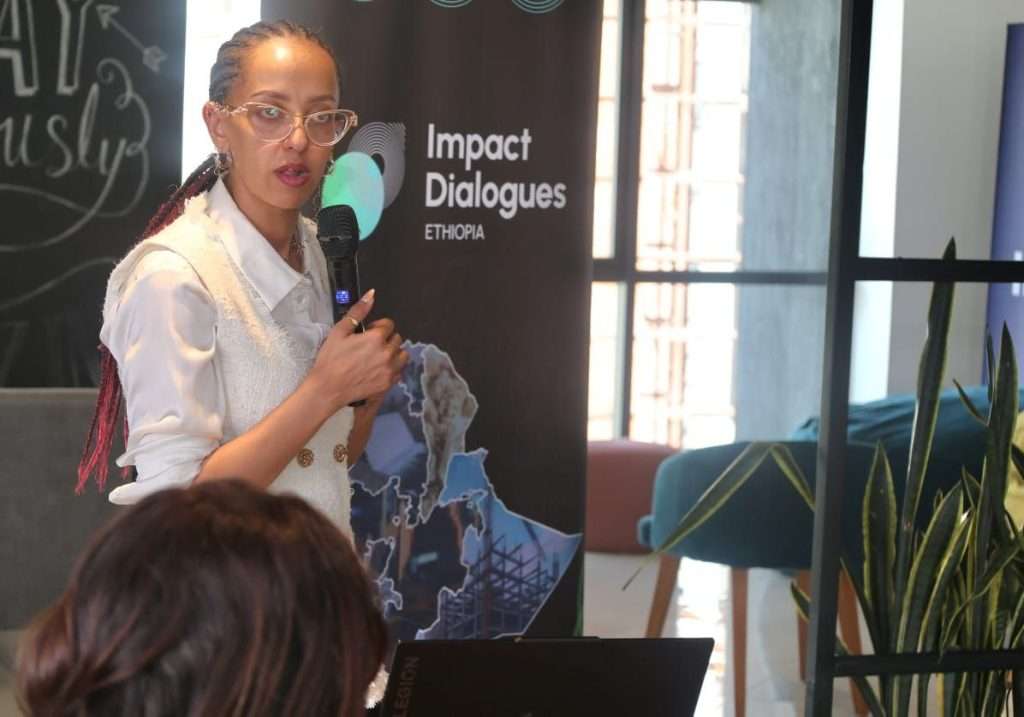
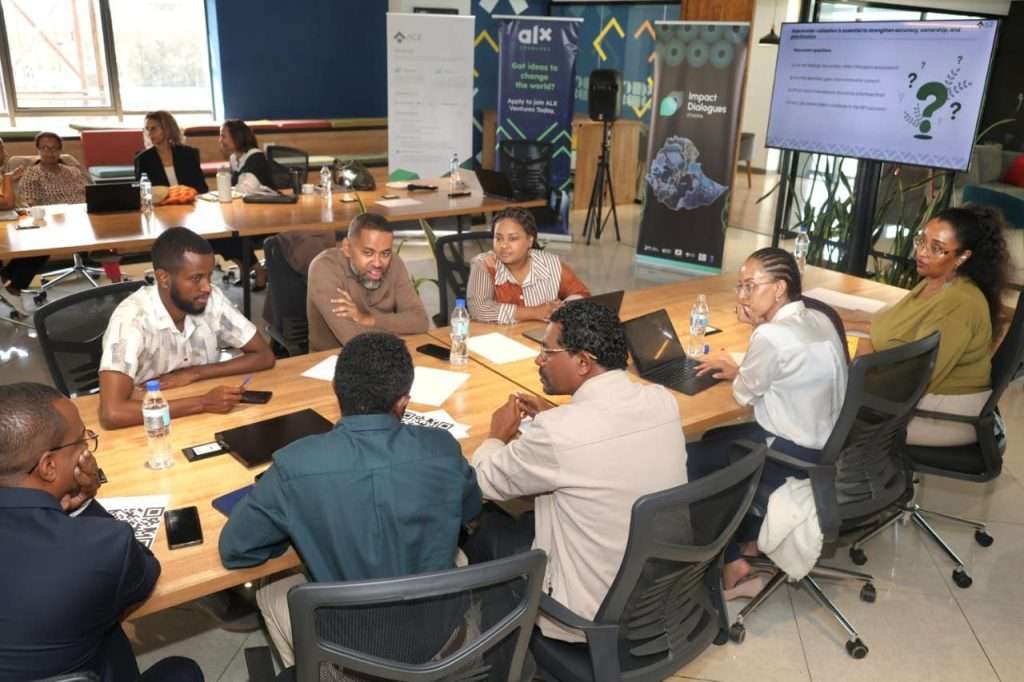
Experts identified the “missing middle” as a primary concern SMEs that are too large for microfinance but lack the collateral required by traditional banks.
Ethiopia Today (Addis Ababa) February 18,2026:- The Ethiopia Impact Investing Landscape Mapping Report, a thorough roadmap intended to turn the country into a frontier market for mission-driven capital, was unveiled today in a meeting attended by stakeholders and financial experts.
The report, presented by ACE Advisors in collaboration with ALX Ethiopia, arrives at a critical juncture as the country faces a $608 billion SDG financing gap.
The mapping study benchmarks Ethiopia against regional peers like Kenya and Rwanda, identifying the country as a high-potential “frontier impact market.” says ACE Investment and Impact Advisor Ms Nasreen N. Adem, manager and Co- founder.
The report highlights a “paradox of capital”, while Ethiopia holds over $1.1 trillion in domestic institutional assets, including pension funds and insurance pools, However, structural barriers prevent this wealth from reaching “bankable” projects.
Experts identified the “missing middle” as a primary concern—SMEs that are too large for microfinance but lack the collateral required by traditional banks.
The landscape mapping analyzed the ecosystem across five critical dimensions, revealing both deep-seated constraints and emerging opportunities.
A landmark diagnostic report on Ethiopia’s economic landscape has called for a systemic overhaul of the nation’s financial architecture, identifying five critical pillars that currently hinder sustainable growth.
At the forefront of these challenges is a staggering $4.2 billion credit shortfall for Small and Medium Enterprises (SMEs), a gap that is particularly acute for women-led businesses, which account for $1.9 billion of that deficit. While the banking sector remains the dominant source of capital, its highly collateralized nature often excludes innovative startups. To address this, the report advocates for a strategic shift toward “patient capital” and the use of blended finance to de-risk high-impact investments.
The report further highlights a profound “coordination deficit” among market intermediaries, noting that a lack of standardized metrics and financial structuring expertise frequently prevents investors from connecting with viable entrepreneurs. This fragmentation is echoed in the ecosystem’s geography; support systems are currently concentrated in Addis Ababa, leaving regional entrepreneurs in secondary cities significantly underserved. However, a pivot is underway at the policy level as the Ethiopian government transitions from a traditional regulator to a “market facilitator.”
By operationalizing new legal forms for impact-driven enterprises and developing a sustainable finance taxonomy, the state aims to create a transparent environment capable of attracting global mission-driven capital.
The task force aims to establish a formal coordination platform and launch a National Digital Impact Dealroom—a centralized platform to showcase investment-ready enterprises with verified impact data. There is also an urgent call to finalize the legal recognition of social enterprises to provide regulatory clarity for founders.
“The question is not whether the potential exists rather how quickly we can build the mechanisms to connect our domestic wealth and international interest to the innovators who will build Ethiopia’s future.” adds the manager.
The workshop serves as a final validation step before the official application to join the GSG Impact global network as a National Partner.