By:- Dawit Astatike
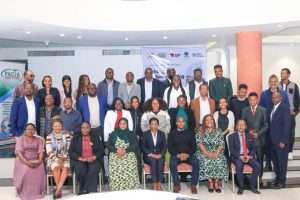
Addis Ababa (Ethiopia Today) December 2, 2024: The Forest Stewardship Council™ (FSC™) launched the Interim Forest Stewardship Standard (IFSS) for Ethiopia at the Sheraton Hotel in Addis Ababa. The standard is poised to strengthen Ethiopia’s forestry sector, provide access to niche global markets for certified forest products, and increase the value of verified ecosystem services impact (Verified Impact), especially carbon, water, biodiversity, recreation, and culture.
The new FSC IFSS for Ethiopia promotes responsible forest management through FSC certification and would strengthen the conservation of Ethiopia’s rich biodiversity. By conforming with the standard’s requirements, smallholders and communities can increase the benefits they generate from the forest resources they manage.
“For Ethiopia, this standard is more than a certification—it is a commitment to our shared future,” said Meseret Shiferaw, Certification Officer for FSC in Ethiopia. “With this milestone, Ethiopia is setting the stage to protect its precious resources while empowering communities and strengthening our economy. As our forests earn a place on the world stage, they bring with them stories of resilience, stewardship, and respect for nature’s bounty.”
FSC certification is a core steppingstone to align with the European Union (EU) Regulation on Deforestation-free Products (EUDR), a legislation requiring companies to ensure their products are not linked to deforestation and forest degradation. This alignment, once applied by Ethiopian stakeholders using the FSC certification system allows their forest products including bamboo to compete on the growing market for sustainably sourced forest goods and other Non- Timber Forest Products (NTFPs) such as coffee, honey, and spices.
“The FSC-standard has a broader approach to address the gaps in social, economic, ecological, and environmental aspects in a participatory manner so that all the stakeholders would benefit at the end of the day,” said Dr. Yirgadu Mulatu, Senior Research Scientist, Ethiopian Forestry Development (EFD).
The Ethiopian Forestry Development (EFD) is an autonomous federal institution, established by the federal government of Ethiopia council of ministers. EFD was resulted by merging (the Ethiopian Environment and Forest Research Institute (EEFRI) and the Forestry sector from the then Environment, Forest and climate change commission).
The Forest Stewardship Council™ (FSC™) launched the Interim Forest Stewardship Standard (IFSS) for Ethiopia at the Sheraton Hotel in Addis Ababa. The standard is poised to strengthen Ethiopia’s forestry sector and provide access to niche global markets for certified forest products and increase the value of verified ecosystem services impact (Verified Impact) especially carbon, water, biodiversity, recreation, and culture.
The new FSC IFSS for Ethiopia, promotes responsible forest management through FSC certification and would strengthen the conservation of Ethiopia’s rich biodiversity. By conforming with the standard’s requirements, smallholders and communities can increase the benefits they generate from the forest resources they manage.
“For Ethiopia, this standard is more than a certification—it is a commitment to our shared future,” said Meseret Shiferaw, Certification Officer for FSC in Ethiopia. “With this milestone, Ethiopia is setting the stage to protect its precious resources while empowering communities and strengthening our economy. As our forests earn a place on the world stage, they bring with them stories of resilience, stewardship, and respect for nature’s bounty.”
FSC certification is a core steppingstone to align with the European Union (EU) Regulation on Deforestation-free Products (EUDR), a legislation requiring companies to ensure their products are not linked to deforestation and forest degradation. This alignment, once applied by Ethiopian stakeholders using the FSC certification system allows their forest products including bamboo to compete on the growing market for sustainably sourced forest goods and other Non- Timber Forest Products (NTFPs) such as coffee, honey, and spices.
“The FSC-standard has a broader approach to address the gaps in social, economic, ecological, and environmental aspects in a participatory manner so that all the stakeholders would benefit at the end of the day,” said Dr. Yirgadu Mulatu, Senior Research Scientist, Ethiopian Forestry Development (EFD).
The Ethiopian Forestry Development (EFD) is an autonomous federal institution, established by the federal government of Ethiopia council of ministers. EFD was resulted by merging (the Ethiopian Environment and Forest Research Institute (EEFRI) and the Forestry sector from the then Environment, Forest and climate change commission).