Ethiopia Today (Addis Ababa), March 22, 2026: In a bold move toward energy sovereignty and environmental stewardship, Ethiopia is pivoting its transport sector toward Natural Gas (NG) while revealing its massive role as a global “carbon sink,” according to high-level government authorities.
From Petroleum to Gas: A New Era for Public Transport
The Petroleum and Energy Authority has announced a strategic shift to convert city bus engines from liquid fuel to Natural Gas. This initiative aims to alleviate the persistent fuel shortages and reduce the heavy economic burden of petroleum imports.
Dr. Destaw Mebratu, Director General of the Petroleum and Energy Authority, says the success of electric vehicles in reducing gas station queues in Addis Ababa has paved the way for this next phase.
“Converting city buses to natural gas will provide significant relief to the transport sector. Our goal is to ensure that key economic pillars—such as cement factories, export industries, and corridor development projects—never grind to a halt due to fuel shortages.” — Dr. Destaw Mebratu
Key Infrastructure Highlights:
New Filling Stations: Gas stations are set to begin operations soon in Kaliti, Adama, and Dire Dawa.
Energy Independence: A domestic fuel refinery is expected to be completed in three and a half years, aiming to cover 80% of local demand.
Massive Demand: To illustrate the scale of the challenge, Dr. Destaw noted that the construction of the new Bishoftu Airport alone requires 15.8 million liters of fuel per month.
Ethiopia’s Forests: The World’s “Green Lungs”
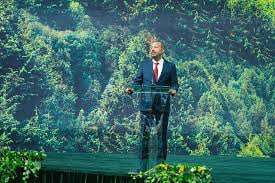
As the world marks International Forest Day (March 21), the Ethiopian Forestry Development (EFD) revealed that the nation’s forests are currently shielding the planet from a climate catastrophe by storing 2.7 billion tons of carbon.
Dr. Kebede Yimam, Director General of EFD, highlighted that without these forests, approximately 10 billion tons of Carbon Dioxide (CO2) would have been released into the atmosphere.
“Ethiopia’s forests absorb about 20% of the 50 billion tons of carbon dioxide released globally each year. We are now working to enter the international carbon market to sell these carbon credits.” Dr. Kebede Yimam
The Impact of the “Green Legacy” Initiative:
Forest Cover: Ethiopia’s forest coverage has surged from 17.3% to 23.6%.
Seedling Success: Over 40 billion seedlings have been planted, reviving dried lakes and degraded lands.
Deforestation Drop: Annual deforestation rates have plummeted from 92,000 hectares to 27,000 hectares.
Economic Backbone: Forestry contributes significantly to the GDP, with 28% to 47% of the population deriving direct income from forest resources.
Urban Transformation
In the capital, the Corridor Development Project, alongside the Enoto and Friendship Parks, has fundamentally increased Addis Ababa’s green canopy. These efforts are not just aesthetic; they are part of a calculated strategy to mitigate urban heat and pollution.
Authorities concluded with a stern call to action, urging the public to report illegal fuel smuggling. The government reiterated its commitment to using technology and administrative measures to protect subsidized resources and ensure that Ethiopia remains a leader in the global green economy.