By: Our Staff reporter
Addis Ababa (Ethiopia Today), June 23, 2026: The Ethiopian Institute of Agricultural Research (EIAR) partnered with the Ethiopian Artificial Intelligence Institute (EAII) and GPS PLC to launch pilot artificial intelligence (AI) systems for the poultry, dairy, and enset sectors, aimed at modernizing the nation’s agricultural productivity and food security.
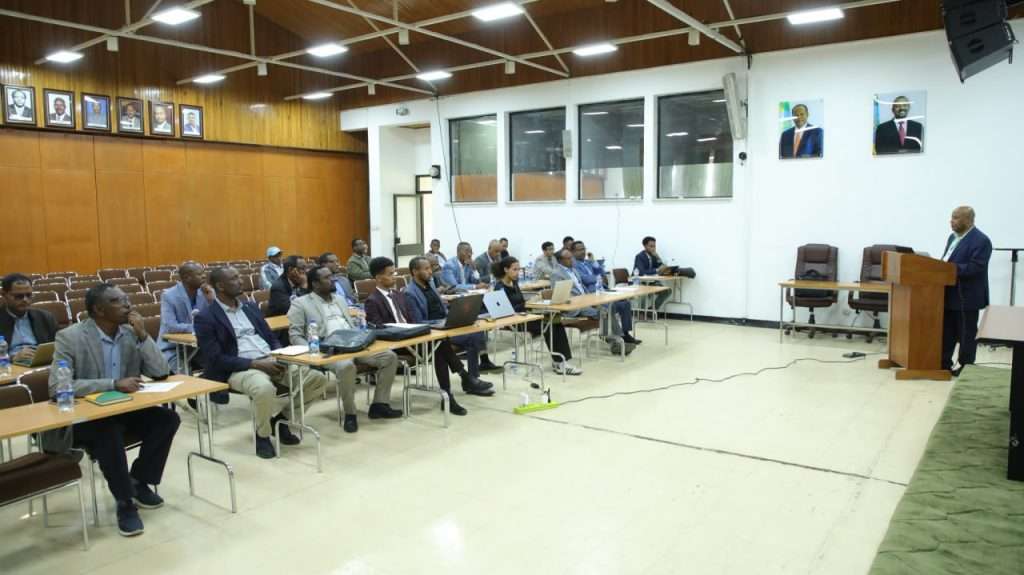
As climate change and pests threaten East African food security, the seminar convened top researchers, agricultural professionals, and technology specialists to explore how machine learning and advanced data systems can optimize disease monitoring, resource management, and productivity.
The seminar highlighted several active pilot projects demonstrating that AI is no longer a futuristic concept for Ethiopian agriculture but a current research tool. Experts shared empirical data and practical deployment strategies from the Holeta Agricultural Research Center (HARC), focusing on three vital sectors.
Regarding poultry health and stress detection, researchers Fitsum M. and Ararsa B. presented pioneering work on AI-based chicken growth monitoring and behavioral stress detection.
Concurrently, a joint project developed by Abel W. from the EAII and Beksisa U. from the EIAR demonstrated how AI-driven models can detect Newcastle disease early, offering an essential digital shield for automated poultry health management.
In the area of enset disease surveillance, where the crucial staple crop for millions of Ethiopians is heavily threatened by bacterial wilt, Abel W. from the EAII presented an innovative solution. This AI-based early detection system is designed to dramatically improve disease surveillance and mitigate catastrophic crop losses before they have a chance to spread across agricultural regions.
Finally, focusing on infrastructure building, a case study presented by Betelhem from GPS PLC outlined the operational lessons learned from establishing the foundational systems at the Holetta center. This project highlights the critical steps required to build and sustain the robust AI infrastructure necessary to run these highly intensive data models in the field.
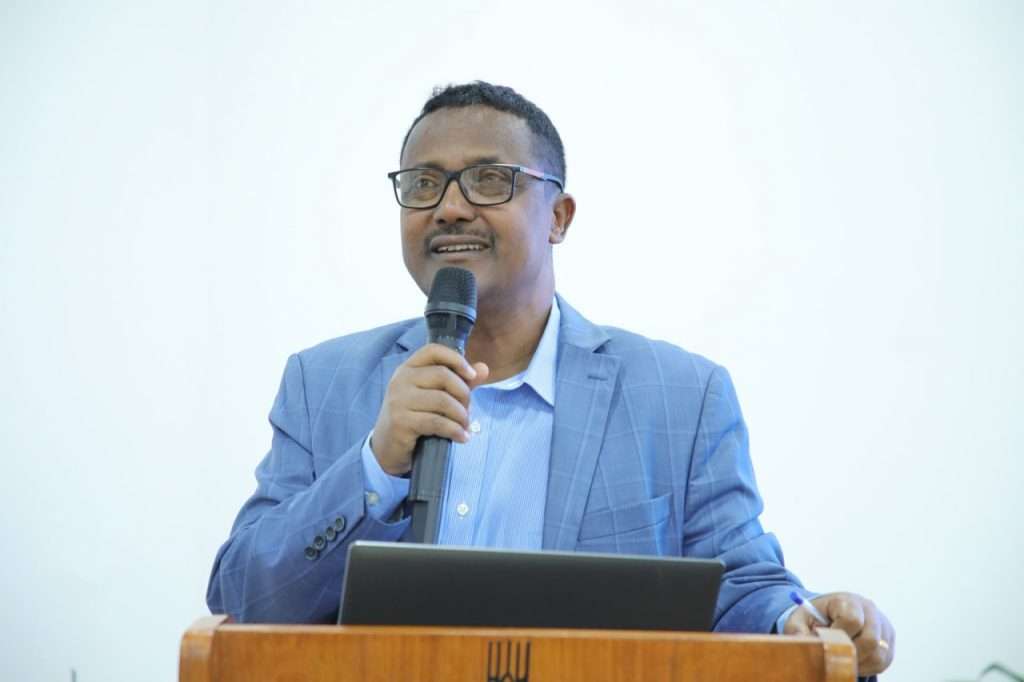
AI-based solutions are serving as an engine of macroeconomic development and have dynamically changed the metrics of total factor productivity in nations like Brazil, China, and India. Agriculture is the primary user of these innovations. “ said Prof. Nigussie Dechassa, Director General of EIAR
According to Dr. Mekuria Tadesse, head of RSCO/EIAR, the ultimate objective of these pilots is to establish scalable, actionable pathways that transition AI from isolated laboratory experiments into mainstream public-private partnerships.
EIAR Director General, Professor Nigussie Dechassa, noted that this technological push aligns directly with a clear directive from the Ethiopian government, which has already backed its policy commitment with heavy investments, including the establishment of a dedicated AI university. However, officials acknowledged that scaling these technologies nationwide requires more than just software.
Prof. Dechassa emphasized that for AI to truly revolutionize Ethiopian agriculture, the country must aggressively commit to physical infrastructure investment, empower the national agricultural research system, cultivate local tech talent, and adjust legacy institutional structures to accommodate fast-moving digital innovations.