By: Our Staff Reporter
Ethiopia Today (Addis Ababa) April 27, 2026: Ethiopia is officially going green. In a game-changing move for East African finance, the National Bank of Ethiopia (NBE) and the European Investment Bank (EIB) are preparing to roll out the country’s first National Green Taxonomy.
This sophisticated policy tool acts as a “green dictionary,” providing a common language to define which investments from solar irrigation to climate-smart transport truly qualify as sustainable.
By setting these national standards, Ethiopia aims to eliminate investment uncertainty, slash the risk of “greenwashing,” and position itself as a top-tier destination for global climate capital.
The initiative, funded by Germany and Luxembourg under the Greening the Financial Systems Programme, represents a shift from high-level talk to practical, multi-sectoral implementation.
Since the technical agreement was inked in May 2025, the focus has moved to building the capacity of local lenders to assess climate risks. Rather than simply denying loans to “risky” traditional farming projects, the taxonomy empowers banks to act as advisors, steering borrowers toward resilient alternatives like drought-resistant crops.
This approach doesn’t just protect the environment; it protects the banks’ bottom lines by ensuring borrowers can withstand the increasing pressures of a changing climate.
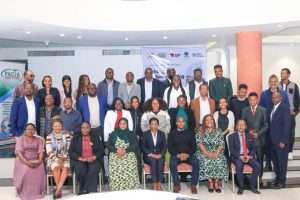
While the EIB has provided global experts who have shaped dozens of similar frameworks worldwide, officials emphasize that this is an Ethiopian-led journey. A diverse steering committee comprising government ministries, civil society, and private sector leaders is ensuring the taxonomy reflects local market realities and national priorities.
As the global market for green finance becomes increasingly crowded, Ethiopia’s new framework signals to international investors that the country is ready, transparent, and serious about aligning its future economic growth with environmental sustainability.