OPINION
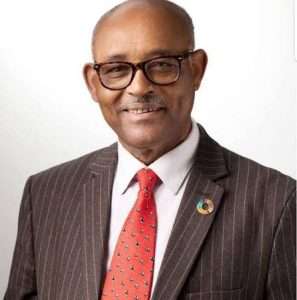
Kebour Ghenna
Why decentralizing power may be Ethiopia’s best hope for peace, democracy, and prosperity
Ethiopia has spent much of its modern history trying to answer the wrong question: Who should control the center?
Emperors, military rulers, and successive governments have offered different answers. Some promised unity, others revolution, democracy, ethnic self-determination, or prosperity. Yet the underlying political habit has remained remarkably consistent: concentrate power, command resources from above and expect society to obey.
What if Ethiopia’s problem is not simply who governs, but how much power government possesses over the people?
This is where the idea of positive anarchism deserves attention. Not anarchism as chaos or lawlessness, but as a philosophy that questions unnecessary authority and insists that individuals and communities should govern as much of their own lives as possible.
Its starting point is simple: People do not exist to serve the state. The state exists to serve people.
Ethiopia’s ethnic federalism recognizes the rights of Nations, Nationalities and Peoples. That recognition responded to genuine historical grievances. But it left a troubling question unanswered: what happens to the individual when the collective claims sovereignty?
Who speaks for an ethnic community? Its members, with their different opinions and aspirations? Or political organizations claiming to represent everyone?
An Oromo should be free to disagree with Oromo political leaders. An Amhara should not be obliged to support those claiming to defend Amhara interests. A Tigrayan should be able to reject the policies of Tigrayan authorities without being accused of betraying the community.
An ethnic identity is not a political instruction. A community is not a political party.
The individual belongs to a community, but does not belong to its leaders.
Ethiopia needs a political order that protects cultural identity without sacrificing individual liberty. Otherwise, collective rights risk becoming another instrument through which powerful people control less powerful people.
Why must everything pass through Addis Ababa? Centralization is one of Ethiopia’s oldest political problems.
From imperial times to the present, governments have struggled to control territory, taxation, security and public resources. Even when constitutions promise decentralization, authority has repeatedly gravitated toward the center.
Why?
Centralization certainly makes national coordination possible. But it also enables those controlling the state to collect resources from across the country and distribute them according to their own priorities.
That is where political power becomes economic power.
Control the government, and you influence public contracts, appointments, investment decisions, development budgets and access to opportunity. Losing power consequently becomes terrifying, while capturing it becomes enormously attractive.
Is it surprising that Ethiopia’s political competition so frequently turns into confrontation?
The solution is not to abolish the federal government. Ethiopia needs national institutions for defense, monetary stability, constitutional protection, and major infrastructure.
But why should decisions about neighborhood schools, water systems, local markets, and community development depend so heavily on distant authorities?
The closer a decision can reasonably be made to the people affected by it, the stronger the case for making it there.
The Derg’s introduction of kebele structures contained an interesting possibility: bringing administration closer to communities. But in practice, kebeles also became instruments of surveillance and political control.
The lesson is important. Moving government offices closer to citizens is not the same as giving citizens power.
Real decentralization means elected local authorities, transparent budgets, independent community organizations, and the ability to remove officials who fail to serve the public.
Coming to Ethiopia’s wars, clearly they have different causes, including historical grievances, territorial disputes and legitimate security concerns. But many share a recurring feature: struggles over political authority and control of the state.
Military force may capture territory or defeat an opponent. It cannot manufacture political legitimacy.
Yet successive Ethiopian governments have repeatedly approached political disagreements as problems to be subdued rather than negotiated.
The concentration of power makes matters worse. When the center controls so much, political opponents have enormous incentives to fight for it.
If power were more widely distributed, there would be less power worth capturing through war.
This does not mean local autonomy would eliminate conflict. Local authorities can also discriminate against, intimidate, and abuse minorities. That is why decentralization must be accompanied by enforceable individual rights and independent courts.
But a country whose communities genuinely govern their local affairs may have fewer reasons to settle every national disagreement on the battlefield.
After nearly four years of consultations, Ethiopia’s National Dialogue Commission has brought its recommendations to the country’s political institutions.
That effort deserves serious consideration. But consultations, however extensive, are not the same as national agreement.
Did citizens meaningfully debate the continuing resort to war? The pursuit of sea access and its possible consequences? The balance between individual citizenship and ethnic sovereignty? The concentration of economic resources and political authority?
And what happens to those who disagreed, were unable to participate or believe the most important questions remain unanswered?
A national dialogue should not conclude that the nation has finished talking.
Democracy is not an agreement reached once. It is the freedom to continue disagreeing without fear.
The real achievement would be to create permanent opportunities for citizens to question government policy, challenge decisions, and propose alternatives. Otherwise, dialogue risks becoming another political ceremony: impressive participation, carefully prepared recommendations, and little change in the relationship between rulers and ruled.
A disturbing feature of Ethiopian political life is the distance between citizens and public authority.
Many people appear reluctant to engage with government because they doubt their opinions will influence decisions. Others fear the consequences of criticism. Still others are simply exhausted by politics that seems to change leaders without changing their lives.
The main question is why participate when the important decisions have already been made? The relationship between government and citizen has been turned upside down.
In a democracy, public officials should worry about losing the confidence of the people. Instead, citizens often worry about displeasing public officials.
This helps explain another peculiar feature of our politics: the apparent absence of credible leadership alternatives.
Ethiopia has hundreds of parliamentarians, ministers, regional officials, and experienced professionals. Yet where are the politicians openly presenting themselves as potential national leaders with different programs? Must the country’s political imagination revolve almost entirely around Prime Minister Abiy Ahmed?
A functioning political system should continuously produce alternative leaders. When ambition disappears from public view, it is worth asking whether the system encourages independent thinking at all.
A strong leader creates institutions that can function without him. A weak political system makes the country dependent on one person.
Political freedom means little to someone who cannot find employment, secure credit, establish a business, or obtain reliable public services.
Ethiopia possesses public resources, private capital, entrepreneurial talent, and strong traditions of community cooperation. Yet these resources are too often poorly connected.
Government collects taxes and finances infrastructure. Private businesses invest and produce. Communities organize savings, mutual assistance, and local activities through institutions such as EDIR and EQUB. Why not bring these capacities together more effectively?
Imagine local governments with transparent development budgets, working alongside businesses, cooperatives, and community organizations to establish productive enterprises, improve services, and create jobs.
Public capital could finance essential infrastructure. Private capital could support production and market development. Community organizations could identify priorities, mobilize participation, and monitor results.
This would require safeguards against corruption, favoritism, and the capture of public assets by politically connected interests.
The objective should be neither state domination nor the unchecked accumulation of private wealth. It should be to enlarge the economic independence of ordinary people.
The measure of development is not how much capital the government commands, but how much opportunity citizens gain from it.
Some Ethiopians who resist greater individual autonomy and local self-government make their arguments while living in the United States, France, or Australia, countries where they themselves enjoy freedoms and local institutions that they hesitate to endorse for Ethiopia.
The irony deserves reflection.
Why should freedoms considered normal abroad be regarded as dangerous at home?
Ethiopia’s unity need not depend on concentrating authority in Addis Ababa. Nor must respect for ethnic communities require obedience to ethnic political elites.
A stronger Ethiopia could emerge from a different arrangement: individuals secure in their rights, communities governing their local affairs, and a federal government powerful enough to perform its legitimate responsibilities but restrained from dominating society.
Positive anarchism offers no ready-made constitutional formula. Its contribution is more fundamental: it reminds us to question authority rather than automatically expand it.
For too long, Ethiopia has tried to build a strong state by making citizens subordinate. We have changed rulers, constitutions and political slogans without sufficiently changing that relationship.
Perhaps our next political ambition should not be another powerful leader, another grand national project or another promise of unity imposed from above.
Perhaps it should be something far more demanding: a government that listens, citizens who are unafraid, communities that govern themselves, and a country whose unity rests on consent rather than submission.
Ethiopia does not need another strongman. It needs strong citizens and a government that remembers who its masters are?
Editor’s Note: The opinion expressed in this article is that of the author and does not necessarily reflect the position of Ethiopia Today.