By: Our Staff Reporter
Ethiopia Today (Addis Ababa) May 03, 2026: Despite being responsible for less than four percent of global greenhouse gas emissions, Africa continues to face a disproportionate burden of climate change impacts while receiving only a fraction of the necessary financial support.
According to the United Nations Economic Commission for Africa (UNECA), the continent currently secures only 11 percent of the USD 277 billion required annually to meet its climate goals by 2030. This stark funding gap was a central focus of the seventh Africa Climate Talks, which convened this week to strategize for the upcoming COP31 in Türkiye and the landmark COP32, which Ethiopia is set to host in 2027.
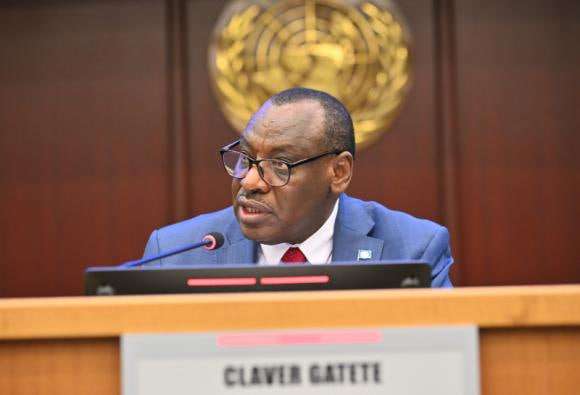
A Crisis of Credibility Claver Gatete, Executive Secretary of UNECA, issued a stern call to action, stating that COP32 must serve as a “turning point” for international climate diplomacy. He emphasized that the global community must move past empty promises and focus on “credible implementation.”
“COP32 will be a defining test of credibility,” Gatete remarked. “It is a test of whether Africa’s priorities will finally be matched with action at scale and whether trust in the multilateral system can be restored through actual delivery.”
The discussions highlighted the worsening climate reality in Africa, where erratic weather patterns, severe droughts, and rising sea levels are actively destabilizing public finances and food security. However, Gatete urged a shift in the global narrative, moving away from viewing Africa solely as a victim of climate change.
Claver Gatete urged a fundamental shift in the global narrative, arguing that defining Africa solely by its vulnerability overlooks its immense potential as a hub for global climate solutions. He highlighted that the continent possesses abundant renewable energy resources, rich biodiversity, and significant carbon sequestration capacity, all of which are vital for a green transition.
Furthermore, he pointed to Africa’s young and innovative population as a primary driver of green growth, suggesting that with the right support, these assets can fuel structural transformation and provide a roadmap for sustainable development worldwide.
The seventh Africa Climate Talks, attended by high-level officials such as Ethiopia’s Minister of Planning and Development, Fitsum Assefa, established five key pillars to guide the continent’s climate agenda leading up to COP32. This strategy prioritizes a shift toward implementation to ensure the conference moves beyond negotiations into concrete action, alongside a push for comprehensive finance reform to make climate funding more predictable, concessional, and accessible.
Central to this vision is the integration of climate adaptation into core development planning to safeguard infrastructure and economies, as well as the promotion of green industrialization to drive job creation and energy access.
Finally, the agenda emphasizes the importance of a unified voice to strengthen Africa’s collective influence and coherence within the global international negotiation framework.
As Africa prepares to host the world in 2027, the success of global climate goals depends on whether the world’s most vulnerable yet resourceful continent is given the tools and funding it needs to thrive in a warming world.