By: Our Staff Reporter
Addis Ababa (Ethiopia Today), August 17, 2026: Building on the successful transition of Addis Ababa University, the U.S. Embassy in Addis Ababa announced a $522,000 financial commitment to support nine additional public research universities in achieving institutional autonomy.
The primary focus of the announcement highlights the major strides taken by Addis Ababa University (AAU) and nine other public research institutions in transitioning away from direct state administrative control toward self-governing models.
Addressing delegates at the event, EAS President Professor Belay Kassa expressed deep gratitude to the academic stakeholders, government officials, and institutional leaders whose collaborative efforts drove the successful completion of the Autonomy 2.0 Project.
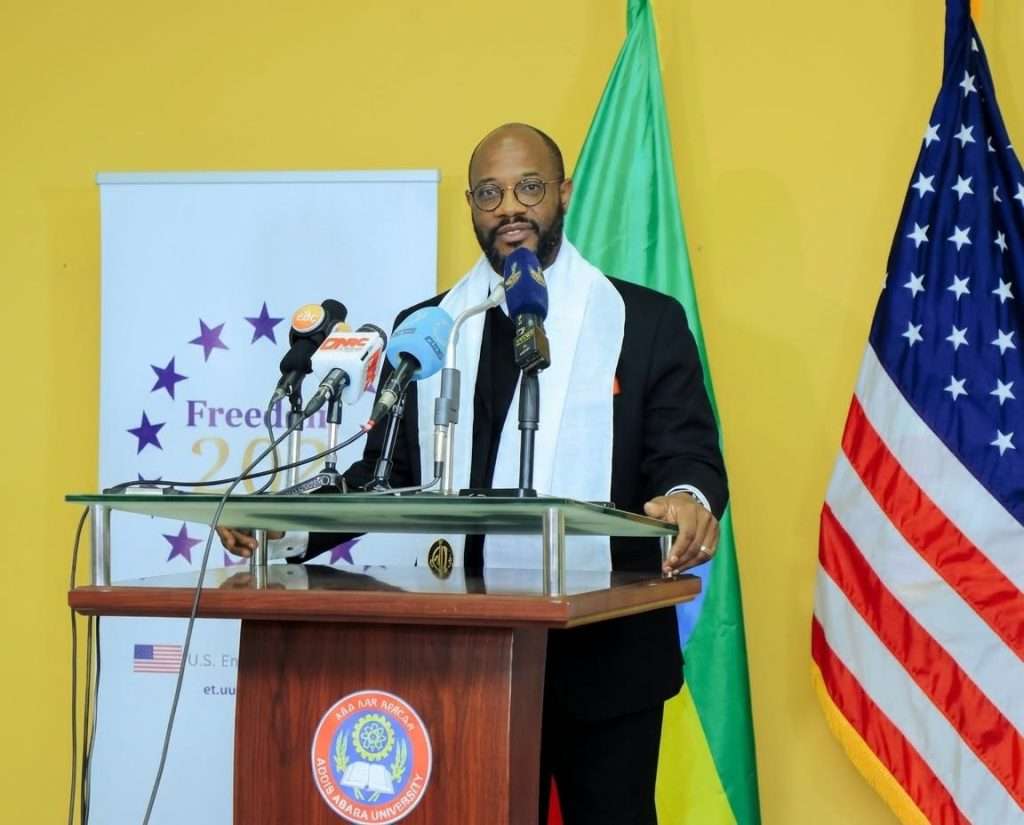
The international partnership driving the project, U.S. Ambassador to Ethiopia Ervin Massinga, announced that the U.S. Embassy has committed $552,000 in dedicated funding to help Ethiopian universities navigate this operational and governance shift.
Massinga recognized the collaborative work between technical specialists from the United States and Ethiopia, praising the leadership of the participating universities and the coordination between the Ethiopian Academy of Sciences (EAS) and the Ministry of Education.
Connecting the reform efforts to a broader historical narrative, EAS Founding Fellow and renowned historian Emeritus Professor Bahru Zewde reflected on the long-standing bilateral relationship between Ethiopia and the United States in higher education.
He underscored that the current push for university autonomy builds upon a legacy of educational partnership dating back to the 1950s, when foundational institutions such as Haramaya, Jimma, and Gondar universities were established under the U.S. Point Four Program.
He underscored that the current autonomy transition builds upon a 70-year legacy of academic exchange, capacity building, and institutional support that has shaped Ethiopia’s research infrastructure since the mid-twentieth century.