By: Our Staff Reporter
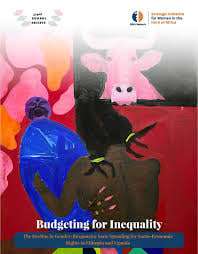
Ethiopia Today (Addis Ababa), May 28, 2026: A landmark research report released in May 2026 by the Strategic Initiative for Women in the Horn of Africa (SIHA) Network reveals that a severe decline in gender-responsive state funding is directly undermining the socio-economic rights of women and girls across Ethiopia.
Relying on extensive field interviews, focus groups, and institutional analysis, the comprehensive study exposes a major gap between the government’s progressive political rhetoric and its actual fiscal practice. The findings warn that state budget constraints, regional conflict, widespread gender-based violence (GBV), and a shrinking civic space for independent advocacy are collectively threatening to stall long-term developmental progress for the nation’s female population.
Ethiopia has achieved notable success in expanding its educational system over the past few decades. With education expenditure placed at 5.2% of its GDP, comprising 23.7% of total government spending, the nation is moving rapidly toward global benchmarks. Net enrollment in primary education jumped dramatically from 22% in 1996 to 86% in 2015.
However, this academic progress is directly compromised by critical deficiencies in safety and public health infrastructure
The sweeping educational progress across Ethiopia faces a severe crisis as safety and health vulnerabilities directly compromise the well-being of students. Alarmingly, the lifetime prevalence of gender-based violence (GBV) among female high school and college students stands at 63.8%, with 37.2% having endured sexual violence. Compounding this dangerous academic environment, a basic infrastructure deficit looms large; approximately 60 million citizens lack safe drinking water, and over 112 million live without basic sanitation facilities.
The shortages are exacerbated by acute funding bottlenecks within the government’s flagship One WASH National Program (OWNP), which directly degrades environmental health inside schools and leaves school-aged children highly vulnerable. Furthermore, critical preventative measures like Comprehensive Sexuality Education (CSE) a global policy proven to lower GBV rates, are kept segregated as an extracurricular activity completely dependent on foreign NGOs due to intense resistance from local actors who brand the curriculum an inappropriate imposition of Western values.
The study highlights that while the Ethiopian government excels at drafting well-written strategies, execution remains heavily under-resourced. At the sectoral level, most ministry gender directorates lack dedicated budgets or receive funds that are allocated inconsistently. In certain regions, the entire annual allocation is only enough to cover planned activities for a single day: International Women’s Day on March 8.
This systemic failure is mirrored in civil society. A review by the Union of Ethiopian Women and Children Association (UEWCA) found that nearly 75% of 30 surveyed local organizations failed to outline GRB as both an objective and an activity. This is compounded by a lack of public awareness; although budget hearings are technically open, public participation is low because citizens have become disillusioned by the persistent lack of institutional enforcement and accountability.
Protracted armed conflicts in regions like Oromia and Amhara have heavily reversed developmental progress, forcing school closures that push young girls into early or forced marriages. When crisis dominates the national agenda, long-term advocacy for women’s rights is sidelined as a “luxury” by stakeholders who claim “now is not the time.” Media programming for women and children is similarly deprioritized and rescheduled in favor of breaking news.
The regulatory landscape for independent advocacy in the country has constricted severely, marked by massive civil society closures and escalating state pressure. The Ethiopian Authority for Civil Society Organisations shut down at least 1,504 CSOs for failing to submit their annual reports, a violation that the vast majority of these grassroots organizations blamed on a complete lack of operational funds required to handle the heavy administrative work of compiling such documents. Alongside these structural shutdowns, independent human rights defenders are facing a wave of direct intimidation and suspensions; prominent organizations—including the Ethiopian Human Rights Council (EHRCO), the nation’s oldest independent human rights group—have been subjected to targeted suspension notices, threats, and harassment from security and intelligence forces.
Simultaneously, the regulatory space for independent human rights defenders has tightened severely:
Economic disparities remain deeply entrenched. While women face higher unemployment rates, they occupy only 36% of domestic job opportunities. Furthermore, despite Ethiopia having 25 million people living with disabilities, they occupy less than 1% of formal training or job slots because Technical and Vocational Education and Training (TVET) institutions lack accessible infrastructure and trained personnel.
To move forward, the report notes that the Minister of Finance recently emphasized the need to elevate the legal framework addressing gender-based violence from a mere “directive or guideline” into a formal, legally binding state proclamation. Without shifting state priorities away from economic and military logic toward genuine human security, and without mandating the collection of gender-disaggregated data, closing these structural gaps will remain out of reach.