By: Our Staff Reporter
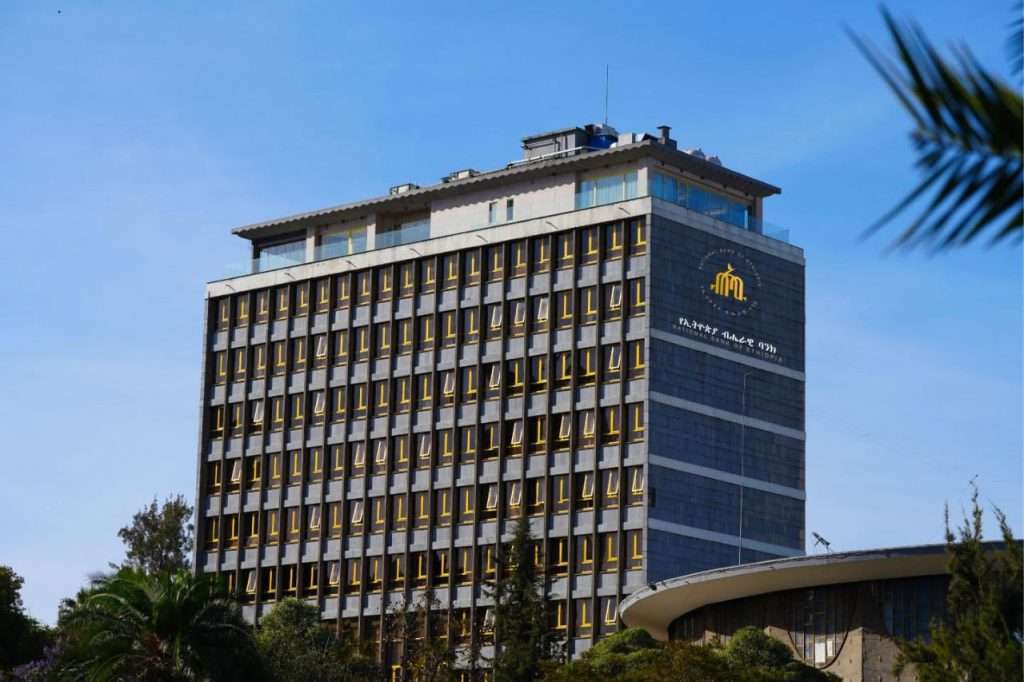
Addis Ababa (Ethiopia Today), July 13, 2026: The central bank has introduced sweeping measures to enhance market liquidity and competitiveness, including cutting foreign exchange (FX) surrender requirements and reducing transaction commissions.
Following its 7th regular meeting, the National Bank of Ethiopia’s Monetary Policy Committee has unveiled major macroeconomic adjustments to navigate a complex landscape of surging domestic growth and renewed inflationary pressures.
The central bank has lifted the blanket annual credit growth cap on commercial banks.
To prevent unchecked credit expansion from fueling inflation, the NBE will now implement a targeted reserve requirement based on regular assessments of individual banks’ loan-to-deposit ratios.
To boost export competitiveness and deepen market confidence, the Board approved a significant reduction in the foreign exchange surrender requirement on goods exports, cutting it from 50% down to 30%.
To contain inflationary pass-through and trim import-related expenses, the NBE’s own FX commission rate has been reduced by one percentage point, dropping from 2.5% to 1.5%.
The committee noted that while the historic July 2024 macroeconomic reforms successfully dragged headline inflation down to a single-digit low of 9.7% by December 2025, geopolitical factors have reversed some gains.
Following conflicts in the Middle East that disrupted fuel supplies, headline inflation rebounded into double digits, reaching 13.4% in May 2026. This uptick was driven heavily by spikes in both food (15.0%) and non-food inflation (11.1%) due to soaring transportation costs.
Although inflation is projected to moderate by December 2026, the NBE expects it to hover in the double digits over the next six months.
On a brighter note, Ethiopia’s real economy continues to exhibit robust growth momentum. Following a strong 9.2% real GDP growth rate in FY 2024/25, the economy is projected to expand by an impressive 10.2% in FY 2025/26.
This expansion is heavily anchored by vibrant manufacturing activity, particularly cement production, electricity generation, and iron & steel output, alongside a booming services sector driven by tourist inflows and aviation transport.
The NBE reported that the banking sector has maintained strong resilience, marked by healthy capital buffers and encouraging asset quality. Furthermore, the government’s fiscal discipline has significantly advanced the broader reform agenda.
By refraining from direct central bank advances, the overall budget deficit-to-GDP ratio dropped to just 0.9% during the first ten months of FY 2025/26, down sharply from 2.1% in the pre-reform period of FY 2023/24.
The MPC is scheduled to reconvene at the end of September 2026 to assess the impact of these adjustments and review near-term economic trends.
Financial expert Abdulmenan Mohammed (PhD) appreciated the National Bank of Ethiopia’s decision to lift the credit ceiling as a positive step but warned that effectively utilizing the policy rate requires managing the base money expanding from gold purchases, calculating the equilibrium interest rate as an anchor, and carefully navigating the significant risk of model uncertainty caused by widely divergent results from different methodologies.