
By: Dawit Astatike
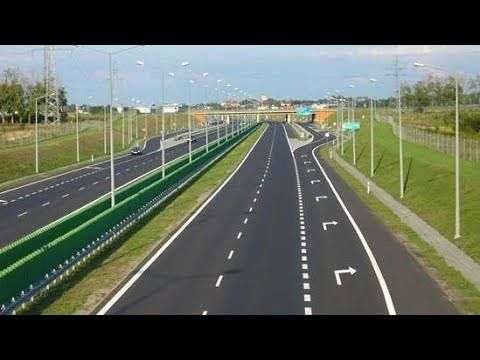
Ethiopia Today(Addis Ababa) October 29, 2025:The 202-km Modjo-Hawassa Expressway – Ethiopia’s second major toll road and first internationally-standard expressway – is advancing toward completion, with the World Bank-funded Batu-Arsi Negele segment now 95% complete and scheduled to become operational by April 2026.
According to Addishiwot Tadesse, Project Manager for the Modjo-Hawassa Expressway at the Ethiopian Roads Administration, the third of four lots is in its final phase, requiring only the installation of intelligent transport systems, toll stations, and traffic signaling to become fully operational.
The expressway comprises four distinct segments with varied international financing. The project represents a total investment of 17.1 billion birr across all lots: Lot 1 (Modjo-Meki) at 4.2 billion birr financed by the African Development Bank; Lot 2 (Meki-Batu) at 2.2 billion birr supported by the Korean Exim Bank; Lot 3 (Batu-Arsi Negele) at 5.3 billion birr fully funded by a $295 million World Bank commitment; and Lot 4 (Arsi Negele-Hawassa) at 5.4 billion birr currently facing funding challenges.

“The first three sections have demonstrated steady progress, but the Arsi Negele-Hawassa segment faces challenges due to financing constraints,” explained Addishiwot. “The contractor cannot proceed primarily using Ethiopian currency alone, and critical asphalt work remains outstanding.” The final segment, valued at 5.4 billion birr, has seen China Exim Bank withhold approximately $70 million in funding over the past four to five years.
Ministry of Finance is currently engaged in negotiations to secure the necessary funding and ensure the corridor’s completion.
Upon full operational status, the Modjo-Hawassa Expressway is expected to reduce travel time between Modjo and Hawassa from five to three hours while cutting vehicle operating costs by 15–20%, significantly enhancing Ethiopia’s regional trade and logistics capacity. The highway forms a crucial segment of the Cairo–Cape Town Trans-African Highway, supporting the African Continental Free Trade Area (AfCFTA) objectives by improving cross-border connectivity and supply chain efficiency.
The expressway will serve over 1.5 million people, providing improved access to industrial zones including the Hawassa Industrial Park, while incorporating climate-resilient features such as wildlife crossings and electronic tolling systems to ensure sustainable infrastructure development.



