By:- Dawit Astatike
Regional dialogues spotlight issues in modern conflict reporting
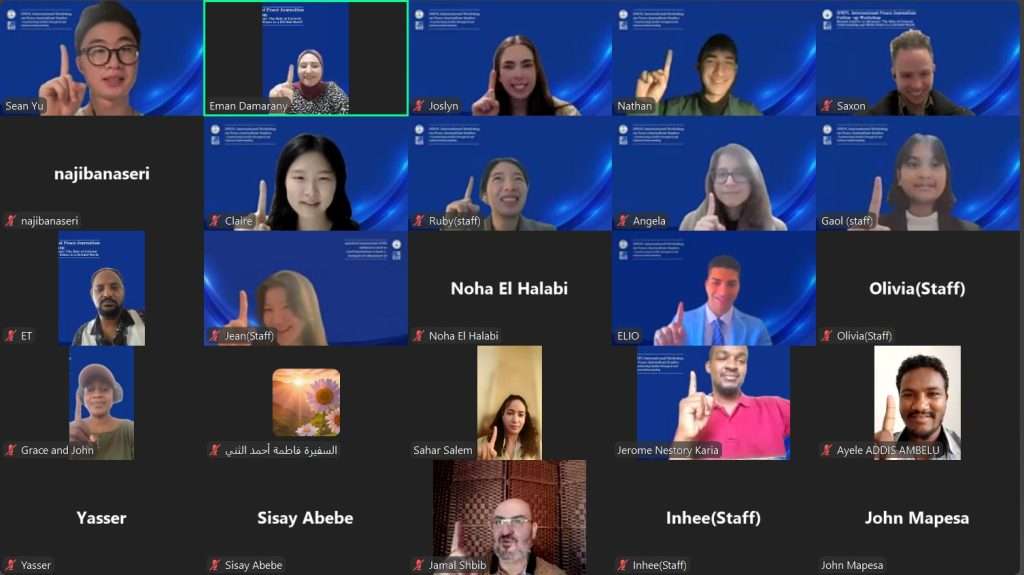
Ethiopia Today (Addis Ababa), July 14, 2025:— On July 19, the international peace group HWPL hosted the “International Peace Journalism Follow-up Workshop” online, drawing 44 participants from 14 countries, including journalists, legal experts, youth leaders, educators, and religious figures.
The workshop served as a regional continuation of HWPL’s global media forum held on April 17, and aimed
to deepen discussions on ethical journalism, peace promotion, and responsible media
practices across conflict-affected regions.
HWPL’s Peace Journalism aims to foster responsible reporting that promotes dialogue,
understanding, and conflict resolution. It encourages journalists to move beyond
sensationalism and highlight peace-building efforts. Through education and global
collaboration, HWPL supports a more ethical media landscape.
The workshop included a summary of HWPL’s first-half activities and a review of the April
forum outcomes. Participants joined breakout sessions by region—Middle East, Africa, and
Oceania—where they discussed two key questions: how social media impacts peace or fuels
conflict in their countries, and whether journalists have witnessed or contributed to peaceful
transformation through reporting.
In the Middle East session, participants from Egypt, Palestine, Syria, and Jordan shared field
experiences and discussed restrictions on press freedom, misinformation, and interreligious
narratives. Ibrahim Zrary, Zoroastrian Seminary in Iraq and Syria, stated: “Social media
today often misleads people through the rapid spread of rumors. Rather than serving as a tool
for understanding and learning, it’s increasingly used for entertainment, mocking others,
spreading hate, and undermining different beliefs. This misuse stems largely from a lack of
education, empathy, and awareness. We all agreed that this needs to change and that
promoting more respectful and mindful use of these platforms is essential.”
In the Africa session, participants examined how national broadcasters and independent
outlets navigate political sensitivities and ethnic tensions. “In Ethiopia, media is sometimes
used to incite political propaganda, extremism, or ethnic conflicts. However, on the flip side,
there are clear efforts to promote peace,” Ayele Addis Ambelu Ethiopian News and Program
Director pointed out. “Our journalists are actively utilizing SNS to foster national unity and
tolerance. We strive to showcase media’s positive role in peace.”
In the Oceania session, journalists from Australia emphasized issues related to multicultural
communities, misinformation in diaspora groups, and editorial independence. Najiba Naseri,
Reporter, ARTV News Australia commented “peace journalism can transform conflict into
justice and harmony. HWPL’s peace journalism has been crucial in guiding us to the right
path.”
HWPL shared its plan to explore co-publication opportunities through regional collaboration.
It announced follow-up discussions in written format, focusing on journalism issues specific
to each region. These will cover topics such as censorship and conflict reporting in the
Middle East, internet access and media’s mediating role in Africa, and coverage of
multicultural communities in Oceania.