
By: Our Staff Reporter
Addis Ababa (Ethiopia Today) June 8, 2026: The International Monetary Fund (IMF) plans to fast-track the release of approximately $200 million to Ethiopia in abid to support the country in buffering its economy against heavy financial strains triggered by the ongoing conflict involving the United States, Israel, and Iran.
The front-loaded cash is part of an expanded $468 million payout package attached to the fifth review of Ethiopia’s four-year Extended Credit Facility (ECF) program.
The Washington D.C.-based lender originally budgeted around $260 million for this specific review installment, but moving the additional $200 million forward to this calendar year directly responds to severe shocks hitting the country’s energy supply lines.
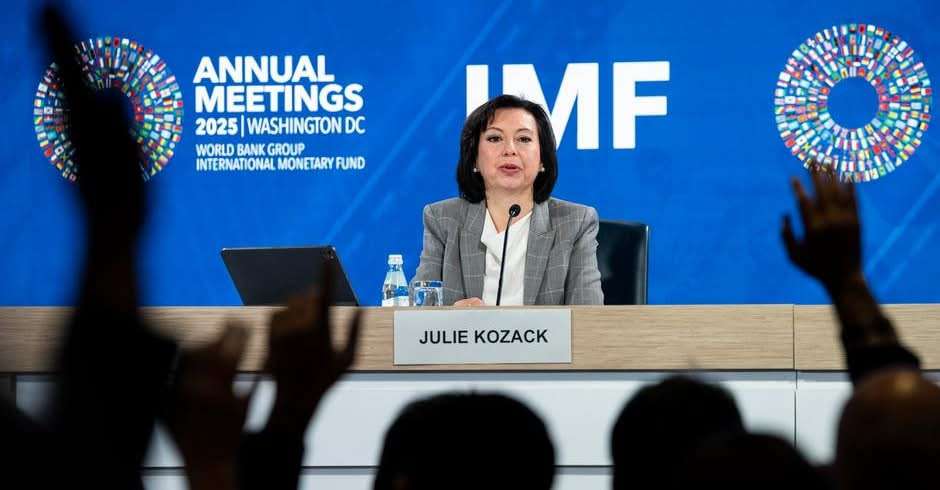
“We will be presenting a proposal to our Executive Board to rephase the disbursements under the program,” IMF Spokesperson Julie Kozack announced last week. “The recommendation aims to bring forward about $200 million this year to help the country cope with the spillovers from the war in the Middle East.”
The Ethiopian government requested the emergency timeline shift after admitting its national budget has taken an “extremely heavy hit” from soaring global oil and fertilizer prices.
While Ethiopia has committed to a phased elimination of fuel and fertilizer subsidies as part of its structural economic reforms, the sudden price spikes outpaced the government’s timeline.
According to the IMF’s fourth review documents, the government had set a strict expenditure ceiling on fuel subsidies at 100 billion Birr (roughly 0.6% of GDP) for the current fiscal year ending in July 2026.
However, severe local fuel shortages and soaring import costs disrupted those projections. Minister of Finance Ahmed Shide recently revealed that the price shock forced the government to inject an unexpected 20 billion Birr monthly in additional fuel subsidies, pushing the state’s total cumulative subsidy burden past 300 billion Birr. While acknowledging the resulting economic pressures and diesel shortages felt by ordinary citizens, Shide stressed that the fiscal intervention was vital to protect vulnerable populations.
The current ECF program was initiated in July 2016 following Ethiopia’s historic decision to float the Birr and transition to a competitive, market-determined foreign exchange system.
| IMF Executive Board Review Milestone | Release Date | Disbursement Amount |
|---|---|---|
| Initial Program Approval | July 28, 2024 | $1 Billion |
| First Review | October 2025 | $340.7 Million |
| Second Review | January 2025 | $248 Million |
| Third Review | June 2025 | $262.3 Million |
| Fourth Review | January 2026 | $261 Million |
| Fifth Review (Staff-Level Agreement) | May 2026 | $468 Million (Expected) |
Source: International Monetary Fund (IMF)
If the Executive Board ratifies the latest staff-level agreement reached in Addis Ababa following an IMF mission from April 28 to May 12, Ethiopia’s total draw from the $3.4 billion total package will reach $2.651 billion.
IMF Mission Chief Alvaro Piris noted that Ethiopia’s recent macroeconomic adjustments are beginning to bear fruit, citing steady improvements in merchandise exports, foreign exchange reserves, and domestic tax revenues.
On the regulatory front, Kozack praised the National Bank of Ethiopia for taking “important steps” to modernize the foreign exchange market. These actions, including eliminating foreign exchange surrender requirements for exporters, launching official FX trading platforms, and easing minor currency transfers, have successfully narrowed the premium between the official and parallel exchange markets over the last several months.
Yet, while technocrats celebrate these systemic improvements, the severe devaluation of the Birr has left ordinary Ethiopian citizens grappling with high inflation, overlapping new tax brackets, and a sharply diminished purchasing power.
“Our programs are designed to restore macroeconomic and financial stability,” Kozack countered, maintaining that the painful reforms are unavoidable. “This provides the necessary foundation for strong, sustainable growth that will ultimately lift living standards.”
While monetary reforms are advancing, Ethiopia’s critical debt restructuring pillar is stalling. The country faces a total public debt load of $51.8 billion, of which $33.5 billion is external. Joint analyses by the IMF and the World Bank’s International Development Association (IDA) continue to classify Ethiopia as in “debt distress,” labeling its current obligations unsustainable.
While official bilateral creditors like China and France have granted temporary debt service relief, negotiations with private commercial international bondholders have turned contentious. Last month, an ad-hoc committee representing international investors holding Ethiopia’s $1 billion Eurobond rejected the government’s restructuring proposal.
The Ministry of Finance had proposed a restructuring package offering bondholders approximately 86 cents on the dollar—a rate slightly higher than what official state creditors accepted. Following the breakdown of these talks, private creditors are reportedly preparing legal action against the Ethiopian government in a UK court.
Despite the gridlock, the Ministry of Finance stated it remains fully committed to finding a “market-friendly solution” with its Eurobond holders. The stakes are incredibly high: debt servicing swallowed up 24% of Ethiopia’s massive 1.93 trillion Birr budget this year alone.



