
By: Our Staff Reporter
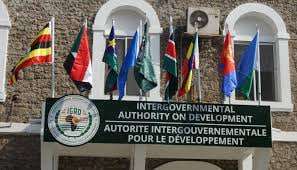
Ethiopia Today (Addis Ababa), May 19, 2026: In a major move to counter the rapidly evolving landscape of transnational crime in the Horn of Africa, the Intergovernmental Authority on Development (IGAD) Security Sector Program (IGAD SSP) has successfully concluded a three-day intensive national training program aimed at equipping senior Ethiopian judges to tackle terrorism financing, money laundering, and technology-enabled crimes through intelligence-led policing and robust inter-agency cooperation.
The Horn of Africa faces interconnected security challenges where illicit financial flows, human trafficking, cross-border criminal networks, and Foreign Terrorist Fighters (FTFs) increasingly exploit digital infrastructure. As criminal networks shift to online platforms, the judiciary’s role has become critical to ensuring complex security cases are handled with technical competence, fairness, and strict adherence to the rule of law.
A total of 41 senior Ethiopian judges (30 male and 11 female) participated in the training. The curriculum was designed to arm the judiciary with the tools needed to adjudicate modern, document-heavy security trials by utilizing Financial intelligence and asset recovery frameworks, Digital forensics, electronic evidence authentication, cross-border data requests, and international legal cooperation.
“Judicial institutions remain central to ensuring that security responses and interventions are anchored in legality, due process, human rights, and judicial independence,” emphasized Mrs. Nejat Abdulrahman. “A well-informed, well-connected, and well-equipped judiciary is one of the most powerful tools to address these threats.”
Judges analyzed how modern terrorist networks exploit both formal banking systems and informal channels, including trade-based laundering, mobile money, cryptocurrencies, and dark-web platforms. The sessions aligned domestic strategies with international standards, such as the Financial Action Task Force (FATF) recommendations and United Nations Security Council resolutions.
The focus shifted to cutting-edge electronic evidence. Participants reviewed the legal standards governing the handling of metadata, network logs, encrypted communications, AI-generated content, and deepfakes.
Crucially, the judges debated the judicial oversight required for special investigative techniques—like wiretapping and controlled deliveries—ensuring a balance between state security and constitutional human rights.
Generously supported by the Government of Spain, this initiative marks a pivotal milestone in IGAD’s ongoing mission to harmonize legal frameworks, promote criminal intelligence sharing, and build institutional resilience against cyber and financial crimes across East Africa.
Within this specific bloc, countries like Kenya and Uganda serve as major financial corridors, while Somalia remains the primary operational epicenter for hybrid terrorist networks. Addressing institutional gaps across these specific IGAD nations is paramount, as demonstrated by the fact that the Financial Action Task Force (FATF) has placed member states like Kenya and South Sudan under increased monitoring to address structural deficiencies in their counter-terrorism financing and anti-money laundering regimes.



