By:- Dawit Astatike
Ethiopia Today( Addis Ababa) March 3, 2025:- Addis Ababa Conference Calls for Collective Action, Ecological Debt Recognition, and a Decade of Reparations to Address Historical and Ongoing Injustices.
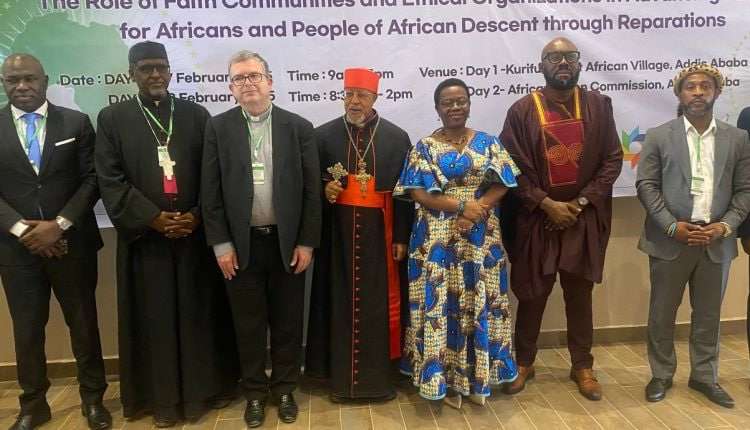
The panel discussion was held under the theme ‘The Role of Faith Communities and Ethical Organizations in Advancing Justice for Africans and People of African Descent through Reparations’ at the African Union Hall on February 28, 2025.
The panel aims to address the ongoing effects of colonialism, slavery, and systemic discrimination against Africans and people of African descent in a bid to unite Africans on the continent and those living in the diaspora in their pursuit of justice.
The urgent need for restorative justice and reparations for Africans and people of African descent while acknowledging the critical role of faith-based and ethical organizations in driving the agenda was at the top.
The delegates noted with deep satisfaction the work and recommendations from the 38th Ordinary Session of the Assembly of Heads of State and Government of the African Union, which emphasized restorative justice and healing.
Call for Collective Action
The delegates supported the call for a collective commitment to confront the historical injustices and severe crimes perpetrated against Africans and people of African descent throughout the slave trades, colonialism, and apartheid.
They emphasized the need to address narratives and policies that foster negrophobia and racial hatred, as well as the inequalities embedded in international economic and political systems.
The profound and lasting effects of slavery, colonialism, racial discrimination, and neo-colonialism on Africans and people of African descent were acknowledged. These injustices continue to inflict immense suffering, cultural disruption, economic exploitation, emotional trauma, and enduring discrimination.
Reparations as a Moral and Legal Imperative
The conference affirmed that the implementation of reparations is both a moral and legal imperative, grounded in the principles of justice, human rights, and human dignity. Reparations represent a concrete step toward addressing historical wrongs and fostering healing among the peoples of Africa and those of African descent.
The concept of ecological debt was also recognized as a critical component of reparations. The severe environmental degradation caused by colonial exploitation, industrial pollution, and resource extraction has disproportionately affected African communities, leading to food scarcity, health crises, and climate vulnerability.
The conference also proposed the formation of an ethical reference group to provide ethical guidance on reparations, drawing on indigenous African traditions, spirituality, and global case studies.
The delegates resolved to center “Justice for Africans and People of African Descent through Reparations” within the African Peace Initiative, aligning with the principles of Ubuntu philosophy and the Golden Rule: “Treat others the way you want to be treated.” This approach seeks to transform a world marked by conflict and dysfunction into societies characterized by dialogue, reconciliation, and reparations.
The conference proposed that the African Union consider a decade of reparations, emphasizing the importance of sustained efforts to address historical injustices.
The Addis Ababa Conference marks a significant step forward in the global movement for justice and reparations, uniting faith communities, ethical organisations, and civil society in a shared commitment to healing and restorative justice for Africans and people of African descent.
The legacies of colonialism, transatlantic slavery, apartheid, and systemic racial discrimination have left deep socio-economic, cultural, and psychological scars across the African continent and its diaspora. These injustices continue to shape global inequalities and underdevelopment in Africa.
The process of reparatory justice should extend beyond the historical wrongs of slavery and colonialism to encompass the ongoing systemic challenges that continue to affect the African continent and its diaspora.
The adverse impacts of climate change disproportionately affect African nations, despite the continent’s minimal contribution to global greenhouse gas emissions. The industrialized countries of the Global North are historically responsible for the emissions; therefore, they should take responsibility for the environmental degradation and climate-related crises that currently burden Africa.
Reparations through climate financing and technology transfer to Africa are essential for mitigating the impacts of climate change across the continent.
The wealth accumulated by colonial powers through the extraction of Africa’s natural resources has played a foundational role in their industrial and economic development. Today, these historical injustices constitute activities of multinational corporations in the extractive industries which continue to operate in ways that often disregard the rights of local communities and the environment.
Reparations, therefore, should be approached holistically, encompassing financial restitution, cultural restitution, systemic redress, environmental accountability, and any other forms crucial for addressing the historical wrongs and fostering equitable global development. By addressing both historical injustices and their contemporary manifestations, reparations can serve as a pathway to healing, justice, and equitable global development.
Panelists were invited to present on various issues such as Genocide and transgenerational trauma, ecological debt, and a moral call for reparation.
“|The reality of ecological debt in Africa demands urgent and sustained action from all stakeholders governments, corporations, faith communities, and civil society” says Ashley Kitisya Laudato Si Movement Africa.
Colonial policies exploited Africa’s natural resources for European benefit, leaving economies impoverished and dependent.
The Addis Ababa declaration invited all religious, ethical, scientific, and cultural organisations, along with Africancitizens—particularly the youth and women—to embrace and promote the call for reparations.