By :Our staff reporter
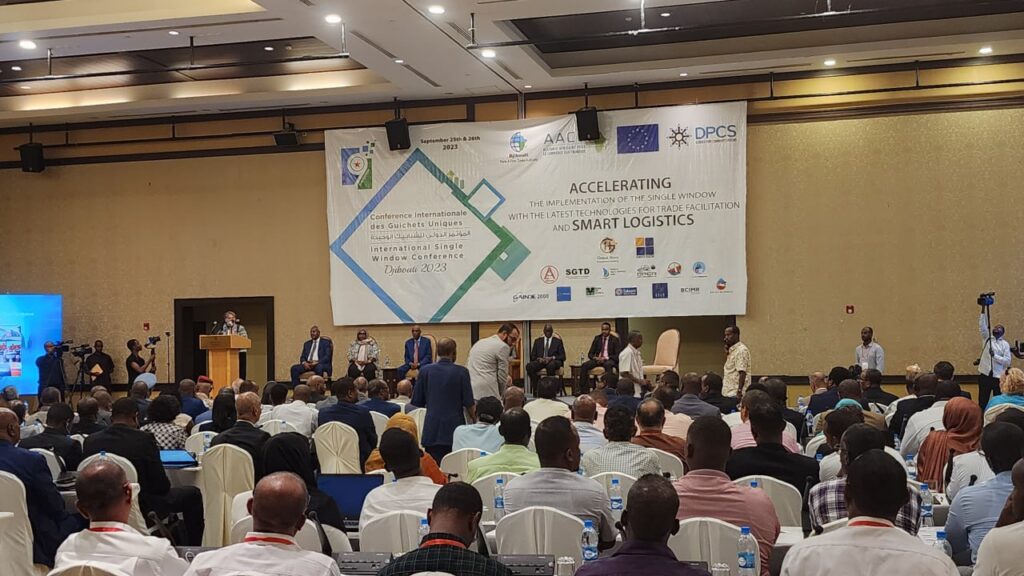
Addis Ababa( Ethiopia Today) October 5, 2023: The European Union (EU) is partnering with the Republic of Djibouti and the African Alliance for e-commerce to organize the ongoing 9th edition of the International Single Window Conference taking place in Djibouti from September 25 to 26, 2023.
The conference highlights some of the investment opportunities and ongoing developments throughout the African continent that will enhance the efficiency of trade globally.
The EU is supporting efforts in the region that will boost regional economic integration and facilitate regional trade aligned with the objectives of the African Continental Free Trade Area (AfCFTA).
A key action under this partnership is the EU’s support for the Horn of Africa Initiative’s strategy, collaborating with the governments of the Republic of Djibouti and the Federal Democratic Republic of Ethiopia.
The EU has committed €32 million to a program dedicated to “promoting regional economic integration in the Horn of Africa through the development of the Djibouti corridor” implemented by Agence Française de Développement (AFD) and the aid-for-trade organization TradeMark Africa (TMA).
The program is aimed at improving the effectiveness and efficiency of one of the most active economic corridors in Africa while promoting inclusive trade. This is achieved through trade process digitalization in government agencies to shorten the time required to get trade documents and accelerate the transit of goods along the corridor, from the Port of Djibouti to Addis Ababa, Ethiopia’s capital. Electronic Single Windows and cargo tracking systems are examples of such digital interventions.
To marshal strategic partnerships that will deliver success, TMA, the implementing partner through this EU program, has signed partnerships with Djibouti’s Ministry of Trade and Tourism to eliminate non-tariff barriers (NTBs) along the Djibouti Corridor and align the Djibouti National Trade Policy to the World Trade Organization’s Trade Facilitation Agreement and the AfCFTA.
The aim is to contribute to a 10% decrease in the cost of trade, a 15% reduction in the time to trade, and a 30% decrease in the time to clear goods at selected border crossings. The EU-supported program will also increase by 15% the exports in targeted sub-sectors and allow a 15% growth in the income of targeted vulnerable groups, especially women in trade.
Djibouti Port handles around 90% of Ethiopia’s international trade today. However, the corridor is constrained by difficulties, such as high clearance charges for traders. This, in turn, increases trade costs and commodity prices, therefore making the EU’s intervention timely.
Noting the progress made and acknowledging the long but rewarding journey ahead, Sylvie Tabesse, Ambassador of the European Union to Djibouti and IGAD, remarked: “I am hopeful the work we are doing here will contribute to reductions in the time and costs of trade. Further, I am looking forward to seeing the full value of our interventions in improving the attractiveness of the region to investors, and more importantly, that the people of Ethiopia and Djibouti will access goods on time and at competitive prices. This conference is the most relevant in today’s context, and the variety and quality of stakeholders here make me confident in the future of our common ambitions.”
TradeMark Africa Djibouti Country Representative, Achaa Abdillahi Ahmed, said: “This global forum is an opportune moment for us to foster discussions and knowledge exchange around digital trade initiatives such as the single window system concept, which we as TradeMark Africa have successfully implemented in East Africa. We hope to create more awareness of such efforts as we build collaborations that will address trade barriers and catalyze increased trade in the Horn of Africa region, particularly the Djibouti-Addis Corridor.”
According to Abdillahi, so far, the initial groundwork for the corridor mapping has been conducted through stakeholder consultations and the identification of the systems to be implemented. Several other critical elements, including the automation of certificates of origin, the implementation of electronic cargo tracking, the implementation of a fleet management system, and the sanitary and phytosanitary e-phyto systems, are in progress.