
By: Our Staff Reporter
Ethiopia Today (Addis Ababa) April 8,2026: Ethiopia’s strategic push to secure multiple outlets to the sea has reached a new milestone as the $25 billion LAPSSET Corridor begins to reshape the regional logistics map.
For a landlocked nation of over 120 million people, the corridor officially the South Sudan-Ethiopia-Transport project represents a vital alternative to the traditional Djibouti route, promising to lower the high cost of imports and accelerate the export of Ethiopian goods to global markets.
Historically, Ethiopia has relied heavily on a single gateway, leaving the national economy vulnerable to congestion and transit delays.
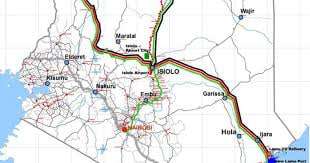
The LAPSSET Corridor changes this equation by providing a direct, modern deep-sea entry point via Kenya’s Lamu Port, which is designed to bypass the congested routes of the south and slash transport costs that currently swallow nearly 40% of the value of goods in East Africa.
The corridor serves as an integrated “super-system” featuring the Lamu Port as Ethiopia’s new northern gateway, with deep-sea berths capable of docking the world’s largest cargo vessels. Supporting this are over 1,700 kilometers of high-speed highways connecting Lamu directly to Southern Ethiopia, turning week-long journeys into a matter of hours, alongside a planned southern rail link designed to move bulk agricultural and industrial products at scale.
This project is more than just asphalt and concrete; it is a centerpiece of Ethiopia’s regional integration strategy, backed by significant investment from Chinese institutions under the Belt and Road Initiative.
The corridor creates a shared economic interest between Ethiopia, Kenya, and South Sudan, granting Addis Ababa increased bargaining power and a more resilient supply chain that is no longer dependent on any single neighboring territory.
As of April 8, 2026, the impact of the project is already visible on the ground. While the massive rail and oil pipeline components remain in early development stages, key highway segments connecting the coast to the Ethiopian interior are now operational or under active construction.
This infrastructure is already opening up previously isolated border regions, fostering the growth of new trade hubs and local manufacturing zones. With the first berths at Lamu Port already processing cargo, Ethiopia is witnessing the birth of its third major maritime corridor, joining the ranks of Djibouti and Berbera.
As the LAPSSET system matures, it stands to fulfill a decade-long national ambition of ensuring that Ethiopian commerce is never again throttled by the limits of a single port, further positioning the country as the undisputed multimodal logistics hub of the African continent.



