
By: Our Staff Reporter
Ethiopia Today (Addis Ababa) April 23, 2026: For centuries, Ethiopia’s finest beans have flourished under the canopy of ancient forests. This traditional “shade-grown” method is a cornerstone of biodiversity, yet it has recently faced an unexpected modern threat, digital misclassification.
Traditional satellite mapping often struggles to distinguish between a wild natural forest and a productive agroforestry coffee plot. With strict new international environmental laws looming, this technological “blind spot” risks unfairly locking Ethiopian smallholders out of the global market.
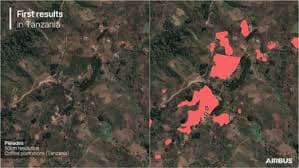
To bridge this gap, global industry giants have launched the Coffee Canopy Partnership, a high-tech initiative using satellite imagery and Artificial Intelligence to map Ethiopia’s coffee lands with unprecedented precision.
Mapping the Future of Ethiopian Coffee
Announced this Wednesday, the partnership aims to create a transparent digital map of coffee-growing regions. By combining AI models with high-resolution satellite data, the system can differentiate between sustainable coffee farms and actual forest loss.
Ethiopia has been named a priority country in the initial rollout, alongside East African neighbors Tanzania, Kenya, Uganda, Burundi, and Rwanda. The goal is to have the entire global “coffee belt” mapped by 2027. The coalition behind the project includes heavyweights like JDE Peet’s, Enveritas, and Germany’s Tchibo, alongside major global commodity traders.
Navigating the EU Deforestation Regulation (EUDR)
The timing of this initiative is critical. The European Union is preparing to enforce landmark deforestation regulations that restrict imports of goods—including coffee—grown on land deforested after December 2020. These rules are set to take effect for large corporations by December 30, and for smaller firms by mid-2027.
Without accurate mapping, the industry warns of a “supply chain crisis” for African smallholders. JDE Peet’s noted that current systems frequently mislabel shade-grown plots as natural forests. If these errors aren’t corrected, millions of sustainable farmers could be banned from the European market, despite following eco-friendly practices.
A Collaborative Platform
The Coffee Canopy Partnership isn’t just for big business; the platform will be open to governments, farmers, and NGOs. By sharing this data, stakeholders hope to improve the accuracy of land-use records and identify specific areas where restoration efforts are actually needed.
For Ethiopia, the world’s fifth-largest coffee producer, this satellite eye in the sky may be the key to ensuring its “green gold” continues to reach the world’s morning mugs legally and sustainably.



