By- Our Staff Reporter
Addis Ababa (Ethiopia Today )November 12, 2024:- Ethiopian Prime Minister Abiy Ahmed’s claim of “discovering” 400 kilograms of gold at Emperor Haile Selassie I’s Jubilee Palace is raising questions.
One of the major opposition parties, Enat Party, is urging the Prime Minister to provide more details about his “finding”.
In his latest address to parliament, Abiy told parliamentarians, “During the renovation we undertook at the National Palace, we established a committee and deposited 400 kilograms of gold, which was stored and locked, at the National Bank.”
Enat Party criticized the lack of clarity in his statement. No questions were raised in parliament regarding where or how the gold was stored.
In a statement released on Monday, Enat Party highlighted the need for clarification on the matter.
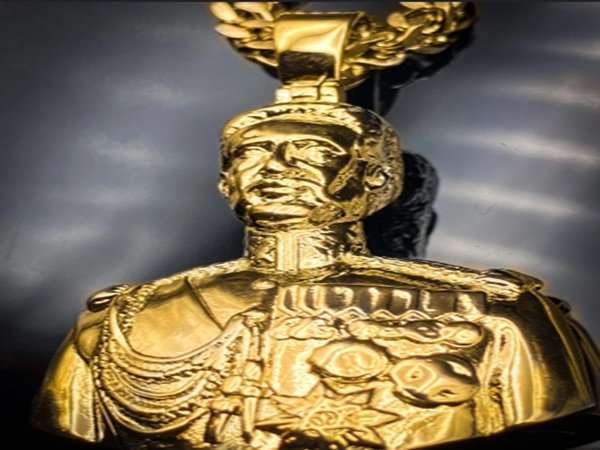
Reports following the Prime Minister’s remarks suggested he was referring to items such as utensils used at the palace, relics, artifacts, and statues received as gifts from visiting leaders of various countries.
Enat Party argued that if the Prime Minister was indeed referring to historical artifacts and gold utensils previously used in the palace, their historical value far exceeds their value as gold.
The party’s stance is that such artifacts should not be treated as ordinary gold, as they are not in “gold bullion” form.
“Enat Party strongly believes that our history shapes our identity today. We do not want the country to appear as one that lacks history, historical relics, or heritage,” the party said in its statement.
The Prime Minister’s description of the gold as “locked” for over 50 years raised questions instead of the praise he may have anticipated.
Questions, such as how else a gold artifact would be stored, have emerged from social media discussions and political remarks.
According to Enat Party, previous governments before Abiy Ahmed demonstrated restraint and respect for relics, and they seek an open explanation from the Prime Minister on this point as well.
The party also expressed concerns that these relics and artifacts might be sold as gold after being transferred to the National Bank.
Enat Party demanded that an explanation be given to the Ethiopian people, whom it described as “owners of this history.”
Additionally, the party called on the Ethiopian government, the Ethiopian Heritage Authority, and the National Bank of Ethiopia to refrain from converting the gold relics into cash, warning that if this happens, they will bear shared accountability.
Enat Party further expressed its belief that the alleged gold likely consists of historical artifacts and heritage items, including utensils, and gifts that were once used in the palace.
The party called for these items to be formally recognized as such and for a conducive environment to be created to ensure the preservation of these historical relics as symbols of Ethiopia’s rich heritage.