By: Our Staff Reporter
Addis Ababa ( Ethiopia Today) February 26, 2024: Africa’s most successful carrier says continent’s airlines are being held back by their inability to operate freely in the region.
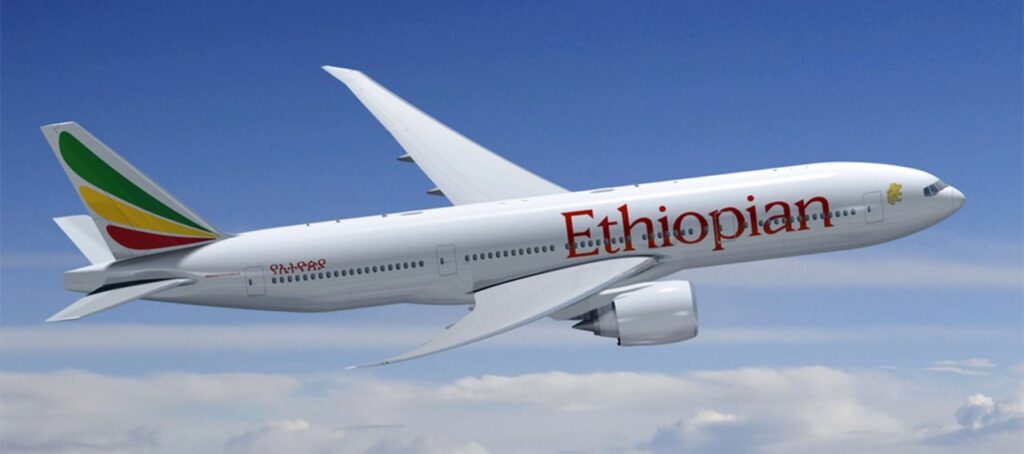
The head of Africa’s largest carrier, Ethiopian Airlines, has called for the continent to implement an agreement allowing airlines to operate freely to increase competition and reduce the costs for travellers amid rising demand for flying.
It is “a big obstacle” for Ethiopian Airlines and affects “nearly all African airlines” who are not able to expand their services, Ethiopian Airlines Group chief executive Mesfin Tasew told the Financial Times.
An African initiative to liberalise the aviation space, to which 37 countries have signed up, was launched in 2018. However, the Single African Air Transport Market has not yet been fully implemented, in part due to countries protecting their national carriers. Unlike in other regions that have deregulated aviation, airlines operating in Africa have to sign bilateral agreements to fly between two countries on the continent.
There is growing demand on the African continent, partly thanks to economic growth and the growing middle class. However, flights on average are only filled to about 70 percent, according to airline data—the lowest compared to any other region, because of the cost of flying.
Home to about 18 percent of the world’s population, Africa only accounts for roughly 2 percent of global air traffic. Liberalizing African aviation would “pave the way for the rapid development of air transport services within Africa,” said Mesfin.
While US plane maker Boeing projects that intra-African passenger traffic will more than quadruple in the next 20 years, placing the continent’s growth among the highest globally, a single air transport market would be crucial for this to materialise, according to analysts. “One of the reasons [Africa is] being held back is because of constraints on market access,” said Derek Nesko, an industry strategist based in Uganda.
Africa’s most successful carrier has worked around the obstacle by partnering with other airlines through joint ventures and acquiring stakes. The carrier has partnerships with ASKY in Togo, Malawi Airlines and Zambia Airways and is due to launch a joint venture with the Democratic Republic of Congo. It was also in talks with Nigeria before these were suspended after a change of government, according to Mesfin. “One or a few airlines in Africa cannot satisfy the demand for air transport in Africa, which is in the lowest state compared to other parts of the world,” said Mesfin.

The carrier transported more than 15 million passengers on flights originating in Africa between January and November last year, according to aviation consultancy Cirium. That was almost 40 percent more than EgyptAir, the next busiest airline operating in the continent during that time. The continent has many small, mostly state-owned airlines that struggle to make a profit.
Ethiopian Airlines, whose revenues jumped 20 percent in the year to July 7 to $6.1 billion, has been among the emerging market airlines placing large aircraft orders with Airbus and Boeing in the past few years. The airline, which flies to more than 150 destinations, recently adding Atlanta, Copenhagen, Gatwick and Karachi, made Africa’s largest-ever purchase of aircraft from Boeing at the Dubai air show at the end of last year as it pushed to renew its fleet.