
By: Our Staff Reporter
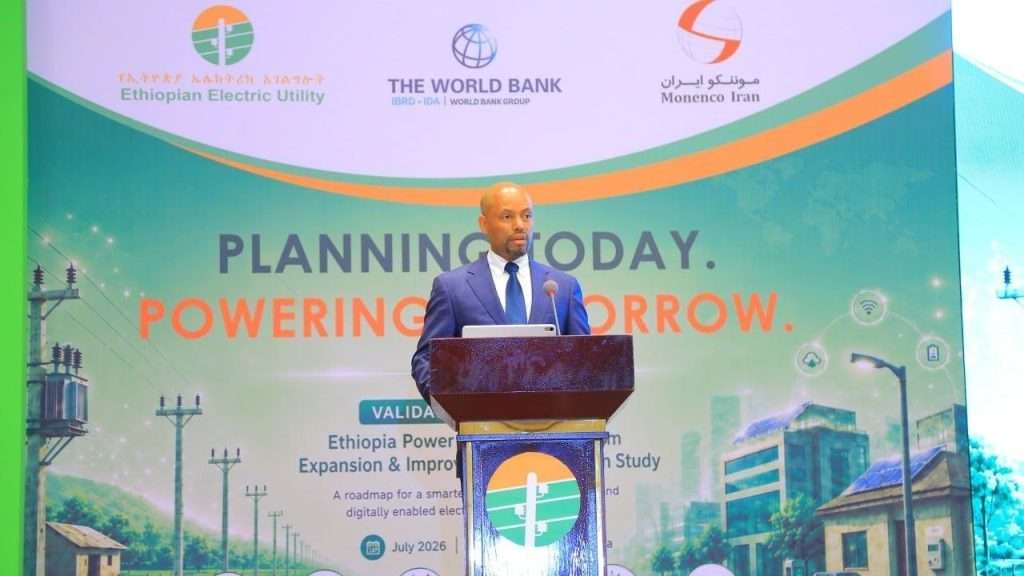
Addis Ababa (Ethiopia Today), July 27, 2026: Ethiopian Electric Utility (EEU) has officially launched a 25-year national power distribution master plan, 2024–2049, in a bid to modernize, expand, and digitize the country’s electricity network.
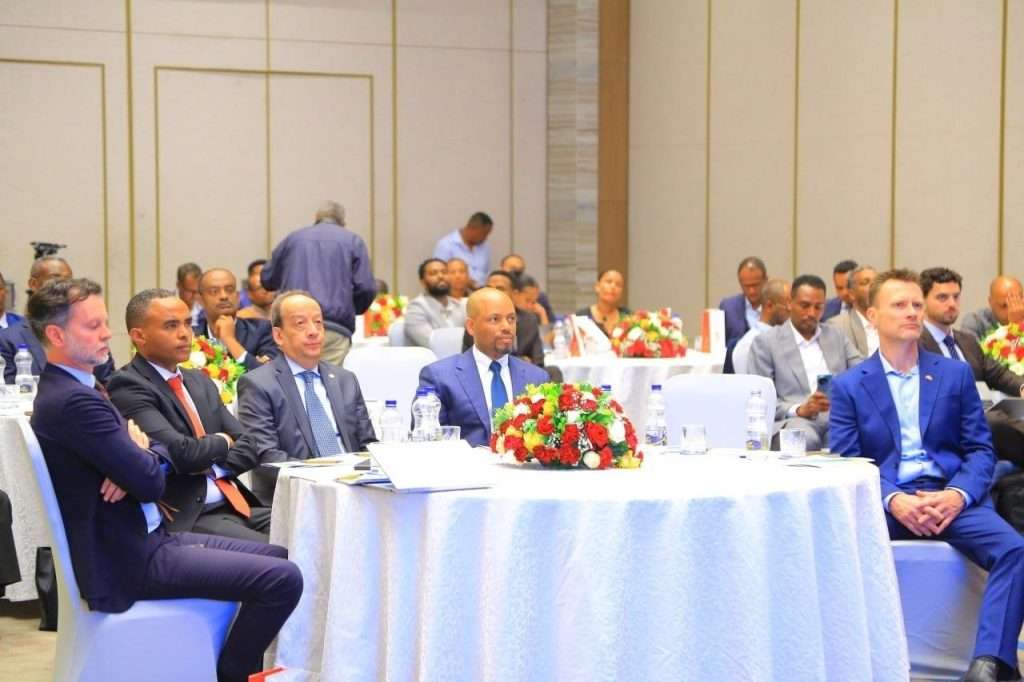
During a two-day consultation workshop at the Ethiopian Skylight Hotel, EEU Chief Executive Officer Eng. Getu Geremew stated that the plan lays the foundation for reliable, high-quality power distribution over the next quarter-century.
Financed by the World Bank and conducted by consulting firm Monenco Iran, the study benchmarked national grid conditions by surveying 1,100 feeder lines, 183 substations, and 79,000 kilometers of medium-voltage lines.
The diagnostic revealed critical grid bottlenecks, finding that 271 feeder lines lack sufficient capacity, 182 lines suffer from severe overload, and 6,800 distribution transformers require urgent repairs costing an initial $71 million.
To address rapidly expanding urbanization and industrial growth, the report projects Ethiopia’s electricity demand will surge from current levels to 10,493 MW by 2030, eventually reaching 39,327 MW by 2049.
Demand growth will be led by Addis Ababa, where power requirements are forecasted to expand tenfold, rising from 1,608 MW in 2025 to 16,057 MW by 2049.
An immediate short-term phase running through 2027 will deploy $1.33 billion to construct 16,511 kilometers of new lines, rehabilitate 9,676 kilometers of existing lines, and install or upgrade over 21,700 transformers.
Long-term structural expansion calls for constructing 128 new substations nationwide for $16.3 billion, alongside 207 new substations dedicated specifically to Addis Ababa and Sheger City totaling $2.81 billion.
The master plan also introduces a 10-year Smart Grid Strategy budgeted between $515 million and $640 million to roll out smart meters, SCADA automation systems, GIS mapping, and modern data centers.
Full implementation of the $30.65 billion roadmap will rely on close coordination and financing partnerships between the Ethiopian government, international financial institutions, and global energy sector stakeholders.



