Tigray, Sudan, and regional rivals are closing in, stretching Ethiopia across three volatile fronts.
May 6, 2026
Tensions and skirmishes between Ethiopia and Sudan are emerging as a new regional concern. The Tigray People’s Liberation Front (TPLF) has moved to reinstate the pre-war regional government, defying the Ethiopian federal authorities. This development effectively undermines the Pretoria Cessation of Hostilities Agreement and risks collapsing the fragile post-war order.
Ethiopian Air Force fighter jets were sighted over Mekelle on the morning of May 5, most likely conducting reconnaissance operations, if not applying psychological pressure. Meanwhile, Eritrea has remained on high alert throughout the year and is reportedly intensifying support for Ethiopian armed groups.
The broader geopolitical theater appears to be influenced, both directly and indirectly, by Egypt, long viewed as Ethiopia’s strategic rival. Cairo has communicated its concerns over Nile water security to several Western governments following Ethiopia’s completion of the Grand Ethiopian Renaissance Dam filling. Ethiopia’s renewed push for Red Sea access has further heightened Egyptian anxieties.
Egypt has shown little hesitation in opposing Ethiopia’s ambitions. The deployment of Egyptian soldiers to Somalia signals Cairo’s willingness to confront Ethiopia should Addis Ababa attempt to establish a foothold along the Red Sea. Egypt also maintains considerable leverage over Sudan’s military leadership and Eritrea’s government. Reports suggest that the three countries are coordinating a common strategy to contain Ethiopia’s regional ambitions.
High-level meetings in Cairo are believed to have produced a multi-layered plan—not only to block Ethiopia’s Red Sea aspirations but also potentially to weaken or destabilize the government of Prime Minister Abiy Ahmed.
Ethiopia’s growing alignment with the United Arab Emirates has further complicated the situation. Allegations that the UAE has supported Sudan’s Rapid Support Forces through Ethiopian channels have angered Sudanese authorities. Sudan, already engulfed in one of the world’s deadliest conflicts in recent years, relies heavily on Cairo for military and financial backing.
For Eritrea, Ethiopia’s declared ambition to secure Red Sea access is seen as a direct threat to its sovereignty. While Asmara may lack the capacity for a large-scale conventional war, it can pursue a more cost-effective strategy by aligning with Khartoum and Cairo. Eritrea also holds additional strategic options. Its potential alignment with the TPLF, amid the latter’s renewed confrontation with Addis Ababa, could significantly ease its military burden while stretching Ethiopia’s defense capacity.
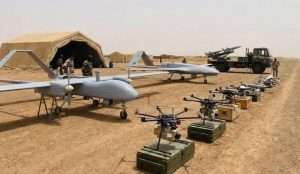
With Sudan and the TPLF escalating their actions simultaneously, Ethiopia faces mounting pressure on multiple fronts: to the east (Eritrea and the Red Sea) and to the west (Sudan). Sudan has accused Ethiopia of facilitating a UAE-origin drone strike on its installations, an allegation Addis Ababa has firmly denied. In the past two weeks, several security incidents have been reported along the Ethiopia-Sudanese border.
Despite building up its military posture, Ethiopia’s leadership has struggled to resolve internal conflicts. Following the 2020–2022 war, the Abiy administration’s strategic miscalculation allowed the TPLF to regroup, retrain fighters, and rearm.
Given current global economic pressures, the Ethiopian federal government may seek alternatives to a full-scale confrontation. Negotiation remains a possibility. However, based on past patterns, Addis Ababa is more likely to pursue limited military operations combined with renewed blockades on Tigray.
For the TPLF, this may represent a decisive moment: either to close this chapter through military defeat or to press ahead with a renewed bid for an independent Tigray.