
By: Our Staff Reporter
Ethiopia Today (Addis Ababa), October 20, 2026: Ethiopia has signed a major agreement with Chinese energy firms GCL Group and Jurong Group to execute the second phase of a liquefied natural gas (LNG) development project at the Calub gas field in the Somali Region, advancing the nation’s long-standing effort to commercialize its vast natural gas reserves.
The agreement covers comprehensive engineering, construction, natural gas liquefaction, and processing services.
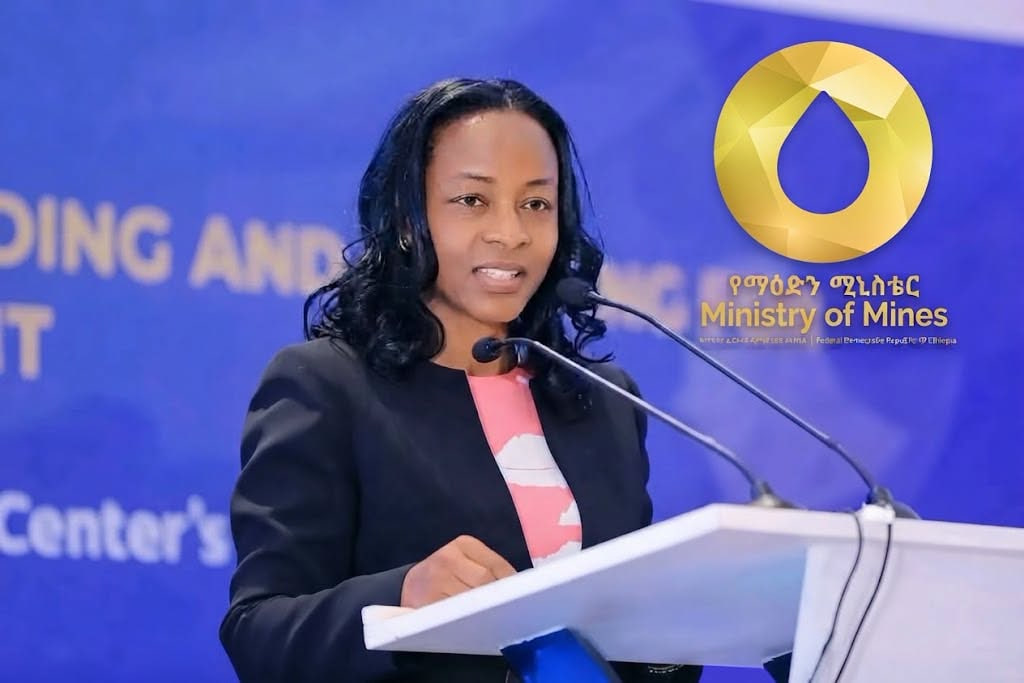
Signed at the Ministry of Mines in Addis Ababa in the presence of Mines Minister Alemtsehay Paulos, the deal builds on a strategic cooperation framework finalized in May 2026 and follows the initial commissioning of Phase 1 in October 2025.
Phase 1 of the Calub development involved a modular LNG facility capable of processing 200,000 cubic meters of natural gas daily, yielding around 50,000 metric tons of LNG per year aimed primarily at domestic industrial users.
The newly signed Phase 2 is designed to scale up production capacity significantly and target global export markets. While contract values, exact processing capacities, and construction timelines for Phase 2 remain undisclosed, the project marks a crucial transition from domestic pilot supply to larger-scale commercial operations. This expansion takes place against the backdrop of significant energy developments and regulatory shifts in the region.
In August 2022, an independent assessment by Netherland, Sewell & Associates provided Ethiopia with its first official gas reserves certificate, confirming an estimated 7 trillion cubic feet (TCF) of natural gas within the Calub and Hilala fields of the Ogaden Basin.
Leveraging these reserves, GCL and Nigeria’s Dangote Group signed a landmark $4.2 billion, 25-year gas supply contract in March 2026 to power a massive urea fertilizer complex in Gode, which will receive natural gas through a planned 108–110 kilometer pipeline to help drastically cut the nation’s reliance on imported agricultural inputs.
While Poly-GCL original production-sharing agreements date back to 2013, the venture faced setbacks when the Ethiopian government temporarily revoked the contracts in September 2022 over capital registration and development delay disputes; however, full relations were restored and contracts reinstated in June 2024, paving the way for the current second-phase progression.



