By: Our Staff Reporter
Addis Ababa (Ethiopia Today) A devastating new global report has laid bare the catastrophic toll that escalating armed conflict is taking on the global education sector, highlighting Ethiopia as one of the primary hotspots where learning institutions have been transformed into battlegrounds.
The newly released Education Under Attack 2026 report, published by the Global Coalition to Protect Education from Attack (GCPEA), reveals that targeted violence against schools, universities, students, and teachers worldwide spiked by over 40 percent during the 2024–2025 reporting period compared to previous years.
Shockingly, the independent study identifies Ethiopia alongside Colombia, the Democratic Republic of the Congo, Haiti, Palestine, and Ukraine as the nations experiencing the highest and most systematic incidence of these assaults.
For Ethiopia, a country striving to stabilize its educational infrastructure amidst localized instabilities, the findings underscore a profound national crisis where the mere act of attending school has become a life-threatening gamble.
The report meticulously details how the domestic intersection of armed clashes and the militarization of academic spaces is actively driving this crisis.
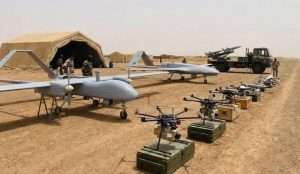
Nationally, the most alarming trend is the systemic military use of schools, with GCPEA recording over 100 distinct cases of state and non-state armed groups occupying educational facilities in Ethiopia, Colombia, and the DRC alone. This dangerous proximity to combat zones was vividly illustrated in January 2024, when a devastating drone strike struck directly near a school in the Merhabete woreda of the Amhara region.
According to administrative records cited in the study, the drone targeted an armed group that had stationed its base immediately adjacent to the school grounds while classes were actively in session.
The resulting blast triggered widespread panic, leaving multiple students severely injured as they scrambled to escape the shrapnel and collapsing infrastructure. Consequently, the school, which served over 2,600 registered local children, was forced into indefinite closure, as traumatized families refused to allow their children to return.
This localized devastation reflects an unraveling global landscape where international humanitarian norms are rapidly eroding.
Worldwide, GCPEA documented at least 8,566 attacks on education and instances of military occupation over the two years, directly harming more than 10,600 students and academic personnel.
The report points out that the changing nature of warfare, particularly the proliferation of drone-borne explosives and the use of explosive weapons in populated areas (EWIPA), has severely amplified civilian risks.
Beyond physical infrastructure damage, these conflicts are exacerbating the marginalization of vulnerable groups, heavily disrupting access to education for young girls, ethnic minorities, and students with disabilities.
In response to this generational threat, the GCPEA has issued an urgent international appeal for governments to domesticate protective legal standards, immediately halt the military occupation of campuses, and heavily resource early warning networks to preserve the fundamental human right to safely learn.