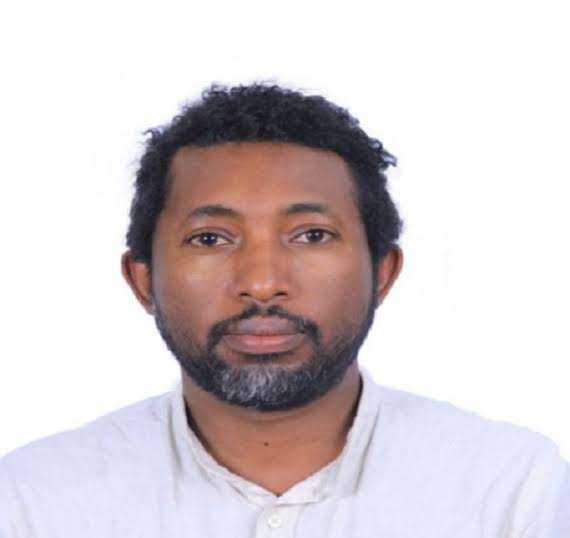
OPINION: By Tesfatsion Dominiko (PhD)
Key Takeaways:
- Ethiopia has changed considerably since 2018. Its political space briefly widened, economic management has become more market-oriented, elections have been administered through newer institutions and technologies, and parts of the state have become more capable. Yet political authority remains heavily concentrated.
- This is the central paradox of Ethiopia’s post-2018 transformation: the country has modernized important parts of the state without fundamentally changing the relationships through which power is allocated, contested, and constrained.
The 2026 general election makes that paradox difficult to ignore. The National Election Board of Ethiopia announced that Prime Minister Abiy Ahmed’s Prosperity Party had won 438 of the 486 contested seats in the House of Peoples’ Representatives, Ethiopia’s federal lower house of parliament. No voting occurred in Tigray, while insecurity prevented elections in several constituencies in Amhara. Parliament is expected to reconvene in October and return Abiy to office for another five-year term.
The size of the victory is not the most important issue. In the 2021 election, the Prosperity Party also won an overwhelming majority, taking 410 of the 425 constituencies for which the National Election Board of Ethiopia announced results. International IDEA reported that the party won 96 percent of the parliamentary seats contested in that election.
The figures vary according to whether one counts only the constituencies covered by the initial announcement or the full electoral process. The broader point, however, is clear: in both elections, the ruling party secured a dominant parliamentary position while substantial parts of the country were excluded from voting or unable to compete under equal political conditions.
The question, then, is not simply whether Ethiopia has changed since 2018. It has. The more important question is what kind of change has taken place—and whether modernization of institutions has been accompanied by a redistribution of political authority.
This article examines that question through four dimensions: whether political competition widened, whether economic reform expanded social mobility, whether federalism became more accountable, and whether dialogue and reconciliation included those most affected by conflict. By “redistribution of authority,” I mean more than changing officeholders. It means transferring meaningful decision-making power to legislatures, courts, regional institutions, opposition parties, civil society and citizens.
Reform without redistribution
Political transitions often create the illusion that replacing leaders automatically changes the system. Ethiopia’s history suggests otherwise.
The 2018 opening was real and consequential. Abiy Ahmed came to power with a promise of political renewal, reconciliation, and national unity. Political prisoners were released, exiled opposition figures returned, some organizations were removed from proscribed lists, and press freedoms expanded.
The U.S. State Department’s 2019 human-rights report documented the release of political prisoners, the return of opposition leaders, the registration of new political parties, and the government’s revision of repressive legislation. Amnesty International likewise described the release of thousands of political prisoners and the return of opposition politicians from exile as major developments during the transition.
Ethiopia and Eritrea formally ended their state of war. The restrictive Charities and Societies Proclamation was replaced by a more permissive civil-society law. The 2019 Civil Society Organizations Proclamation eased restrictions on registration, foreign funding, and human rights work. The new cabinet was notable for its gender balance, and a woman was appointed president of the Supreme Court.
The opening also generated considerable public enthusiasm and international goodwill, culminating in Abiy’s receipt of the 2019 Nobel Peace Prize.
These developments should not be dismissed. They represented a genuine break with important features of the preceding political order. The problem is that the opening was not fully converted into institutions capable of constraining executive power.
Nor did the opening remain politically neutral. The initial expansion of civic space was followed by renewed arrests, legal restrictions, pressure on political organizations, and a more coercive approach to dissent in several parts of the country. Political liberalization therefore did not move along a straight line. It opened space, generated expectations, and then contracted before those expectations could be secured institutionally.
Max Weber described this challenge as the routinization of charisma. Charismatic authority can disrupt an established order, but it must eventually become institutionalized through rules that apply to rulers as well as citizens. Without that transition, reform rhetoric can become attached to a new center of authority rather than translated into durable checks and balances.
The formation of the Prosperity Party, the ruling political organization created in 2019 from the former EPRDF coalition, illustrates this ambiguity. Its creation dissolved the ethnic-coalition structure of the Ethiopian People’s Revolutionary Democratic Front and promised a more national political organization. It could therefore be understood as an effort to convert the energy of 2018 into a stable institutional form.
In practice, however, critics saw it as a consolidation of the ruling apparatus under a more centralized political structure.
What changed was who occupied the centre. The deeper organization of power changed much less.
The consolidation also had consequences beyond party organization. As political authority became more centralized, the distinction between the ruling party, the executive, and the state became increasingly difficult to maintain. Opposition actors did not compete only against a political organization; they often confronted an administrative and security apparatus whose resources were not equally available to them.
The same pattern can be traced across Ethiopia’s modern history. Imperial rule combined bureaucratic modernization with patrimonial loyalty networks. The Derg, the military government that ruled Ethiopia from 1974 to 1991, replaced monarchy with revolutionary socialism but concentrated authority through the military and party state. The Ethiopian People’s Revolutionary Democratic Front (EPRDF), the coalition that governed Ethiopia from 1991 to 2018, introduced ethnic federalism and expanded recognition of historically marginalized groups, but it governed through a disciplined, cadre-based structure that maintained tight political control.
The ideological language changed. The architecture of authority proved more durable.
This historical continuity should not be mistaken for national incapacity. Ethiopia has repeatedly produced political imagination, popular mobilization, and institutional innovation. The recurring problem is that moments of opening have too often allowed new elites to occupy inherited structures without creating reliable mechanisms through which citizens can constrain them.
Land, finance and mobility
The persistence of mediated access is especially visible in land. Ethiopia’s land system has changed dramatically over the past century, but one feature has remained important: access to land has generally been mediated by political authority rather than secured independently of it.
The Derg’s 1975 land nationalization destroyed the power of the landed aristocracy and represented a major rupture. But it also transferred the role of mediator from landlords to the state. The 1995 Constitution entrenched state ownership of land, a policy defended as protection against large-scale dispossession and land concentration.
That protective rationale should be acknowledged. So should the consequences of continued administrative control. Access to land certification, redistribution, and investment permission depends heavily on local state structures, while urban land allocation and lease arrangements give officials considerable discretion.
The issue, therefore, is not whether public ownership of land is inherently wrong. It is whether citizens have sufficiently independent institutions through which land decisions can be challenged, reviewed, and separated from political power. Protection against private dispossession can coexist with vulnerability to administrative exclusion.
The broader problem is one of mediated access: when valuable resources are controlled through institutions that citizens cannot effectively challenge, economic opportunity can remain closely connected to political relationships.
Finance presents a similar pattern.
Banking dominates Ethiopia’s financial system, accounting for more than 95 percent of sector assets according to recent National Bank reporting. The state-owned Commercial Bank of Ethiopia has historically received a disproportionate share of foreign-exchange allocations compared with private competitors. In such a concentrated system, access to large-scale credit and foreign currency is not merely a market outcome. It is also a question of institutional access.
The July 2024 decision to float the birr is therefore significant. The International Monetary Fund’s 2024 program documents describe the move toward a market-determined exchange rate and the creation of a new benchmark exchange-rate system. The IMF also approved a four-year Extended Credit Facility arrangement of approximately $3.4 billion.elibrary.
The reform helped narrow the gap between official and parallel exchange rates. According to the IMF’s subsequent assessment, the parallel-market premium had almost disappeared by early September 2024.
This was a meaningful reform, not a cosmetic one.
But it liberalized one channel of economic access without fundamentally changing the political channels through which land, licensing, credit and security are allocated. Ethiopia has made progress liberalizing the price of the dollar. It has made far less progress liberalizing the price of political entry.
The distinction is important because market reform can expand opportunity while leaving the institutions that decide who receives opportunity politically controlled. Economic liberalization may therefore create new businesses and investors without creating a political class capable of demanding transparency from the state.
That distinction matters because economic growth does not automatically produce social mobility.
Ethiopia’s university enrollment has expanded dramatically, from roughly 98,000 students in 2004 to a projected 533,000 by 2025. A 2024 study published in Cogent Education found that higher-education enrollment had risen sharply while graduation and employment outcomes failed to keep pace. The study reported graduate unemployment averaging approximately 19.5 percent over the period examined.
The country’s youthful population is often described as an economic opportunity. Sociologically, it is also a test of institutional inclusion.
Young people acquire credentials with the expectation that education will provide mobility. When employment and advancement remain mediated by political affiliation, regional identity or personal connections, education can generate frustration rather than incorporation.
This is more than a jobs problem. It is a mobility problem.
And mobility has political consequences. When education, entrepreneurship and employment are expected to provide a route into a better future, access to opportunity becomes part of how citizens judge the legitimacy of the state. If advancement appears to depend on political affiliation, regional identity or personal connections, economic exclusion can become political alienation. The question is no longer simply whether the economy is growing, but whether citizens believe they can participate in that growth without first gaining access to political power.
National unemployment figures can conceal this pressure because Ethiopia remains overwhelmingly rural. The World Bank’s employment analysis shows that youth unemployment is substantially higher in urban areas than national averages suggest. In 2019, approximately 27 percent of urban youth were unemployed, compared with much lower rates in rural areas. Urban young women faced particularly difficult conditions.
Unemployment figures also understate insecurity because many young people survive through informal, irregular or low-productivity work. The relevant question is therefore not only whether people have work, but whether they have secure work, predictable income and a realistic path to advancement.
Growth measures the expansion of economic output. Mobility measures whether a new generation can rise through transparent competition rather than proximity to power. Ethiopia has performed better on the first than on the second.
That gap has political consequences. A generation that is educated enough to expect inclusion but excluded enough to experience stagnation may interpret the state not as a vehicle of mobility but as a gatekeeper. Migration, political withdrawal and protest can become collective responses to that experience.
Federalism and the centre
Ethiopia’s federal structure adds another dimension to the question of power.
Ethiopia’s ethnic federalism, a federal arrangement that gives major ethnolinguistic communities territorial regions and constitutional recognition, was designed to recognize collective identity, correct historical marginalization and provide territorial self-government. It delivered important gains: communities previously excluded from national decision-making acquired administrative representation, language recognition and symbolic standing.
But federalism becomes genuinely pluralistic only when constituent units can meaningfully constrain the centre. Where the federal government retains decisive influence over security deployment, fiscal transfers and regulatory approvals, regional autonomy becomes dependent on central goodwill.
Decentralization may then distribute administrative responsibilities without distributing political authority.
The arrangement also turns identity into a political resource. Collective belonging is no longer only cultural or expressive; it is connected to territory, jurisdiction and access to state resources. Competition over political influence can therefore become competition over whose identity controls a particular administrative space.
This does not mean that identity is the only cause of Ethiopia’s conflicts. Nor does it mean that ethnic federalism alone explains the violence in Oromia, Amhara, Tigray, three of Ethiopia’s major regions, or elsewhere. But the federal structure has shaped the institutional channels through which grievances are expressed and power is contested.
The federal system should therefore be assessed through two questions at once. Has it provided recognition and voice to historically marginalized communities? Yes, in important respects. Has it consistently provided peaceful and accountable mechanisms for resolving disputes over territory, resources and security? No. Its achievements and failures must be considered together.
The continuing insurgencies reveal an even more basic problem. A state cannot create stable inclusive institutions where its authority over territory and coercion remains substantially contested. Ethiopia’s government exercises significant authority over land, finance and administration, while its monopoly over force remains incomplete in parts of the country.
The result is an unstable combination: administrative centralization without fully consolidated state authority.
But the absence of a complete state monopoly over force cannot justify unlimited coercion. Military campaigns and emergency security measures may restore short-term control while producing displacement, civilian casualties, fear and deeper distrust. Where armed conflict is met primarily through force, the state may expand its reach without acquiring legitimacy.
This is one of the central contradictions of Ethiopia’s post-2018 order: the government has sought a stronger centre in the name of national stability, yet coercive centralization has often intensified the grievances that make national stability difficult to achieve.
Dialogue and reconciliation
The National Dialogue Commission, a government-established body intended to provide a forum for resolving Ethiopia’s major political disputes, was established to address the country’s deep divisions. In February 2026, the House of Peoples’ Representatives approved an eight-month extension, taking the commission’s mandate to October 2026.
The extension demonstrates that dialogue remains politically relevant. It also reflects the limits of the process. The Commission has spent much of its mandate gathering agendas and consulting groups across the country, but several significant opposition and armed actors have declined to participate.
A recent analysis in The Conversation noted that the process has faced questions concerning participation, trust and the inclusion of actors who remain in conflict with the government.
A dialogue process cannot produce national reconciliation merely by convening delegates. It must create enough confidence that actors who have reason to distrust the state believe their participation will not expose them to political or physical vulnerability.
The question is not simply whether the Commission has consulted enough groups. It is whether those with the greatest political and military capacity to disrupt the state believe that the process can address the issues that matter to them, and whether victims believe that their experiences will not be sacrificed in the name of elite compromise.
The lapse of the earlier Reconciliation Commission in 2022 without a successor mechanism further weakened the continuity of national healing efforts. Conflict-related grievances cannot be resolved through administrative consultation alone. They require credible acknowledgment, accountability, victim participation and guarantees against recurrence.
Dialogue, reconciliation and transitional justice are related but not interchangeable. Dialogue can identify contested questions. Reconciliation can rebuild relationships. Justice can establish responsibility and repair harm. A process that emphasizes consensus while avoiding accountability may produce temporary political calm without addressing the causes of conflict.
This is where the government’s argument deserves both recognition and scrutiny.
The post-2018 administration inherited debt, foreign-exchange shortages and institutional weaknesses. It then faced the COVID-19 pandemic, the war in Tigray, drought, regional insecurity and a difficult international financing environment. Under such conditions, the government argues, political stabilization had to precede deeper liberalization.
There is truth in that argument. Governments cannot easily build open and accountable institutions while struggling to maintain security and basic economic stability.
The government also has a legitimate argument that a fragmented state cannot protect citizens, deliver services or implement economic reforms effectively. A measure of central coordination is necessary. The issue is not whether Ethiopia needs a capable centre; it is whether that centre is constrained, transparent and politically answerable.
But emergencies explain delay more convincingly than they explain direction. The creation of a more centralized ruling party preceded the Tigray war. The failure to establish a successor to the Reconciliation Commission was not an inevitable consequence of external crisis. Nor was the design of a national dialogue in which major political and armed actors felt unable or unwilling to participate.
Nor can emergency conditions explain every arrest, media restriction, internet shutdown or exclusion of opposition actors. Conflict may justify temporary limitations under law, but it cannot turn exceptional powers into a permanent method of governance.
The overall pattern is therefore difficult to interpret as reform temporarily postponed. It looks more like reform combined with consolidation.
In some respects, it has also involved regression: the contraction of civic space, the normalization of coercive security practices, the marginalization of opposition voices and the erosion of public trust in the state’s willingness to protect citizens equally. These developments should be named directly rather than absorbed into the softer language of an “unfinished transition.”
Ethiopia’s unfinished transition
Ethiopia is neither a fully closed authoritarian system nor a consolidated pluralist democracy. Telecommunications has been partially liberalized, with Safaricom entering the market in 2022. An Ethiopian securities exchange was launched in 2024. The IMF program has encouraged fiscal and exchange-rate reforms. Administrative capacity has improved in several areas.
At the same time, political competition remains constrained, public authority is concentrated, and access to economic opportunity continues to depend heavily on institutions that citizens cannot effectively challenge.
The political record is more troubling than the language of hybridity alone suggests. Opposition parties have faced unequal conditions, journalists and activists have operated under pressure, internet shutdowns have restricted public communication and armed conflict has produced mass displacement and severe humanitarian consequences. The state has not merely failed to become fully accountable; in some areas, it has actively narrowed the space in which accountability can be demanded.
This is why Ethiopia does not fit neatly into the categories of either inclusive or extractive institutions. It is better understood as a hybrid order: selective economic opening coexisting with political concentration.
“Hybrid” should not mean morally neutral. It describes the coexistence of reform and repression, not a compromise between them. Economic opening can be real while political exclusion is also real. Administrative competence can improve while citizens become less secure in exercising their rights.
Such an arrangement can produce genuine growth. It can also generate international legitimacy and attract new economic actors. But it raises expectations that it may be unable to satisfy. Entrepreneurs gain market access without sufficient political voice. Citizens receive more efficient administration without stronger accountability. Young people acquire education without reliable pathways into secure employment.
Reform and control are not necessarily opposites. In Ethiopia, they have often operated together.
Indeed, this combination may be politically functional. Selective reform can strengthen state capacity, attract foreign finance, reassure international partners and create new economic constituencies. Political concentration can then preserve the ruling party’s control over the institutions that determine the distribution of security, land, credit and public office. Reform and control are therefore not accidental companions; under certain conditions, they reinforce one another.
The country has experienced at least three major political junctures — in 1974, 1991 and 2018. Each produced significant reconfiguration, but none fully redistributed authority. That history should not be read as evidence that Ethiopians are incapable of reform. It shows instead that political openings do not automatically create incentives for those in power to accept constraint.
It also shows that change does not come only from the top. Ethiopia’s reform moments have been shaped by mass protest, youth mobilization, civic activism, public anger, regional demands and the persistence of communities seeking recognition and justice. The future of reform will depend not only on the willingness of leaders to liberalize, but also on the ability of citizens and institutions to make concentration of power politically costly.
The present constitutional debate is therefore consequential. Proposals involving regional powers, federal authority, the right to secession, executive institutions, and possible term limits could reshape the country’s political order. But changing the name, structure, or tenure of an office will not necessarily redistribute power.
A term limit, for example, can constrain an individual while leaving intact the party dominance, patronage networks, and institutional arrangements that enable executive concentration. The central question is not simply how long a leader may remain in office. It is whether losing office becomes politically survivable.
That requires a legislature with real oversight powers, a judiciary protected from executive interference, independent regulators, transparent rules for procurement and credit, an electoral commission subject to meaningful review, and opposition parties able to organize and compete without depending on executive discretion.
It also requires the protection of journalists, civic organizations, victims’ groups, professional associations, and citizens who criticize the government. Accountability cannot exist if the social actors expected to demand it are exposed to arrest, surveillance, violence, or exclusion.
These are not abstract democratic ideals. They lower the stakes of political competition. When losing office threatens a political elite’s liberty, property, or security, incumbents have strong incentives to prevent genuine turnover. When political loss is survivable, competition becomes more credible.
The same principle applies to reconciliation. Political opponents, regional leaders, and armed actors are more likely to accept constitutional competition when they believe that losing power will not mean collective punishment, dispossession, or physical danger. Accountability and reconciliation are therefore not competing objectives; properly designed, they make one another possible.
Ethiopia’s post-2018 record should therefore be judged neither as an outright failure nor as a completed democratic transformation. The more accurate conclusion is that the country has modernized parts of its state without yet transforming the relationships through which power is allocated.
More sharply, Ethiopia has experienced both transformation and regression. It has transformed economic management, public administration, and the language of national politics. It has regressed in important areas of political openness, civic security, and public trust. The coexistence of these developments is the defining fact of the post-2018 period.
That is a serious limitation, but it is not a reason for fatalism.
The reforms of the past eight years have created new institutions, expectations, economic actors and public demands. Those developments may eventually make deeper accountability more possible. Ethiopia’s political future will depend on whether its next constitutional and national dialogue processes merely reorganize authority or begin to place authority under durable social and institutional constraint.
There are still resources for a different future: a large and increasingly educated population, expanding civic networks, women’s political participation, private-sector development, professional associations, public demands for justice and the continuing desire of communities to participate in decisions that affect their lives. These forces do not guarantee democratization, but they mean that the political order is not socially settled.
The country’s reform problem is not a lack of policy knowledge. It is the unfinished sociology of power.
The central lesson of the past eight years is therefore not that reform is impossible. It is that reform without accountability can strengthen the state while weakening the social basis of its legitimacy.
The path toward a more accountable state remains open. The challenge is to ensure that the next reform does not simply produce new occupants of old positions.
What has changed is the state’s capacity, its economic instruments, and the language of political legitimacy. What has changed less is who can constrain power, contest resources, and make government answerable. Ethiopia’s next transition will be judged not by how dramatically it redesigns the state, but by whether ordinary citizens, regions, opposition groups, and victims of conflict gain a durable voice within it.
Dr. Tesfatsion Dominiko is an Ethiopian sociologist, researcher, and freelance advisory consultant who holds a Ph.D. in Sociology from Stellenbosch University. His work and published commentaries frequently address contemporary social, linguistic, and political issues in Ethiopia, including governance, youth employment, and systemic social structures.
He can be reached at tesfatsiondominiko@gmail.com.
Editor’s Note: The views and opinions expressed in this article are those of the author and do not necessarily reflect the position of Ethiopia Today
The article was originally published at Eurasia Review.