By: Dawit Astatike
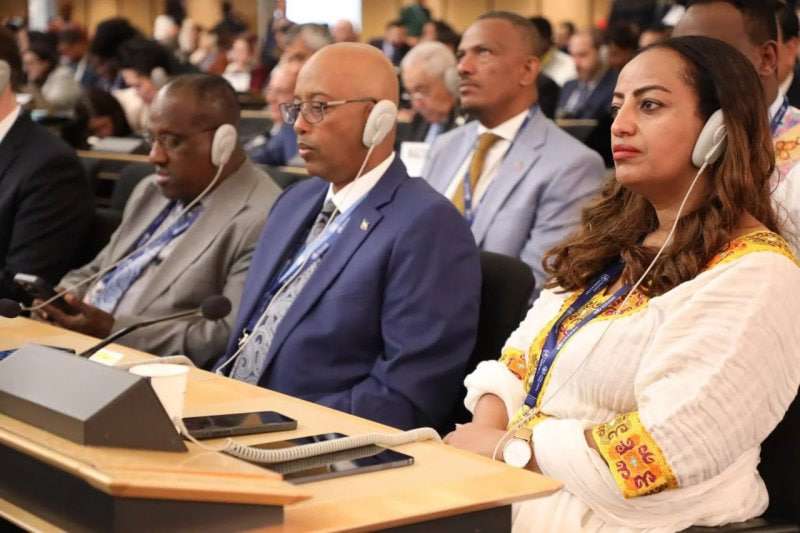
Ethiopia Today (Addis Ababa) May 22, 2026: In a resounding demonstration of healthcare leadership, Ethiopia has joined five other developing nations and two European donors at the 79th World Health Assembly to pledge a record-breaking $175 million aimed at scaling up domestic investments in life-saving maternal, newborn, and reproductive health commodities.
The historic announcement comes at a critical juncture. Global funding cuts to women’s health programs are projected to leave a staggering $185 million deficit in contraceptive funding alone in 2026. By stepping up alongside Ghana, Honduras, Nigeria, Senegal, and Zambia, Ethiopia is sending a clear message: African nations are taking ownership of their healthcare destinies to eliminate preventable maternal deaths.
Doubling Down on Maternal Care: The Matching Fund Advantage
For Ethiopia, this commitment is not just a policy statement—it is a heavily leveraged investment. Under the mechanism announced in Geneva, several of the domestic financial commitments will be matched dollar-for-dollar by the United Nations Population Fund (UNFPA) through the UNFPA Supplies Partnership Match Fund and the Maternal and Newborn Health Commodities Accelerator.
This matching structure allows Addis Ababa to effectively double its resources, accelerating the procurement and rural distribution of critical contraceptives and emergency obstetric supplies.
The urgency of this initiative cannot be overstated. Globally, more than 700 women die every day from preventable pregnancy and childbirth complications. However, a major shift is underway: since 2020, domestic investment in maternal health supplies has increased more than sixfold across 54 UNFPA Supplies program countries, with Ethiopia consistently positioning itself at the forefront of this trend.
Combating Postpartum Haemorrhage with Low-Cost Innovation
In tandem with the financial pledges, the Geneva assembly highlighted groundbreaking progress in clinical tools directly relevant to Ethiopia’s rural healthcare network.
UNFPA, Unitaid, and the Clinton Health Access Initiative (CHAI) announced a new market-shaping partnership to expand access to the calibrated drape. This low-cost, highly effective visual device allows midwifes and health extension workers to instantly detect postpartum haemorrhage (severe bleeding after childbirth)—the leading cause of maternal mortality worldwide—and trigger timely, life-saving treatment before it is too late.
International solidarity also bolstered the summit, with Belgium and Luxembourg each committing €4 million (totaling €8 million) to the UNFPA Supplies Partnership, providing vital buffer support as traditional donor aid face intense global pressure.