
By: Our Staff Reporter
Ethiopia Today (Addis Ababa) September 22, 2026: Ethiopia’s Ministry of Agriculture has unveiled a comprehensive 10-year Research and Development Master Plan to commercialize its date palm industry, aiming to eliminate historically costly trade deficits and position the nation as a competitive global exporter.
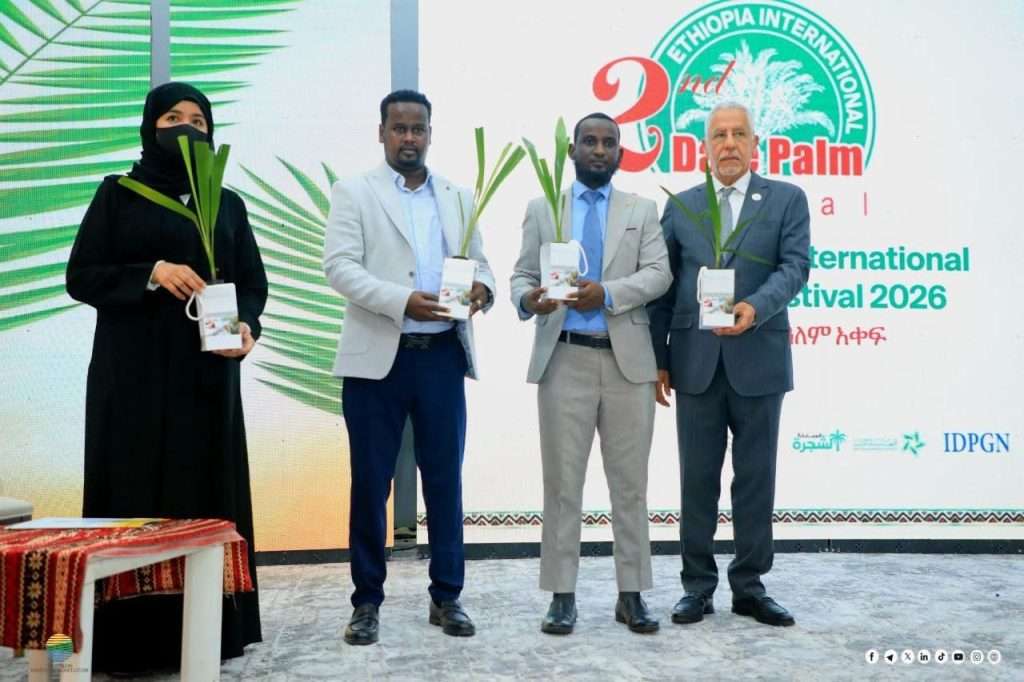
Announced at the Second International Date Festival in Semera, Afar, the strategy leverages 500,000 to 700,000 hectares of prime, underutilized lowland across Afar, Somali, Gambela, Benishangul-Gumuz, Dire Dawa, and Oromia.
By scaling up modern cultivation, Ethiopia intends to eliminate an annual import bill that once stood at $9.8 million, already reduced to $650,000 last year, and generate substantial commercial surpluses for international markets.
The initiative unfolds across three distinct phases. The initial two-year preparatory phase focuses on institutional capacity, land-use mapping, cooperative formation, and technology transfer. The subsequent Execution Phase (years three through five) expands cultivated land from 6,000 to 25,000 hectares, deploying disease-free saplings via advanced tissue culture laboratories, water-efficient drip irrigation, and regional processing hubs. The final Consolidation Phase (years six to ten) targets full-scale commercial exports, international quality certifications, and industrial value addition.
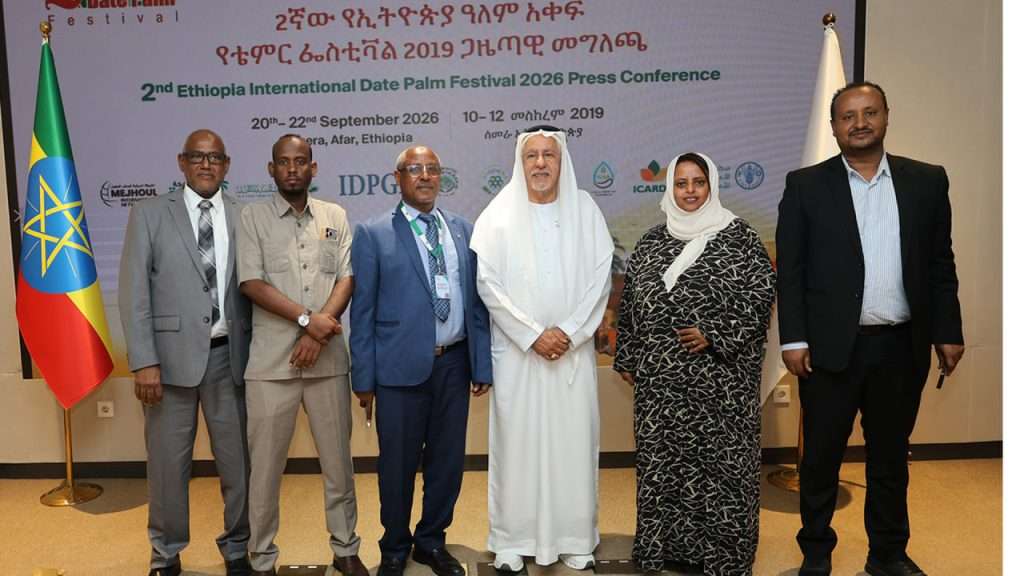
To resolve historic productivity bottlenecks, the master plan builds on breakthrough genetic research from Addis Ababa University, which cataloged 314 native date palm varieties and revealed rich genetic diversity suitable for selective breeding. This domestic foundation is backed by strategic international partnerships, notably with the United Arab Emirates through the Khalifa International Award for Date Palm and Agricultural Innovation, alongside technical support from the Food and Agriculture Organization (FAO), ICARDA, and AOAD.
Beyond import substitution and foreign exchange gains, commercial date farming will drive significant rural job creation, offering steady on-farm and processing employment for women and youth in pastoralist communities.
Culturally woven into Afar’s heritage for over 250 years, the resilient date palm also reinforces Ethiopia’s Green Legacy Initiative with a single mature tree capable of sequestering up to 360 kilograms of carbon dioxide annually to combat desertification in vulnerable drylands.



