By: Dawit Astatike
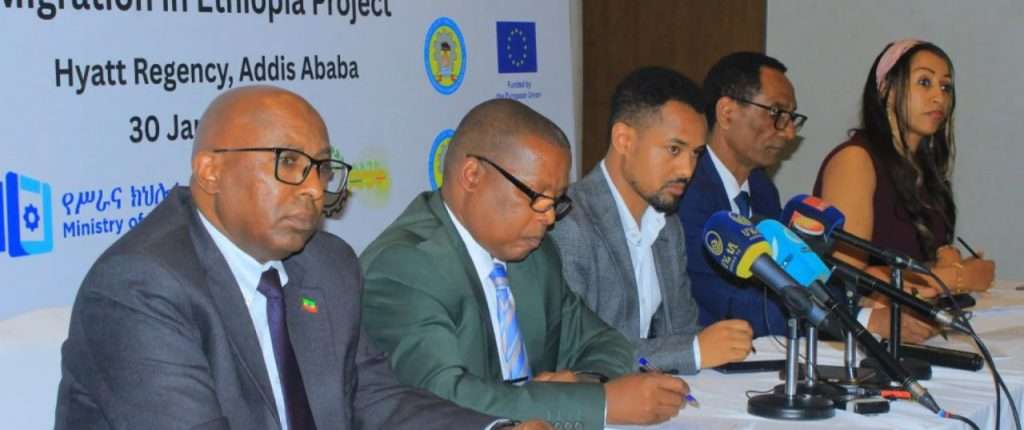
Ethiopia Today (Addis Ababa), February 24, 2026: In a major move to overhaul how Ethiopia manages its workforce abroad, the International Labour Organization (ILO) and the European Union have officially kicked off a landmark four-year program designed to turn the tide against irregular migration and worker exploitation.
The initiative, titled “Strengthening Inter-Regional Cooperation for Safe, Regular and Orderly Labour Migration,” was unveiled during a high-level summit in the capital. The program isn’t just about policy—it’s about building a digital and institutional “safety net” for the millions of Ethiopians seeking opportunities across the Horn of Africa and the Gulf States.
Why This Matters No
Ethiopia sits at a crossroads of global migration. While overseas work provides a vital lifeline of remittances and skills, the journey is often fraught with peril. Currently, the system faces several “blind spots,” such as fragmented information between federal and regional offices, a mismatch between what Ethiopian workers can do and what foreign markets demand, and Persistent irregular pathways that leave women, in particular, vulnerable to abuse.
The “Systemic” Solution
Rather than applying a temporary bandage, the EU-funded project aims to rebuild the engine of labor governance. Key pillars of the four-year plan include strengthening the Electronic Labour Market Information System (E-LMIS) to track trends and protect workers in real-time, cracking down on unethical hiring practices, enforcing strict standards for agencies, and ensuring that an Ethiopian worker’s qualifications are recognized and valued in destination countries.
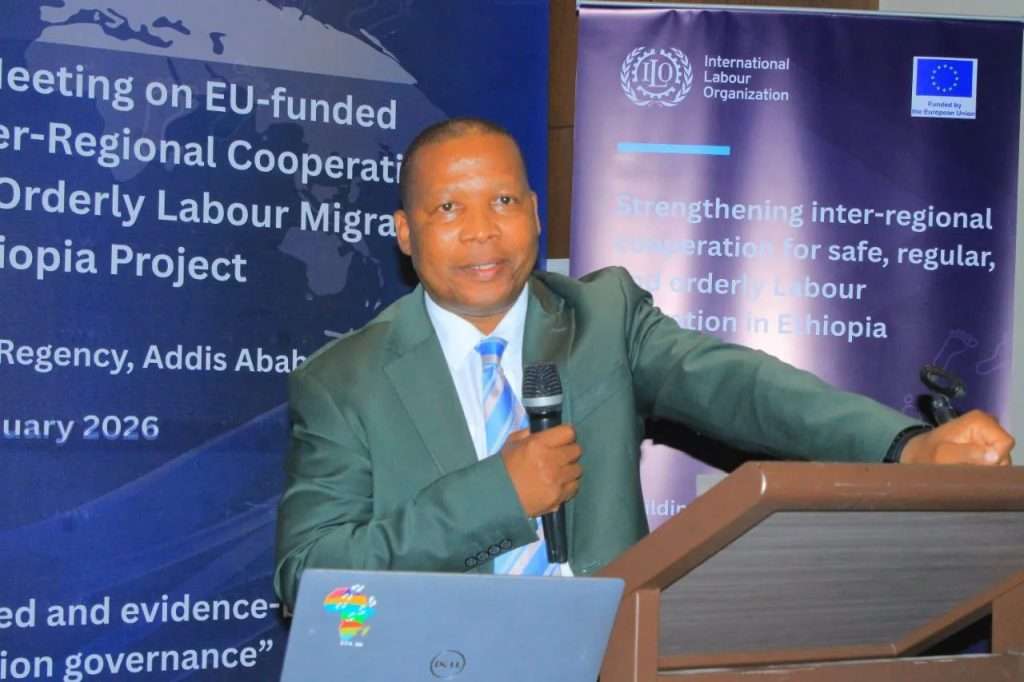
“Labor migration governance requires coordinated, evidence-based, and institution-led responses rather than isolated interventions,” stated Khumbula Ndaba, ILO Country Director, during the opening ceremony.
A Unified Front
The launch brought together a powerhouse of stakeholders, including the Ministry of Foreign Affairs (MoFA), the Confederation of Ethiopian Trade Unions (CETU), and private sector employers.
Ambassador Dawano Kedir of the MoFA emphasized the economic stakes, noting that while migration fuels the economy, the risks to citizens’ safety are too high to ignore. “We must strengthen coordinated action across foreign policy and labour governance,” he urged.
What’s Next?
With the roadmap now validated by national partners, the project moves into an immediate implementation phase. The focus shifts to operationalizing governance structures and finalizing a detailed “battle plan” to ensure that when an Ethiopian citizen decides to work abroad, they do so with a contract in hand, a digital record in the system, and a government that has their back.