By: Dawit Astatike
Ethiopia Today (Addis Ababa), May 12, 2026: In a landmark move to revitalize century-old diplomatic ties, senior Ethiopian and U.S. officials convened in Washington this week to sign a comprehensive, structured bilateral dialogue framework.
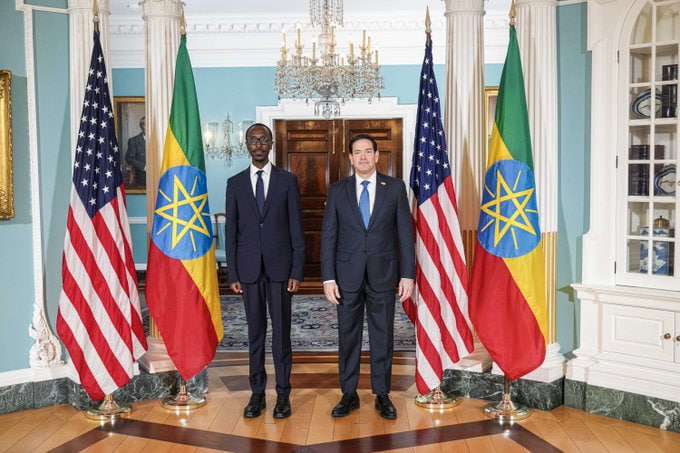
Led by Foreign Minister Gedion Timothewos and U.S. Secretary of State Marco Rubio, the high-level delegation, which included Prime Ministerial Advisor Girma Birru and NISS Director General Redwan Hussein, finalized a roadmap centered on three pillars: economic prosperity through trade and investment, robust defense and security cooperation, and the advancement of regional stability.
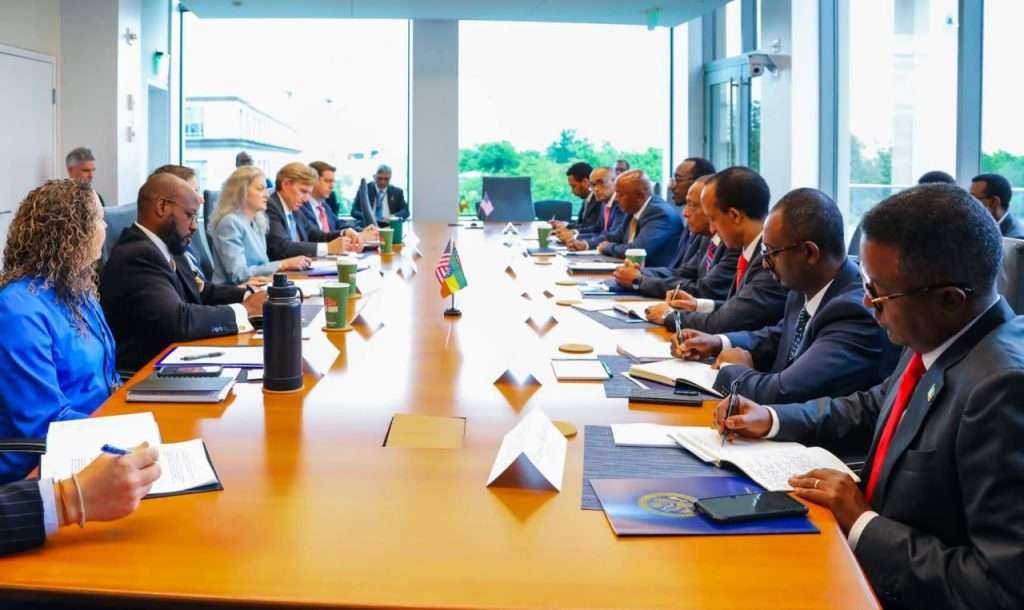
This newly established mechanism is designed to sustain long-term engagement, signaling a significant shift toward a more formalized and predictable partnership between Addis Ababa and Washington.
The discussions were described by U.S. Senior Advisor Massad Boulos as “productive and wide-ranging,” notably marking a renewed American engagement with the Grand Ethiopian Renaissance Dam (GERD).
Following President Trump’s recent assertions that the Nile dispute sits at the top of his agenda, the talks touched upon balancing Ethiopia’s right to generate electricity with downstream concerns during periods of drought. While the GERD reached full completion in 2025, Washington appears to be positioning itself once again as a mediator to resolve the long-standing legal and technical friction between Ethiopia and Egypt, emphasizing a collaborative approach to the Nile’s resources.
Beyond water politics, the dialogue addressed the urgent security crises gripping the Horn of Africa. The two sides coordinated on strategies to facilitate a humanitarian truce in the Sudanese conflict, now entering its fourth year, and expressed a shared commitment to safeguarding Red Sea maritime security amidst intensifying geopolitical competition.
While Ethiopia continues to push for its reinstatement into the African Growth and Opportunity Act (AGOA) trade program, the meeting underscored a growing U.S. strategic focus on Ethiopia as a key regional anchor.
By linking commercial opportunities with high-level security recalibration, this framework sets the stage for increased U.S. investment and a coordinated effort to counter the instability threatening the Red Sea corridor.