
By: Our Staff Reporter
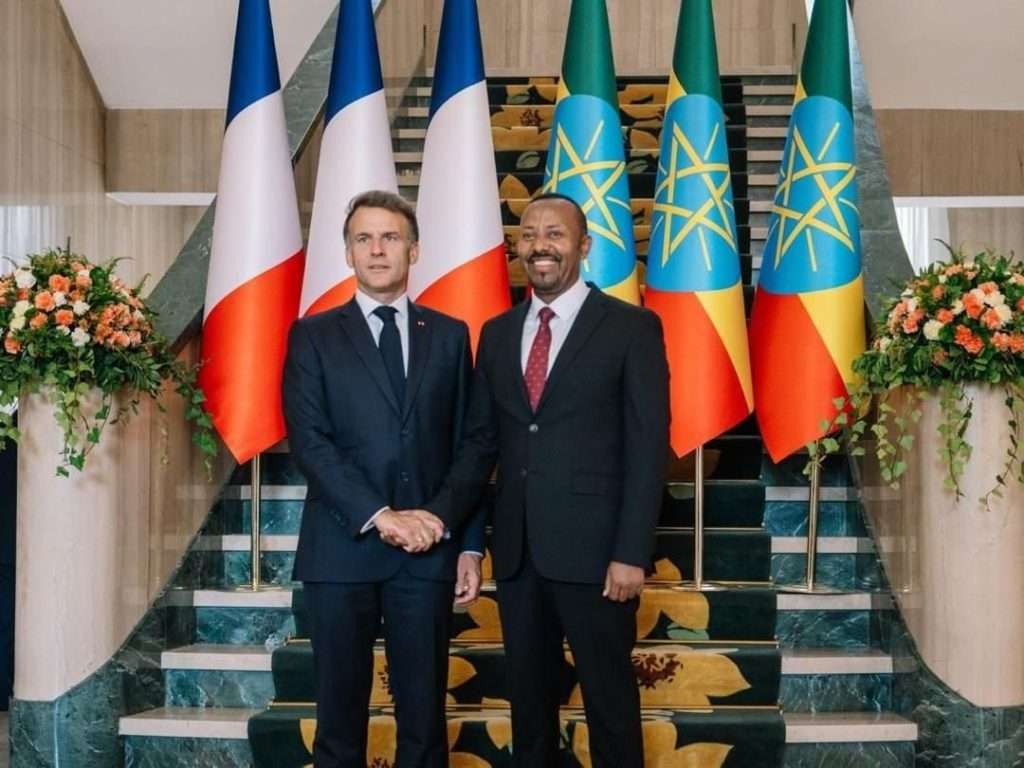
Ethiopia Today (Addis Ababa) May 13, 2026: The Ethiopian government has taken a decisive step toward energy sovereignty and modernizing its national infrastructure by securing a €54.6 million (approximately 3.4 billion ETB) concessional loan agreement with France.
Signed in Addis Ababa by Ethiopia’s Minister of Finance, Ahmed Shide, and France’s Minister for Europe and Foreign Affairs, Jean-Noël Barrot, the deal was finalized just one day after the landmark Africa Forward Summit.
This strategic investment, financed directly by the French Treasury, is designed to overhaul Ethiopia’s aging electricity transmission network using advanced digital technologies. Under the technical leadership of GE Vernova France and RTE International, in partnership with Ethiopian Electric Power, the initiative will automate substations, modernize the National Grid Control Centre, and enhance asset management.
The primary goal for Ethiopian citizens is a dramatic improvement in reliability, with the project expected to reduce the frequency and duration of power outages by 50% while expanding electricity access to over four million people across the country.

This agreement represents a critical component of the broader €270 million Renewable Integrated Sustainable Energy and Digitalization (RISED) program, a flagship initiative under the European Union’s Global Gateway strategy. Beyond mere infrastructure, the project serves Ethiopia’s ambitious climate goals by cutting an estimated 150,000 tons of carbon dioxide emissions annually through the reduction of energy losses and the optimization of the existing grid.
The shift toward a “green and digital” transition was a central theme of the Africa Forward Summit held in Kenya, where French President Emmanuel Macron announced a massive $27 billion investment package for the continent.
Macron’s presence in Nairobi signaled a pivot in French diplomacy, seeking to build a “partnership of equals” with English-speaking African nations like Ethiopia and Kenya as traditional ties with former colonies face increasing friction.
The diplomatic energy surrounding the summit underscored a move away from traditional aid toward high-value investment in sectors such as energy transition, agriculture, and artificial intelligence. While major industrial players like Aliko Dangote and executives from TotalEnergies and Orange looked on, Macron emphasized that this new era of engagement is “entirely free of hang-ups,” inviting African business leaders to invest in France just as French firms commit to the continent.
This is evidenced by major projects like the €700 million modernization of Kenya’s Mombasa port and Ethiopia’s digital grid overhaul.
As Kenyan President William Ruto noted, the relationship has evolved to focus on what Africa has to offer the global market. By prioritizing technological self-sufficiency and resilient power systems, Ethiopia is positioning itself as a leader in this new continental narrative, proving that the future of African development lies in sophisticated, sustainable, and mutually beneficial global partnerships.



