Eritrea Becomes a New Channel for Arming Al-Burhan’s Forces
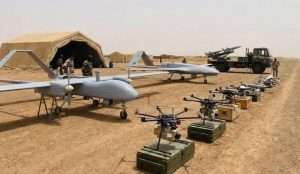
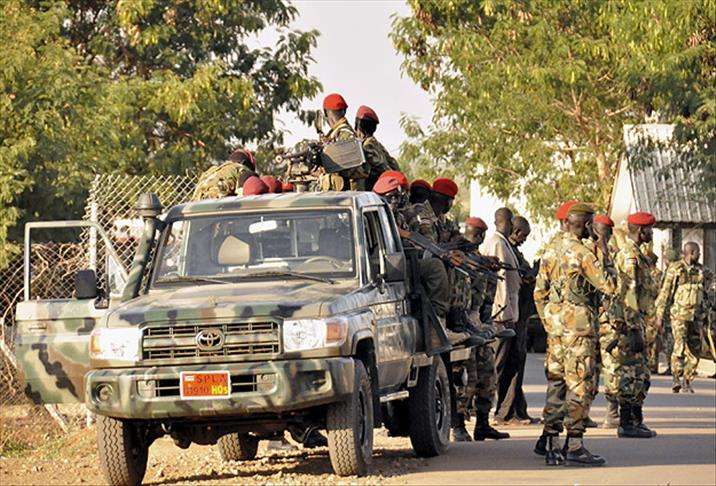
Ethiopia Today(Addis Ababa) June 18,2025:- Eritrea has emerged as a new gateway for smuggling weapons to the Port Sudan-based government forces. Recent media reports have revealed the arrival of a military supply shipment containing anti-aircraft weapons, barrel bombs, and spare parts.
These developments follow reports that former Sudanese intelligence chief Salah Gosh visited Eritrea on May 16 and met with President Isaias Afwerki. The two reportedly agreed that Asmara would serve as a front for arms purchases on behalf of the Port Sudan forces and allied militias, using Eritrean ports as transit points.
Salah Gosh is well-known for brokering arms deals and weapons trafficking. Often described as “Sudan’s strongman,” Gosh has a long history of service under ousted president Omar al-Bashir. Since the fall of that regime in 2019, his influence has grown through his alliance with General Abdel Fattah al-Burhan’s forces, where he plays a key role in facilitating arms smuggling.
Reports suggest that Turkish and Iranian drones are arriving in Port Sudan via Asmara Airport. These include Turkish Bayraktar TB2 drones and Iranian Mohajer-6 drones capable of carrying guided bombs. This follows mounting evidence of growing support from Ankara and Tehran for Al-Burhan’s forces.
A recent shipment from Eritrea reportedly included anti-aircraft weapons, barrel bombs, and spare parts—constituting a clear violation of UN resolutions prohibiting arms transfers to either side of the Sudanese conflict.
Since the outbreak of war in Sudan in April 2023, Eritrea has played a crucial role in facilitating military supplies. According to a previous report by Agence France-Presse, the scale of demand has exceeded what traders alone can manage. What initially began as covert dealings between Port Sudan forces and arms smugglers has, over two years, evolved into official state-level cooperation.
The growing cooperation between Eritrean authorities and the de facto government in Sudan extends beyond arms supply and port usage. Reports have pointed to rapid military and political developments between the two sides. Notably, Al-Burhan’s forces reportedly relocated warplanes to Asmara as a precautionary measure following a series of drone attacks targeting both civilian and military sites in Port Sudan since May 4.
This move came in response to intense airstrikes that forced Sudanese authorities to take steps to protect their military assets amid fears of further escalation—especially as the Rapid Support Forces (RSF) have made significant battlefield gains in recent weeks.
The reports further highlight Eritrea’s growing support for Al-Burhan’s forces—from deploying warships along the Sudanese coast and hosting Sudanese fighter jets at its airports, to training thousands of fighters from armed movements in Darfur. These fighters later joined the so-called “Joint Force” now fighting alongside the Port Sudan forces in Kordofan and Darfur.
These developments could cast a long shadow over Eritrea–Ethiopia relations, which have already entered a period of overt tension. Addis Ababa continues to assert what it calls a “legitimate right” to access the Red Sea, specifically via Eritrea’s Assab Port. Asmara, however, views Assab as a “symbol of national sovereignty” and refuses to negotiate over it.
A similar escalation occurred in July 2024 when Eritrea deployed naval vessels to the Sudanese coast—a move Ethiopia viewed as a serious provocation, sparking a deterioration in bilateral relations.
Ties between Asmara and the Port Sudan government have deepened significantly over the past two years of conflict. Al-Burhan himself has made multiple visits to Eritrea, most recently in April 2025.
Observers believe the presence of Eritrean naval vessels in Port Sudan at this critical time signals at least a symbolic show of support for the Sudanese army in its war against the RSF.
Meanwhile, Port Sudan forces continue to stockpile weapons. Previous reports indicate that Al-Burhan’s military has been seeking “secure” storage locations for massive weapons caches amassed over recent months. These include tanks, drones, and missiles delivered to the capital Khartoum, many allegedly supplied by Iran’s Revolutionary Guard.
Other reports say the Port Sudan forces have built tunnels within multiple military bases to safeguard newly acquired strategic weapons and drones. These include advanced radar systems and defense equipment, intended to counter RSF drone attacks.
The recently constructed tunnels aim to protect Sudan’s strategic weapons for decades to come. They also enable systematic weapons storage and bolster security infrastructure—addressing vulnerabilities exposed when the army lost several depots after war broke out on April 15, 2023.
Editors Note:- SPONSORED CONTENTS