By:Our Staff Reporter
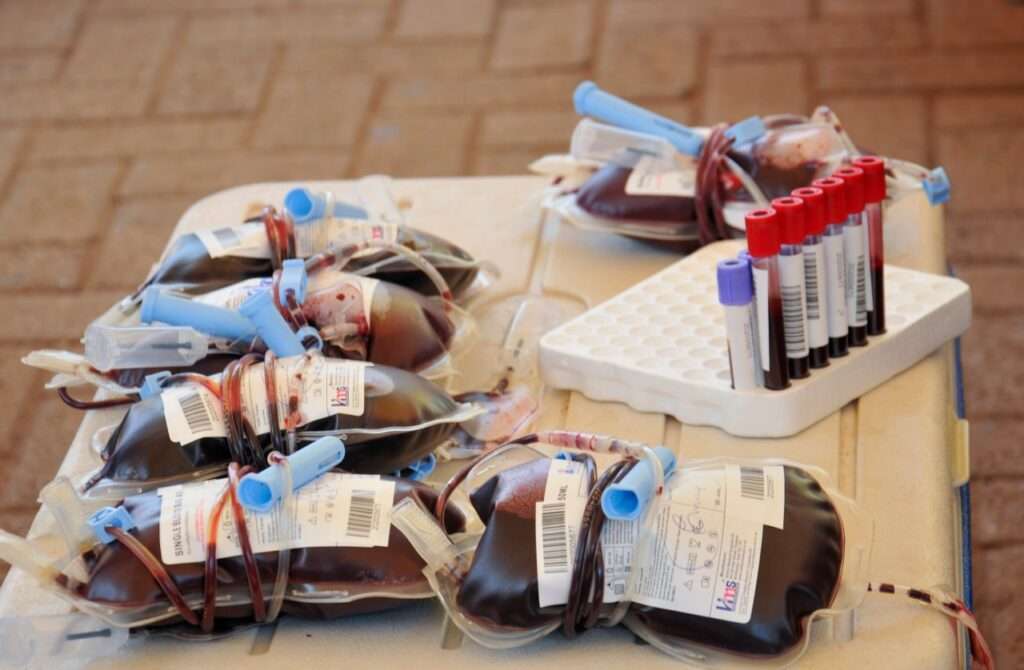
Addis Ababa(Ethiopia Today) June 13,2004 :-With World Blood Donor Day celebrated on June 14, the need for increased blood donation remains a critical issue in conflict zones and developing countries, particularly in sub-Saharan Africa.
Dr. Emmanuel Obeagu, a senior lecturer in Hematology and Blood Transfusion Science at Kampala International University, Uganda, underscored the global impact of blood shortages, highlighting the dire need for blood in war-torn areas like Gaza, where trauma and injuries are rampant.
“Of course, the only way to overcome such challenges is for us to have blood in adequate quantities,” he stated. “It’s an issue that the World Health Organization, so many NGOs, and so many donor agencies should come into play because a natural disaster or man-made disaster can happen anywhere.”
Dr. Veronika Berdnikova, a Russian senior lecturer and head of the Department of Medical Physiology at the University of Dodoma in Tanzania, explained that the disparity in blood donation rates across Africa stems from factors such as limited infrastructure, lack of awareness, cultural beliefs, and logistical challenges.
“It is still widely believed that during donations there is a higher risk of contracting infections, but only sterile equipment is used throughout the donation process at authorized blood centers, so if we are talking about the authorized blood centers, we can’t take any infectious disease,” she clarified.
Despite these challenges, both experts highlight ongoing efforts to address the blood shortage and increase voluntary donation rates.