By: Our Staff Reporter
Addis Ababa (Ethiopia Today), August 6, 2026: The number of migrant workers across Africa has climbed to 13.1 million, up from 9.3 million in 2010, according to the newly released fourth edition of the Labor Migration Statistics Report in Africa.
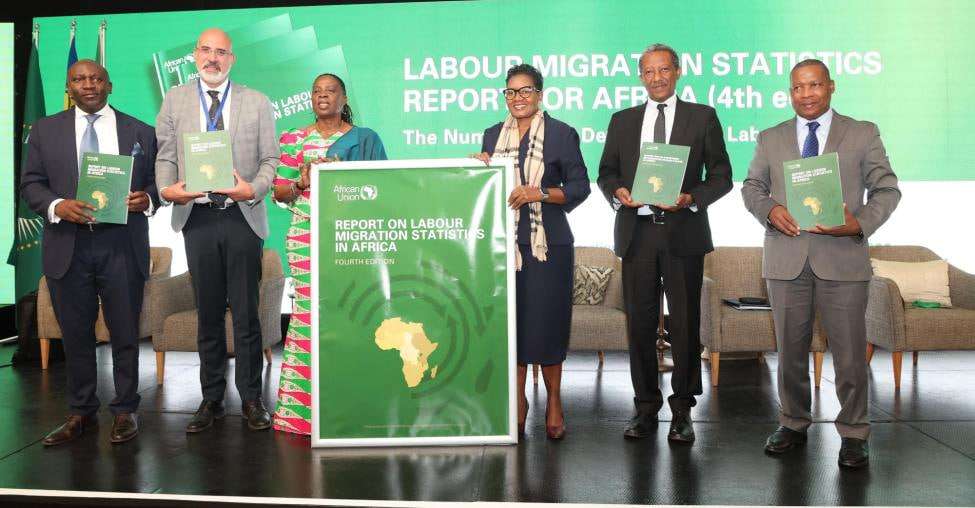
Unveiled during the Ministerial Session of the Sixth Ordinary Session of the African Union Specialized Technical Committee on Social Development, Labor, and Employment in Windhoek, Namibia, the report reveals that out of 26 million international migrants on the continent, 20.4 million are of working age, with 64% actively participating in the labor force.
Despite overall growth, a pronounced gender imbalance persists across the continent, with women comprising only 37% of African migrant workers compared to 63% for men.
Geographically, labor migration remains heavily concentrated within specific regions, as West, East, and Southern Africa collectively account for 78% of the continent’s migrant workers, while West and East Africa alone host 48% of all international migrants.
Gender disparities also vary significantly by region; male workers dominate the migrant labor force in every regional economic community, reaching their highest concentration in the Arab Maghreb Union, where men represent 78% of working migrants.
Meanwhile, young migrants aged 15 to 35 number 6.1 million, with young men consistently making up roughly 60% of this demographic.
The economic impact of migration continues to expand, with financial remittances to Africa surging from $64.8 billion in 2013 to $97.5 billion. Northern Africa receives the largest share of these capital inflows at approximately 45%, followed by West Africa at 34%. However, persistent operational hurdles remain, including limited institutional capacity, incomplete administrative records, and unharmonized data collection methodologies across African Union member states.
Addressing delegates at the launch, African Union Commissioner for Health, Humanitarian Affairs, and Social Development H.E. Amb. Amma A. Twum-Amoah emphasized that establishing timely and disaggregated migration data is a continental priority, noting that effective governance is impossible without adequate measurement.
Echoing this call for structural reform, International Organization for Migration Chief of Mission for South Africa Yitna Getachew stressed the need for sustained investments in digital administrative systems, interoperable databases, and institutional capacity.
In response, the African Union’s Joint Labour Migration Programme, developed alongside the IOM, ILO, Statistics Sweden, Sida, and SDC, is working with regional blocs to facilitate cross-border skill mobility for young people and establish formal recognition frameworks for non-formal qualifications.