By: Dawit Astatike
Ethiopia Today (Addis Ababa), July 3, 2025: Prime Minister Abiy Ahmed dismissed a controversial parliamentary proposal to reroute Ethiopia’s major rivers, including the Nile, to secure sea access, while simultaneously announcing the completion of the Grand Ethiopian Renaissance Dam (GERD) and inviting Egypt and Sudan to its inauguration.
The unusual request, put forward by MP Ashebir Weldegiorgis (MD), suggested diverting Ethiopia’s rivers to create a navigable path to the sea a proposition met with laughter in parliament. Abiy swiftly rejected the idea, reaffirming his administration’s commitment to respecting neighboring nations’ sovereignty.
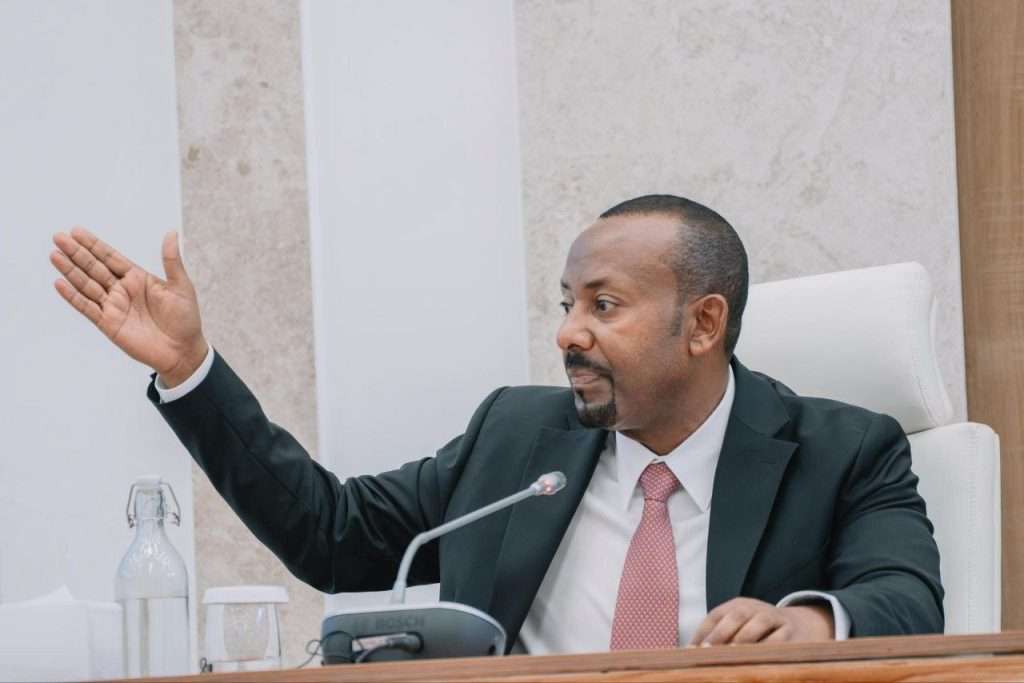
“Eritrea is a sovereign country, and so is Ethiopia, but Ethiopia cannot remain landlocked forever,” Abiy declared. He emphasized that sea access would be pursued through “peaceful dialogue and regional cooperation,” not force. “Not a single bullet will be fired from Ethiopia,” he assured, dismissing fears of renewed conflict with Eritrea.
The statement follows Eritrea’s recent accusation that Ethiopia is “fabricating claims of provocation” to justify aggression. Abiy denied warmongering, insisting Ethiopia seeks to plant “positive seeds of cooperation” while remaining capable of self-defense.
GERD Inauguration: A Milestone Amid Regional Tensions
Shifting focus to domestic achievements, Abiy announced the GERD’s construction is complete, with inauguration set for September. “Nothing can stop it,” he asserted, extending an olive branch to downstream nations. “The dam is a blessing for Egypt and Sudan and will cause them no harm.”
Abiy highlighted GERD’s benefits: boosting Ethiopia’s electricity capacity to 5,200 MW, powering millions, and expanding exports to Sudan, Djibouti, Kenya, and beyond. He reiterated Ethiopia’s openness to dialogue but criticized Egypt’s adherence to “colonial-era agreements” as a barrier to resolving long-standing disputes.
Balancing Ambitions and Diplomacy
The juxtaposition of Abiy’s rejection of river diversion—a symbolic nod to Ethiopia’s hydrological constraints—with GERD’s imminent launch underscores his dual messaging: assertive development at home, coupled with cautious regional diplomacy. As Ethiopia prepares to celebrate a landmark infrastructure feat, its quest for sea access and Nile cooperation remains a delicate tightrope walk.
With GERD’s inauguration looming, all eyes are on whether Egypt and Sudan will accept the invitation and how Abiy’s vision of “shared prosperity” will navigate the Nile’s contentious politics.