By: Our Staff Reporter
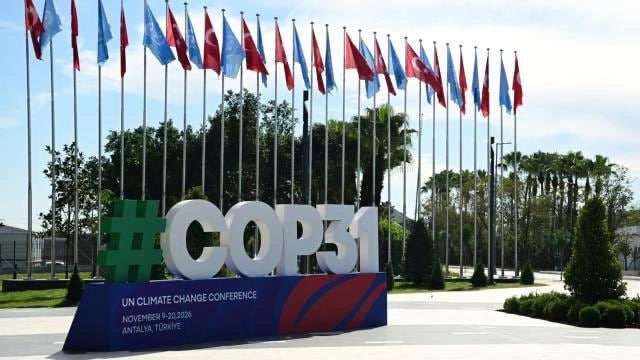
ANTALYA, Türkiye (November 23, 2026): — The 31st UN Climate Change Conference (COP31) ended in diplomatic deadlock on Sunday, November 22, 2026, after nearly 44 hours of overtime negotiations failed to produce a consensus, prompting African climate advocates to welcome the rejection of what they termed a ‘retrogressive’ final text.
Nations formally rejected the COP31 Presidency’s proposed final agreement after intense disputes over the removal of explicit language to transition away from fossil fuels, the omission of a $120 billion annual floor for adaptation finance, and the failure to establish a funded Just Transition Mechanism.
Following the breakdown of the longest UN climate summit in history, the Pan African Climate Justice Alliance (PACJA)—a coalition representing over 2,000 civil society organizations across 54 African countries. stated that walking away without a deal was preferable to endorsing an agreement that undermines vulnerable nations.
‘What collapsed on the plenary floor in Antalya was an attempt by historical emitters and fossil fuel interests to force developing nations to accept an empty shell,’ said Dr. Mithika Mwenda, Executive Director of PACJA.
‘You cannot delete fossil fuel phase-out commitments, refuse to put a single dollar floor on adaptation finance, reduce the Just Transition Mechanism to a powerless talking shop, and expect frontline communities in Africa to applaud.
According to African civil society groups, the stalemate was driven by four core unresolved disputes, beginning with backsliding on fossil fuel phase-out commitments in favor of unproven, gigatonne-scale Carbon Capture, Utilization, and Storage (CCUS) technologies.
Simultaneously, wealthy nations stripped out a proposed $120 billion annual adaptation finance floor by 2035, deferring the decision to 2027 despite developing nations facing annual needs exceeding $300 billion and projected global temperature overshoots past 1.5°C while also resisting the operationalization of a well-resourced Just Transition Mechanism in favor of a non-binding coordination forum and continuing to push unilateral climate trade barriers like carbon border taxes that penalize African exports.
The collapse shifts immense diplomatic weight onto Ethiopia, which is scheduled to host COP32 in Addis Ababa in November 2027.
‘Antalya must serve as a wake-up call for African leaders and the global community,’ said Dr. Augustine B. Njamnshi, Chair of PACJA’s Political and Technical Affairs Committee and Executive Director of the African Coalition for Sustainable Energy and Access (ACSEA).’As the COP gavel moves to Addis Ababa next year, Africa must not become a dumping ground for COP31’s unfinished business.
We must mobilize domestic and regional resources, protect our ecosystems and communities, and build an unshakeable continental front that demands enforceable public finance and genuine climate justice in 2027.’ While commending African negotiators for holding firm against unfunded mandates, PACJA urged all international parties to use the coming year to rebuild multilateral trust through concrete financial and emissions commitments ahead of the Addis Ababa summit.