
By: Our Staff Reporter
Ethiopia Today (Addis Ababa) October 1, 2026: The National Bank of Ethiopia (NBE) has presented the draft National Interest-Free Finance Strategy (NIFFS) 2026–2030, establishing a landmark five-year roadmap to transition interest-free banking from isolated deposit windows into an integrated financial ecosystem.
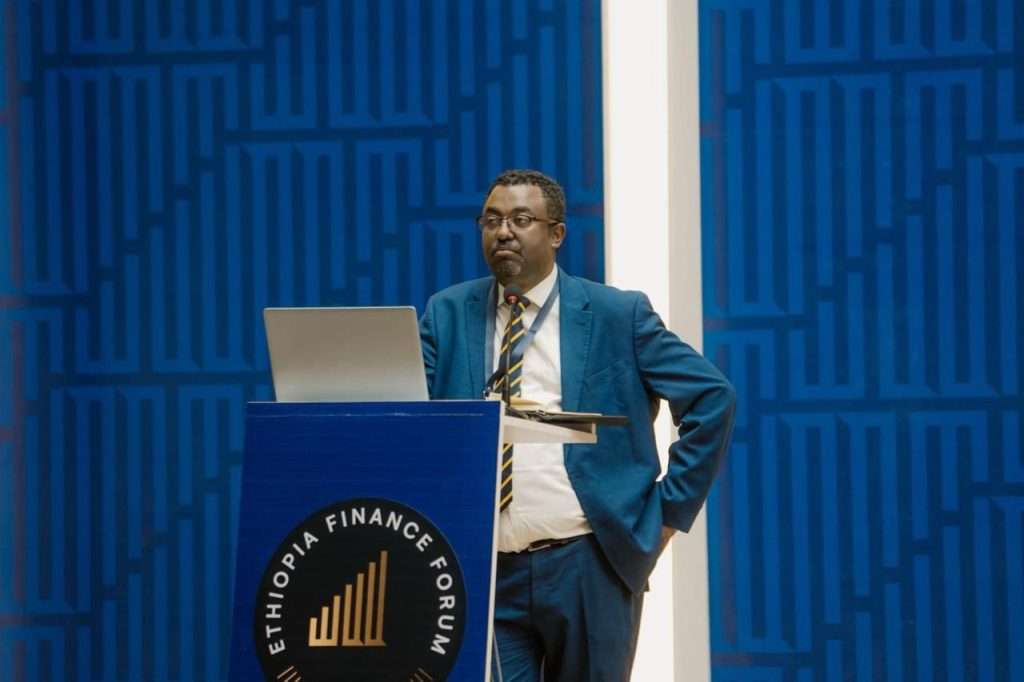
Unveiled by Frezer Ayalew, Director of Banking Supervision at the NBE, during the Ethiopia Finance Forum 2026, the strategy outlines structural moves designed to deepen national financial inclusion and unlock domestic private capital.
The roadmap introduces a multi-tiered growth model built on Takaful (Islamic insurance) frameworks, Sharia-compliant capital market securities (Sukuk), equity-based small business financing, and centralized Sharia oversight.
The primary growth pillar of the strategy introduces dedicated regulatory frameworks for Takaful to provide essential risk mitigation and asset protection for interest-free banking customers and commercial enterprises. In coordination with the Ethiopian Capital Market Authority (ECMA) and the Ethiopian Securities Exchange (ESX), the roadmap paves the way for issuing government and corporate Sukuk bonds.
These non-interest-bearing securities address long-standing liquidity management bottlenecks for financial institutions while unlocking private capital for large-scale infrastructure projects.
To broaden access to capital for underserved populations, the central bank is prioritizing risk-sharing and equity-based models such as Mudarabah (profit-sharing) and Musharakah (joint venture) to channel direct funding to micro, small, and medium enterprises (MSMEs) and smallholder farmers.
To eliminate historical operational ambiguities, the strategy establishes a Central Sharia Advisory Board and unified supervisory standards to enforce consistent product governance across all commercial banks.
This centralized governance framework addresses lingering regulatory discrepancies regarding capital reserve requirements, tax treatments, and compliance metrics.
By expanding services beyond standard deposit windows into insurance, capital markets, and equity finance, the central bank aims to mobilize unbanked domestic capital from population segments previously excluded due to ethical or religious constraints.
The strategy directly complements Ethiopia’s ongoing macroeconomic reforms by building a resilient domestic savings base that reduces reliance on foreign debt.
Following its initial presentation, the draft NIFFS 2026–2030 is undergoing final stakeholder validation before the National Bank of Ethiopia Board of Directors formally adopts it.
Once enacted, the roadmap will serve as the master policy guiding regulatory directives, institutional licensing, and market expansion for the interest-free finance sector through 2030.



