By: Our Staff Reporter
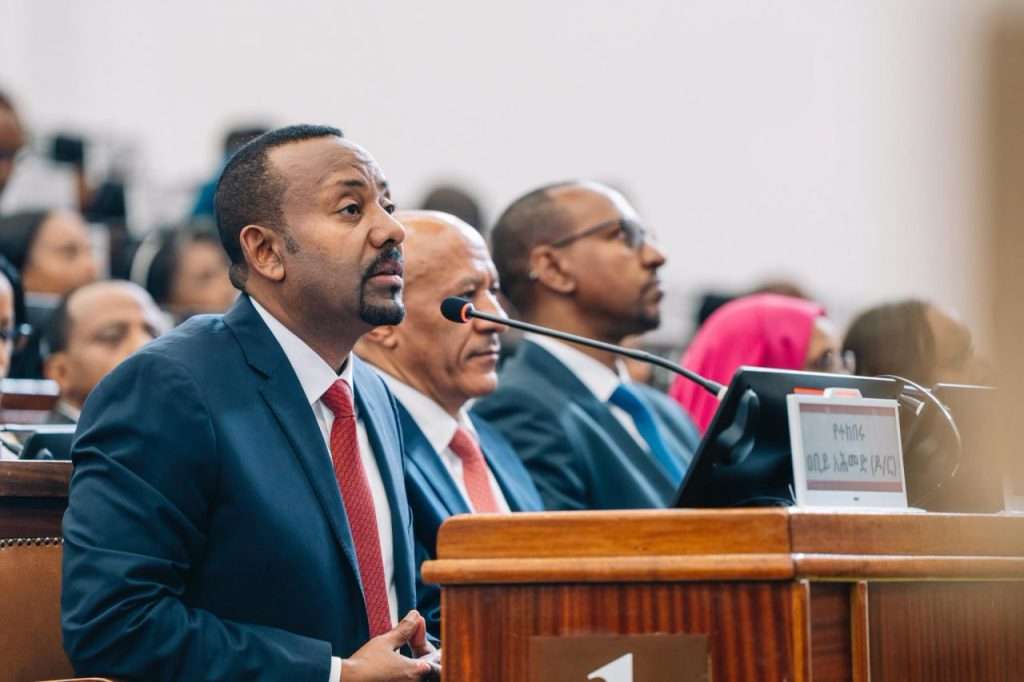
Ethiopia Today (Addis Ababa) October 8, 2026: Prime Minister Abiy Ahmed has presented a newly restructured 23-member cabinet to the House of Peoples’ Representatives (HoPR), revealing that outgoing officials and state ministers had been subjected to strict, covert surveillance over the past year before the changes were finalized.
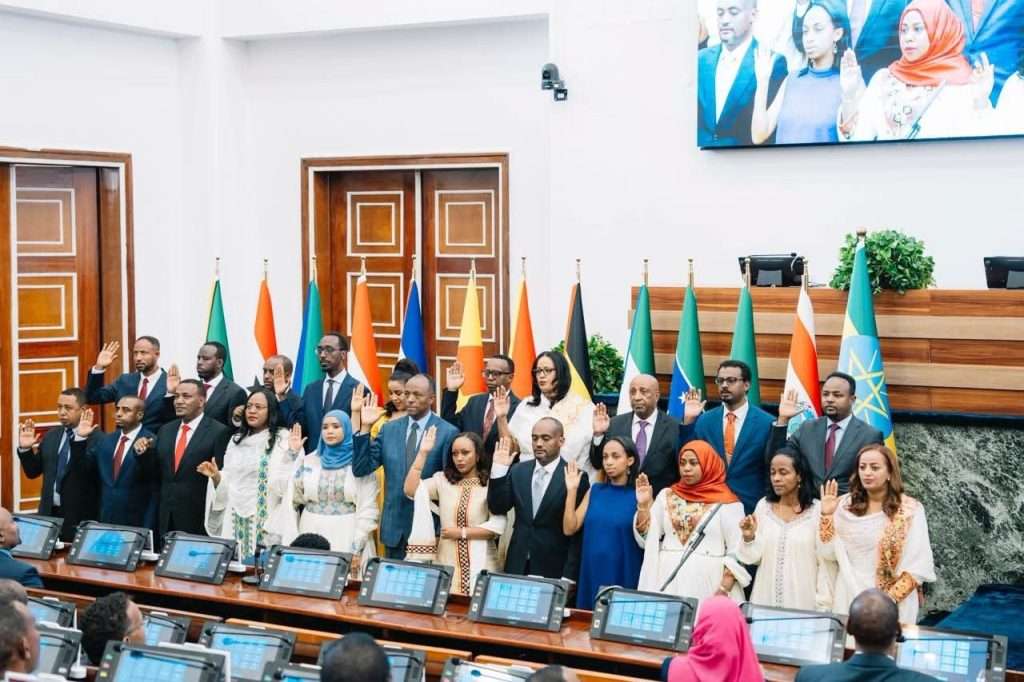
The newly approved cabinet comprises Deputy Prime Minister Temesgen Tiruneh alongside 22 federal ministers. Exactly half of the appointees, 11 ministers, are new entrants to cabinet-level roles, while nine out of the 22 federal ministers (39%) are women.
Addressing lawmakers during the parliamentary approval session, Prime Minister Abiy emphasized that the reshuffle followed rigorous evaluations of competence, educational background, and institutional performance, as well as covert monitoring of personal conduct.
“We closely monitored the activities of outgoing cabinet members and state ministers, both domestically and internationally, including their family networks and connections with prominent business figures,” the prime minister stated.
He added that officials were directly confronted regarding suspicious activities, noting that anyone displaying questionable tendencies was removed from cabinet consideration.
The prime minister boldly told lawmakers that some past officials had engaged in drinking, squandered state resources, and failed to execute their public duties.
Addressing parliamentarians’ queries regarding gender and regional representation, Prime Minister Abiy stated that balancing ethnic, religious, and gender considerations required significant time, noting that quotas for the Amhara and Oromia regions were reduced in the new lineup.
Responding to comments that nine female ministers indicated room for improvement, he stressed that while 39% female representation is significant, appointments could not be based on gender alone.
The prime minister warned incoming officials that strict monitoring will persist, cautioning that any minister failing to deliver or implicated in substantiated wrongdoing would be removed within 24 hours.
Major Cabinet Shifts and Departures
More than ten ministers from the previous cabinet have departed their roles, with several reassigned to new government positions while others exit top executive governance.
Key leadership changes include:
- Ministry of Defense: Former Minister of Peace, Mr. Mohamed Idris, succeeds Eng. Aisha Mohammed.
- Ministry of Finance: Dr. Fitsum Assefa, former Minister of Planning and Development, replaces Mr. Ahmed Shide.
- Ministry of Innovation and Technology: Ms. Frehiwot Tamiru, former CEO of Ethio Telecom, replaces Dr. Belete Molla.
- Ministry of Industry: Dr. Fesseha Yitagesu, former CEO of the Industrial Parks Development Corporation (IPDC), replaces long-serving minister Mr. Melaku Alebel.
- Ministry of Trade and Regional Integration: Ms. Yasmin Wohabrebey succeeds Dr. Kassahun Gofe.
- Ministry of Mines: Ms. Alemtsahay Paulos succeeds Eng. Habtamu Tegegn.
- Ministry of Women and Social Affairs: Ms. Shewit Shanka replaces Dr. Ergoge Tesfaye.
- Ministry of Labor and Skills: Former Vice President of Oromia Region, Mr. Awelu Abdi, replaces Ms. Muferihat Kamil.
- Ministry of Peace: Mr. Musa Adem takes over as Minister of Peace.
- Ministry of Irrigation and Lowlands: Dr. Sultan Wale, formerly State Minister of Water and Energy, has been appointed Minister.
- Other Appointments: Mr. Fekadu Tessema has been named Minister of Parliamentary Affairs, succeeding Dr. Tesfaye Beljige (recently appointed President of the South Ethiopia Region); Ambassador Betre Mengistu becomes Minister of Cabinet Affairs and Head of the Prime Minister’s Office; Ms. Enatalem Melesse continues as Minister of Government Communication Service (GCS); Mr. Sedat Neshah takes over Logistics; Eng. Ahmed Abdirahman leads Urban and Infrastructure; Dr. Aklilu Tadesse heads Youth and Sports; Ms. Selamawit Kassa leads Culture and Tourism; and Mr. Bereket Fessehatsion assumes leadership of the National Strategy portfolio.

Retained Portfolios
To maintain strategic continuity, Prime Minister Abiy Ahmed retained a core group of key ministers in their current roles following the federal government reshuffle. Foreign Affairs Minister Ambassador Gedion Timothewos (PhD), Justice Minister Hanna Araya-Selassie, and Health Minister Dr. Mekdes Daba will all remain at the helm of their respective ministries. Additionally, Professor Berhanu Nega continues as Minister of Education, Addisu Arega as Minister of Agriculture, Engineer Habtamu Itefa (PhD) as Minister of Water and Energy, and Aynalem Niguse as Minister of Revenues.
Prime Minister Abiy closed his address to the new cabinet with a firm mandate, reminding them that political power is temporary.
“Power is a hat that eventually comes off. A challenging period lies ahead; if you do not perform, you will be replaced.”