By: Dawit Astatike
Ethiopia Today (Addis Ababa) October 6, 2026: Over 20,000 Ethiopian migrants have crossed into neighboring Djibouti since mid-September in a high-risk attempt to reach the Gulf States, oblivious to the escalating conflict in Yemen that is actively driving thousands of refugees and returnees in the opposite direction.
Briefing journalists in Geneva via video link, Alexandre Coissac, Chief of Mission for the International Organization for Migration (IOM) in Djibouti, warned that Djibouti is grappling with “overlapping emergencies” along the Eastern Migration Route, one of the world’s busiest and most treacherous maritime and desert corridors.
While thousands of Ethiopian job-seekers continue heading toward Yemen, severe fighting between Yemeni government forces and Houthi rebels has forced over 3,700 refugees to flee across the Red Sea into Djibouti over the past three weeks. Concurrently, 539 stranded Ethiopian migrants have made the desperate journey back across the sea to Djibouti on their way home.
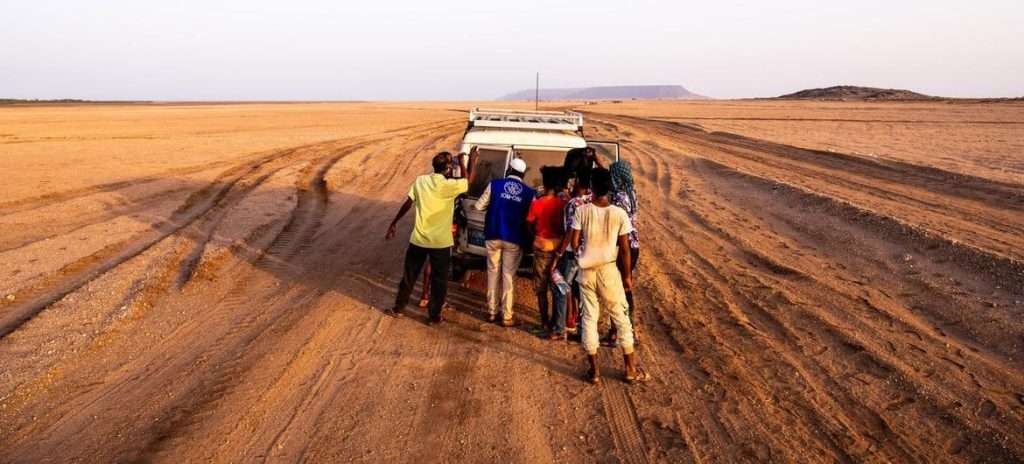
Between September 20 and 30 alone, IOM monitoring teams observed more than 3,000 migrants stranded in remote, scorching desert regions along Djibouti’s border zones, suffering from acute dehydration, physical exhaustion, and critical shortages of food and water.
Coissac confirmed that the agency has received grim reports of migrants dying in the desert near the Ethiopian border. Humanitarian efforts to provide emergency aid and voluntary repatriation services are becoming increasingly complex as desperate migrants take remote, off-grid secondary routes to evade detection.
“Most migrants bound for Yemen are entirely unaware of the grave situation awaiting them as fighting between government forces and Houthi rebels intensifies,” Coissac noted, stressing that the majority are seeking employment in Saudi Arabia and other Gulf nations without knowing the Bab al-Mandab Strait and surrounding areas have descended into active combat.
The complex, bidirectional flow is placing immense strain on Djibouti’s limited public infrastructure and national resources, particularly around transit hubs like Obock.
The UN migration agency is appealing for urgent international support to maintain basic humanitarian relief, protection, and Assisted Voluntary Return (AVR) services for vulnerable Ethiopian citizens caught along the route, warning that current response capacities are stretched to their limits.