By: Our Staff Reporter
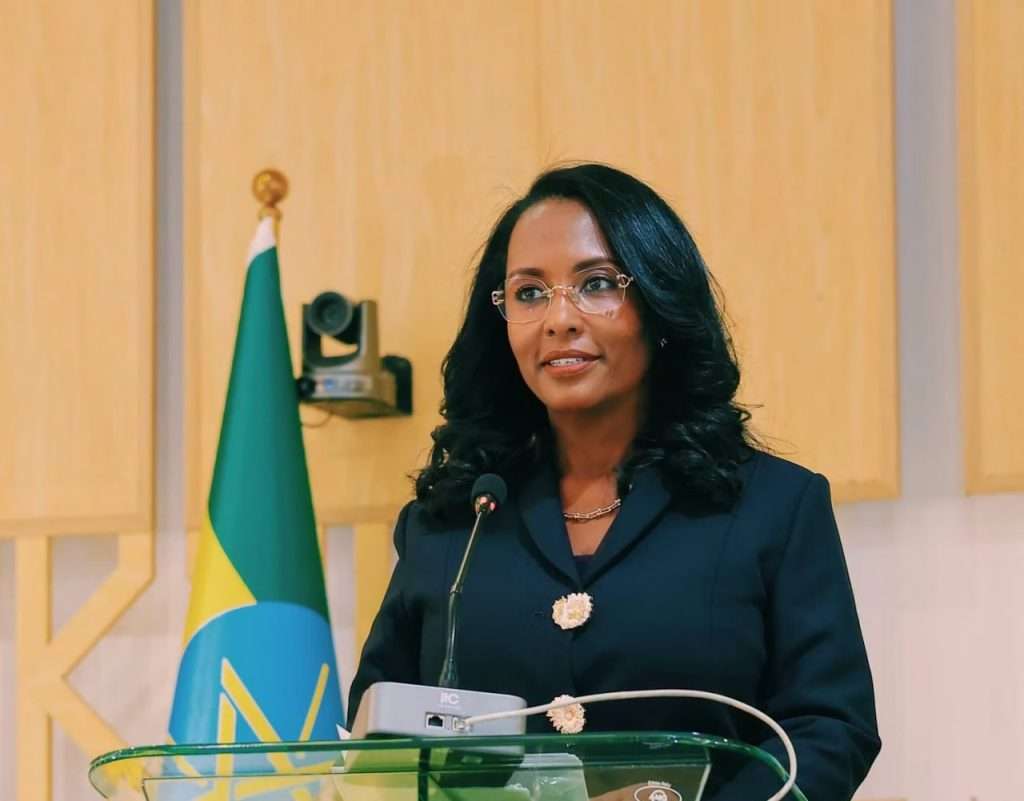
Ethiopia Today (Addis Ababa), September 30, 2026: Adanech Abebie, who has led the Ethiopian capital for the past six years, was unanimously re-elected as Mayor of Addis Ababa by the city council on Wednesday, September 30, 2026.
The election took place during the founding session of the newly constituted 158-seat Addis Ababa City Council, where the ruling Prosperity Party holds 134 seats following the general election held in May.
The remaining 24 seats, which the ruling party did not contest, are occupied by 12 opposition parties and independent representatives, none of whom raised objections or abstained from voting.
Following the unanimous vote, Mayor Adanech took the oath of office before Tesfaye Meles, president of the Addis Ababa City High Court.

Before the vote, Dr. Jemalu Jember, the newly appointed head of the Addis Ababa Prosperity Party branch office, presented Mayor Adanech’s educational background and track record to the council.
Praising her leadership, Dr. Jemalu highlighted her anti-corruption stance, commitment to institutional unity, and track record of delivering tangible results.
He nominated her on behalf of the ruling party, emphasizing that her exemplary service and multi-sectoral leadership during her previous term fully demonstrated her suitability to lead the city administration for another five-year mandate.
In her 14-minute inaugural address, Mayor Adanech acknowledged the broad participation in the 7th general election, noting that while the ruling party received overwhelming support, the votes cast for rival candidates also represented a significant segment of the populace.
She reassured all residents, regardless of whether they voted for the ruling party or opposition candidates, that they hold equal rights, dignity, and entitlement to public services.
Promising to serve every citizen with equity and integrity, she reaffirmed that the city administration’s paramount duty is to safeguard inclusivity and public trust over the next five years.
Outlining her administration’s agenda for the upcoming term, Mayor Adanech signaled a shift in how city development will be evaluated, moving away from purely numerical reports toward measurable improvements in daily living conditions.
She emphasized that future progress will be gauged by tangible impacts, such as reducing living costs for mothers, creating quality employment for youth, providing dignified public services for business owners, and expanding access to housing, healthcare, education, clean water, roads, and public transit.
Furthermore, she confirmed that major infrastructure initiatives, including the urban corridor development project, will continue, alongside urban renewal efforts aimed at upgrading older neighborhoods.
Concluding her address, Mayor Adanech committed to transparency, pledging to build on past achievements, learn from mistakes, and maintain open communication with the public.