By: Our Staff Reporter
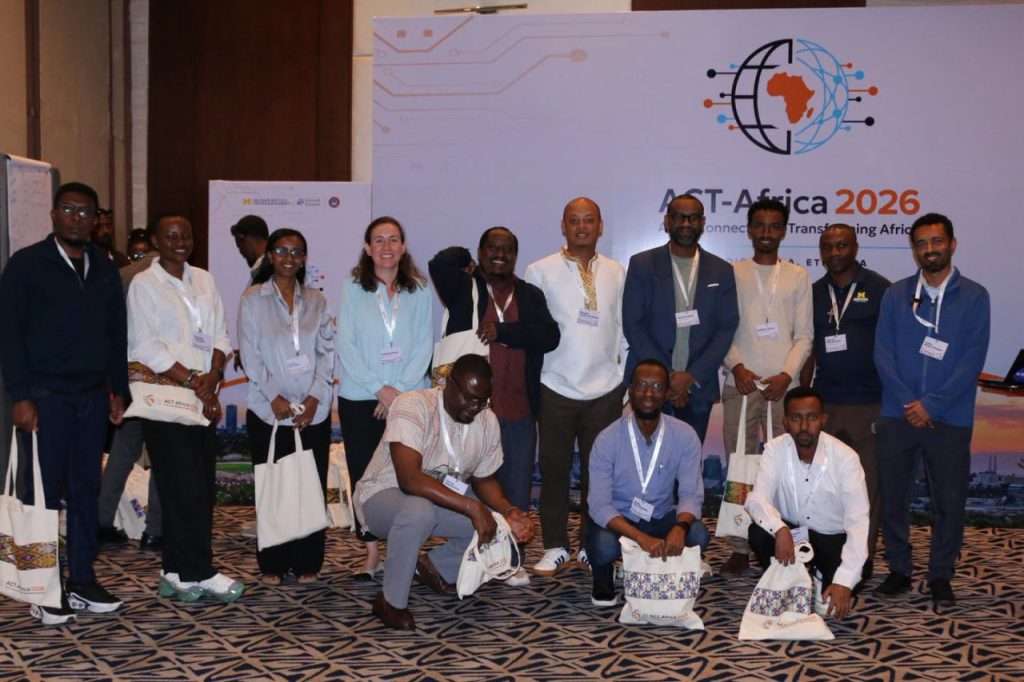
Ethiopia Today (Addis Ababa), September 9, 2026: The four-day ACT-Africa 2026 workshop in Addis Ababa established a regional framework to transform Africa from a passive consumer of artificial intelligence into an active creator of tailored AI solutions.
Co-hosted by Addis Ababa University and the University of Michigan, the summit convened global researchers to align AI models with African languages and priority development challenges.
The event featured hands-on training, a hackathon driving solutions in agriculture and healthcare, and site visits to local AI infrastructure, marking a major step toward continental technological self-reliance.
Organized under the theme “Foundation Models for Addressing African Community Challenges,” the summit convened data scientists, policy experts, and researchers from across Africa and globally to adapt AI technologies to African languages, local realities, and priority development sectors.
Co-hosted by the Michigan Institute for Data and AI in Society (MIDAS) at the University of Michigan alongside Addis Ababa University (AAU) with financial backing from Schmidt Sciences, the summit gathered data scientists, researchers, and policy experts from across Africa and around the globe to align AI systems with African languages, cultural contexts, and priority socio-economic goals.
Main event coordinators Dr. Yonas Minalu Emagnu and Dr. Desalegn Wegeso, researchers from AAU’s College of Technology and Built Environment, highlighted that the initiative co-organized alongside senior researchers from Kenya and Uganda was specifically structured to build enduring research partnerships, promote knowledge sharing, and empower local developers to build indigenous models rather than depending entirely on external software.
Throughout the event, participants engaged in intensive training modules spanning theoretical concepts to hands-on applications, culminating in a competitive hackathon that produced practical AI solutions targeting agriculture, healthcare, manufacturing, infrastructure, and climate change adaptation.