By: Our Staff Reporter
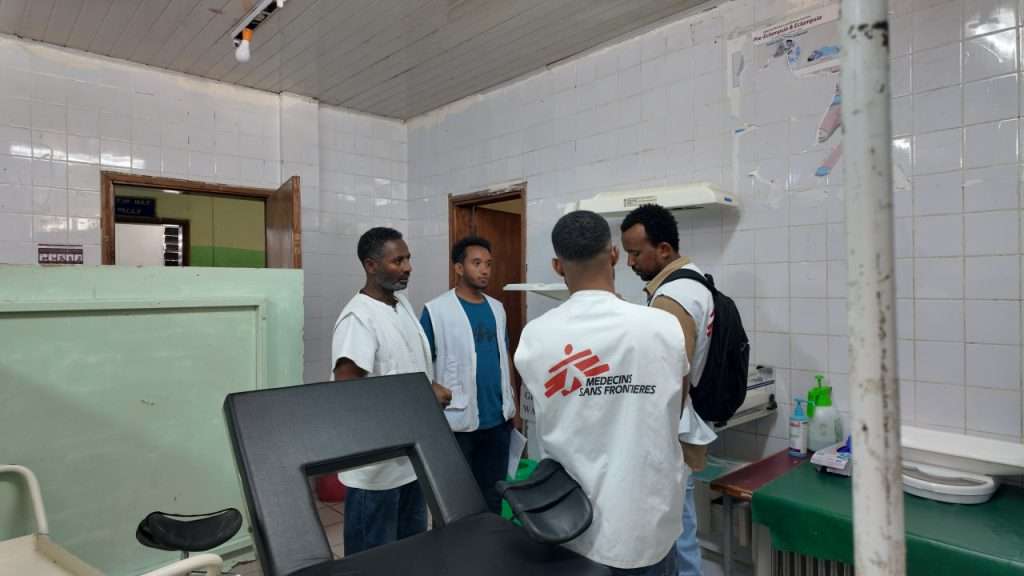
Addis Ababa (Ethiopia Today), August 4, 2026: Médecins Sans Frontières (MSF) has expanded its operational support to Alamata General Hospital to restore critical, life-saving medical care for an estimated 300,000 residents in Alamata town and surrounding areas.
In a statement sent to Ethiopia Today, Médecins Sans Frontières highlighted that Alamata General Hospital, once a main referral hub for pediatrics, obstetrics, and internal medicine, experienced a breakdown in operations caused by infrastructure damage, chronic supply shortages, and severe healthcare worker deficits.
These systemic failures led to overcrowded wards, unreliable water and power, and an absence of basic infection control, leaving vulnerable patients, particularly mothers and newborns, at severe risk of preventable death.
To address these gaps, MSF scaled up targeted interventions across the hospital’s most vital units, focusing specifically on the emergency department, maternity ward, and neonatal intensive care unit (NICU).
According to Farayi Marume, MSF’s project medical coordinator, these critical departments carry the highest risk of mortality if patients cannot access timely, quality medical attention.
MSF’s strategy combines urgent infrastructure rehabilitation and essential medical equipment provision with hands-on, on-the-job capacity building for local healthcare workers and the strengthening of the hospital’s referral network.
The severe degradation of services at Alamata had previously forced impoverished families either to forgo treatment entirely or to travel long distances to neighboring facilities, such as Korem General Hospital, where MSF also provides free medical care.
MSF noted a significant influx of patients traveling from Alamata to Korem seeking free emergency obstetric and neonatal support, where unaddressed childbirth complications had become far too frequent.
MSF has maintained an active presence in Northern Ethiopia since early 2023 to rebuild local healthcare systems severely disrupted by conflict.
In addition to its hospital-based operations in Alamata and Korem, the international medical humanitarian organization deploys mobile outreach teams to remote and hard-to-reach communities, delivering primary consultations, maternal and child healthcare, nutrition screenings, and essential medical treatments.