
By: Our Staff Reporter
Addis Ababa (Ethiopia Today) June 25, 2026: The Ethiopian legislature has unanimously passed a sweeping new Freedom of Information Proclamation, marking a historic shift in the country’s legal landscape.
The newly approved law officially untangles information access rights from the nation’s 15-year-old media legislation, a process that began back in 2021 but remained stalled until the draft bill was finally pushed to parliament’s Democracy Affairs Standing Committee this past April.
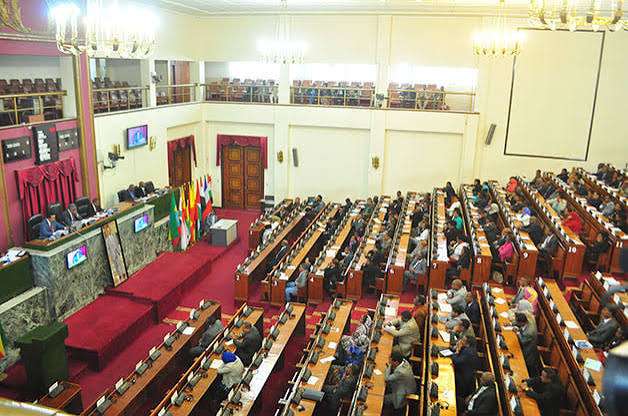
Following five rounds of intensive consultations with the Ethiopian Institution of the Ombudsman and key stakeholders, the revised law was presented to the House floor today and passed without a single dissenting vote.
In a major expansion of civil liberties, the newly enacted proclamation extends the right to request and receive information well beyond state institutions.
For the first time in Ethiopia’s legislative history, citizens and journalists can legally demand access to public-interest data and critical records held by private organizations, fundamentally shifting the boundaries of corporate and institutional accountability across the country.
The law also introduces unprecedented oversight for state-backed development initiatives, changing how public infrastructure is monitored. While the original draft merely required agencies to publish basic project details within 30 days of launch, the approved law mandates that government bodies must proactively publish the entire execution path of any project, including its granular operational details, targeted beneficiaries, and final performance outcomes.
Recognizing the vital role of the press in fostering a transparent society, parliament has removed financial barriers for investigative reporting.
Under the new framework, media organizations are completely exempt from paying any duplication or reproduction fees when requesting public-interest data, ensuring that cash-strapped newsrooms are not priced out of holding powerful institutions accountable.
The most revolutionary aspect of this proclamation is the introduction of uncompromising criminal accountability for public servants, bringing an end to bureaucratic impunity.
Any senior official or designated information officer found guilty by a court of law of deliberately destroying, altering, concealing, or falsifying public documents to block an information request now faces up to five years in prison, a 100,000 Birr fine, or both.
Crucially, the law explicitly criminalizes the use of state secrecy to mask systemic wrongdoing.
The maximum five-year prison sentence will apply directly to any official caught hiding documents to cover up corruption, illegal administrative practices, severe institutional incompetence, or personal and organizational scandals that affect the public interest.
Bureaucratic foot-dragging and systemic incompetence will also face harsh legal penalties under the new penal clauses.
Public officials who deliberately hand out incorrect or misleading information to a requester, repeatedly fail to respond within statutory deadlines, or willfully ignore institutional compliance orders face up to three years of simple imprisonment and heavy fines.
Even minor administrative hurdles designed to frustrate information seekers have been criminalized to ensure a smooth, user-friendly process. Government employees who refuse to help citizens fill out oral information requests on standard forms or fail to provide exact duplicates of requested data face up to one year in prison or fines ranging from 25,000 to 50,000 Birr.
In a significant win for inclusivity and human rights, the proclamation makes it a criminal offense for state entities to ignore marginalized populations.
Any public or private institution that fails to take reasonable, proactive steps to convert and deliver data in formats accessible to persons with disabilities, such as braille, large print, or audio, will face the same one-year jail term and severe financial penalties.
To maintain a careful national security balance, the law simultaneously imposes strict boundaries on state workers regarding classified files.
Any information officer or institutional worker who knowingly leaks defense or national security data, fully aware of its classified status, will face up to three years behind bars, ensuring that transparency does not compromise the state’s fundamental safety.