
By: Dawit Astatike
Inaugurated last September, the dam represents Africa’s energy transition and sets a global benchmark for large hydropower infrastructure
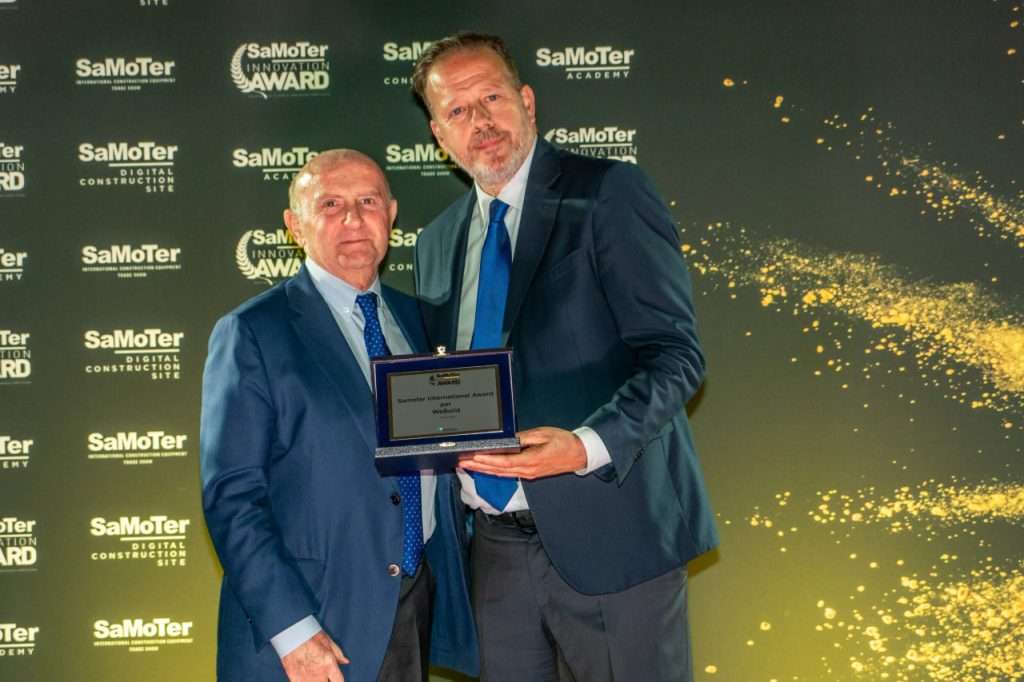
Ethiopia Today (Addis Ababa) May 7, 2026: Webuild has powered its way to the prestigious Samoter Innovation Award 2026, taking center stage at the International Construction Machinery Exhibition in Verona to celebrate the Grand Ethiopian Renaissance Dam (GERD).
Since 1973, this accolade has served as one of Europe’s highest honors in engineering, and this year, the jury lauded the GERD not just as a technical feat, but as a genuine paradigm shift in global infrastructure. By redefining efficiency in large-scale hydropower, Webuild’s work in Ethiopia is being recognized as a benchmark for the future—transforming a nation’s energy landscape through visionary technology and industrial excellence.
In a major boost to Ethiopia’s standing as a global leader in renewable energy, the Grand Ethiopian Renaissance Dam (GERD) has been honored with the Samoter Innovation Award 2026.
Presented at the International Construction Machinery Exhibition in Italy, the award recognizes the GERD not only as a feat of structural engineering but as a transformative project that has redefined Africa’s energy landscape.
The jury lauded the project for setting a new global benchmark in hydropower infrastructure, noting that its design and execution represent a genuine paradigm shift in how large-scale industrial and energy developments are realized.
Since its landmark inauguration last September, the dam has transitioned from a national vision into an international symbol of efficiency, capable of doubling Ethiopia’s electricity production with a staggering 5,150 MW capacity—all while maintaining a zero-carbon footprint.
The accolade further highlights the historic technical milestones achieved on Ethiopian soil, including a world record set during construction for placing 23,000 cubic meters of concrete in a single day.
Beyond the technical precision, the Samoter Award emphasizes the immense socioeconomic legacy the project leaves for the Ethiopian people. By involving more than 25,000 workers—the vast majority of whom are Ethiopian nationals the project has acted as a massive engine for human capital, equipping a new generation of local professionals with specialized skills.
With the development of permanent hospitals, schools, and road networks around the site, the GERD is celebrated as more than just a power plant; it is a national accelerator for industrial growth and a beacon of Ethiopia’s commitment to a green, self-sufficient future.



