By: Dawit Astatike
Ethiopia Today (Addis Ababa) April 24, 2026: The voter registration period for Ethiopia’s 7th General Election, which began on March 7, 2026, officially concluded on April 22.
A significant shift in protocol marked this cycle for the first time; some regions utilized a digital registration system alongside the traditional manual method.
The National Election Board of Ethiopia (NEBE) announced that as of April 23, a total of 50,514,155 voters have been registered. The demographic breakdown shows 23,123,426 (46%) women and 27,390,729 (54%) men.
Timeline Shifts and Extensions
According to the NEBE’s initial schedule released in November, registration was slated for February 14 to March 14, 2026. However, citing an inability to complete preparatory tasks on time, the Board pushed the start date back by two weeks to March 7.
On April 1, after nearly a month of registration, the Board announced a further extension to April 22. The NEBE justified this delay by citing technical challenges with the digital system and logistical hurdles in transporting materials. At the time of this extension, the Board reported that 36.9 million voters had been registered.
The Digital Experiment: Challenges and Reversions
For this 7th General Election, the NEBE introduced digital registration for both candidates and voters. Addis Ababa, Dire Dawa, and the Harari region were intended to be fully digital. Most other regions used a mix of digital and manual systems, and the Afar regional state remained entirely manual.
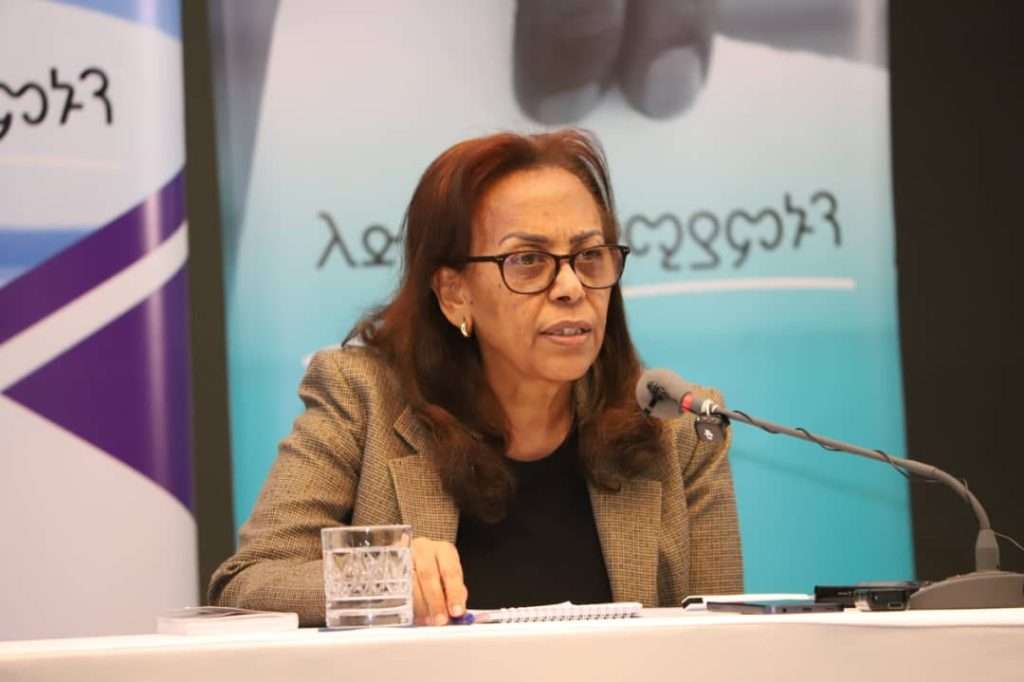
Initially, the Board planned for 52,726 polling stations (31% digital and 69% manual). However, reality forced adjustments. NEBE Chairperson Melatwork Hailu noted that while they planned for 52,773 stations, only 46,757 successfully opened in the first week. By the end of the process, registration took place in 46,352 permanent stations and 2,477 substations.
The digital process relied on a mobile app called “Mirchaye” (My Election), with tablets available at stations for those without smartphones. Almost immediately, the Board faced issues with National ID verification in Addis Ababa, where the number of applicants claiming residency far exceeded expectations, prompting secondary screenings.
Connectivity also proved to be a major barrier. In areas lacking 3G coverage, the Board was forced to revert to manual systems. Specifically, 996 polling stations, including 25 in Dire Dawa, that were originally designated as digital-only had to switch to manual registration due to network failures. Ultimately, only Addis Ababa and specific districts in Bishoftu and Adama successfully maintained a 100% digital process.
Reports of Coercion and Forced Registration
On April 1, the NEBE issued a stern warning about illegal pressure on citizens to register. Reports emerged of officials going door-to-door and threatening to withhold social services or salaries unless citizens produced a voter registration card.
“Threatening to cut salaries for not taking a voter card is an illegal act that the Board strongly opposes. Voting is a constitutional right, not an obligation.” NEBE Press Statement
Despite this warning, “Ethiopia Insider” found evidence that coercion continued until the final days. On April 21, in the Lemi Kura sub-city of Addis Ababa, government employees were reportedly forced to register. Similar incidents were observed in the Sheger City Administration (Tulu Dimtu area), where local militias told residents that registration was “mandatory” and that failure to do so would call their citizenship into question.
Chairperson Melatwork Hailu addressed these concerns, stating the Board had monitored several locations and, in some cases, closed polling stations where irregularities were confirmed to serve as a deterrent.
Security Obstacles and Excluded Regions
Ongoing instability continues to cast a shadow over the election. The NEBE used a “traffic light” system (Green, Yellow, Red) to categorize the safety of polling districts, though the specific designations for each area were not made public.
Conflict has significantly hindered the transportation of election materials. Notably, in Tigray Region, registration has not yet taken place.
In five “contentious” districts between Amhara and Tigray (Humera, Adi Remets, Tselemti, Ofla Korem, and Alamata), no election activity has occurred.
Chairperson Melatwork stated that the Board remains ready to conduct elections in Tigray as soon as conditions allow, while the status of the disputed districts will be announced at a later date.
For context, during the 6th General Election in 2021/22, security issues prevented voting in 38 districts in Tigray, 19 in Amhara, and 8 in Oromia.
The “Coalition for Ethiopian Unity,” in a letter addressed to NEBE on April 22, 2026, has formally requested a minimum one-week extension for the voter registration period.
The coalition based its request on a recent assessment showing a late-stage surge in political engagement and motivation among the public, arguing that more time is needed to accommodate this momentum. The group expressed optimism that the Board will view the request favorably to ensure broader participation.