By: Our Staff Reporter
Ethiopia Today (Addis Ababa) April 19, 2026: International donors have pledged more than $1.8 billion (€1.5 billion) in humanitarian aid for Sudan at a Berlin conference on April 15, as the three-year civil war continues to create the world’s largest humanitarian crisis, with neighboring Ethiopia emerging as a key host for refugees fleeing the conflict, according to Reuters reports and UN statements.
The pledges, announced by German Foreign Minister Johann Wadephul, exceeded initial expectations and included €230 million from Germany, over €811 million from the European Union and its member states, and contributions from the United States, the African Union, and other partners. The funds are intended to address urgent needs both inside Sudan and in neighboring countries, including Ethiopia, which is hosting tens of thousands of Sudanese refugees.
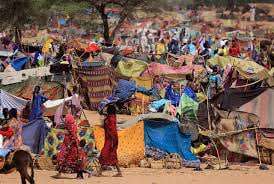
According to the 2026 Sudan Regional Refugee Response Plan, Ethiopia is one of seven neighboring countries, alongside Chad, South Sudan, Egypt, Uganda, Libya, and the Central African Republic, targeted for lifesaving assistance. The EU pledge alone allocates €145.3 million specifically for supporting refugees in these host countries.
The Berlin conference marked the third anniversary of the war between the Sudanese Armed Forces and the paramilitary Rapid Support Forces (RSF). UN Secretary-General António Guterres stated that nearly 34 million people inside Sudan now need humanitarian assistance, with more than 4.5 million forced to flee across borders. The UN has described the situation as the world’s largest humanitarian crisis, with famine taking hold in what was once a breadbasket for the region and an entire generation of children robbed of education.
Despite the pledges, the funding remains far short of what is needed. The UN and partners are seeking $2.2 billion to reach 14 million people across Sudan this year, while last year’s humanitarian response was funded at less than 40 percent. Fletcher also highlighted that the Middle East conflict is adding a layer of challenge, with rising costs for food, fuel, and freight up 25 percent, while half of Sudan’s fertilizer comes from the Gulf, just as the main growing season approaches.
The Sudanese government rejected the conference as “surprising and unacceptable” interference in its internal affairs, while the RSF-run parallel government also refused to participate. Neither warring party sent representatives to Berlin in the absence of a ceasefire agreement, Reuters reported.