By: Dawit Astatike
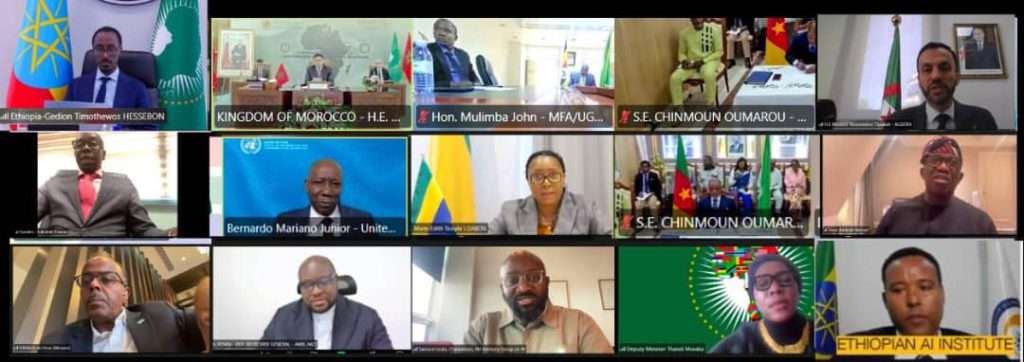
Ethiopia Today (Addis Ababa) April 17, 2026: At a landmark virtual gathering marking Ethiopia’s chairmanship of the African Union Peace and Security Council for April 2026, Foreign Minister Gedion Timothewos led a high-level ministerial discussion on the transformative role of Artificial Intelligence in shaping the continent’s future.
Addressing the council under the theme “Artificial Intelligence: Governance, Peace and Security in Africa,” the Minister emphasized that AI is no longer a futuristic concept but a present-day force rapidly redefining how African nations govern, manage their economies, and protect their citizens.
By integrating these advanced technologies into public administration and security systems, the Minister noted that the continent stands at a critical crossroads where strategic adoption is not just an advantage but a necessity for survival in a digital age.
The discussions highlighted a nuanced dual reality: while AI offers revolutionary tools for peace, it also carries the potential for unprecedented disruption.
Minister Gedion pointed out that if harnessed with integrity, AI could become Africa’s strongest ally in conflict prevention, offering sophisticated early warning mechanisms and data-driven support for mediation and diplomacy. However, he balanced this optimism with a stern warning regarding the darker side of the digital frontier.
The Minister cautioned that without robust regulatory frameworks, the misuse of AI could empower terrorist networks, fuel the spread of sophisticated disinformation, and heighten the threat of cybercrime, potentially destabilizing the very governance systems it is meant to enhance.
Central to the meeting was a call for unified action and the institutionalization of digital ethics across the continent. Minister Gedion lauded the progress made through the African Union Artificial Intelligence Strategy and welcomed the newly established AU Advisory Group on AI, Peace, and Security. He also underscored the symbolic and practical importance of Prime Minister Abiy Ahmed’s role as the AU Champion on Artificial Intelligence and Digital Health, signaling a top-tier political commitment to Ethiopia’s and Africa’s digital evolution.
This sentiment was echoed by Ambassador Hirut Zemene, Ethiopia’s Permanent Representative to the AU and UNECA, who stressed that the time for theory has passed; the focus must now shift to translating high-level strategies into practical, ethical governance that ensures AI serves as a public good.
The session concluded with a look at Ethiopia’s own domestic blueprints as a potential model for the continent, showcasing initiatives that integrate AI into public service delivery and safety. Ambassador Hirut detailed the nation’s commitment to building human capital, specifically focusing on training the next generation of Africans in data science and cybersecurity.
As Council members exchanged views on bridging the digital divide and bolstering infrastructure, the consensus remained clear: the decisions made today regarding AI governance will dictate the stability and prosperity of Africa for decades to come.
By prioritizing research, education, and innovative security architecture, the AU aims to ensure that Africa is not merely a consumer of global technology but a leader in responsible and secure AI governance.